Lost in Translation: How Language Barriers and Dialect Bias Are Sending Innocent People to Prison
New research shows language barriers and dialect bias are quietly fueling wrongful convictions.
04.03.26 By Alyxaundria Sanford
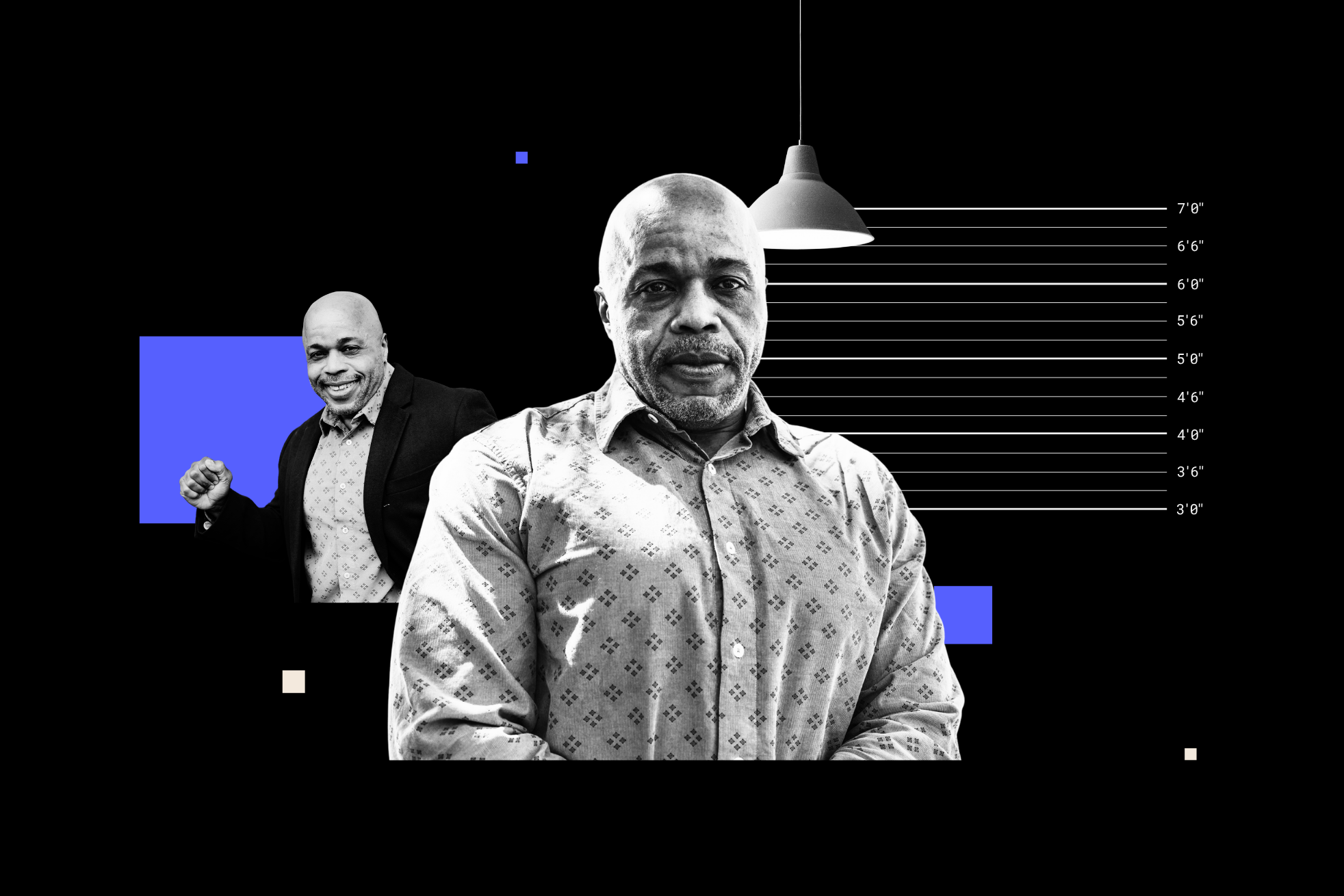
Norberto Peets (Image: Innocence Project/Jack Duran)
Norberto Peets spent 26 years incarcerated for a 1996 murder he did not commit. He was convicted based on mistaken witness identification in a case riddled with inconsistencies and faulty evidence. But layered on top of all of these issues was an obstacle that shaped nearly every moment of his ordeal, from his arrest to his trial and the decades he spent fighting to be exonerated: He could not fully understand the language being used to prosecute him.
Mr. Peets grew up in the Dominican Republic. And though he learned enough English to get by in daily life after moving to New York, he was nowhere near fluent enough to navigate an attempted murder prosecution, read legal documents, or meaningfully communicate with his defense attorney. In the American criminal legal system, a language barrier can guide the outcome toward justice or a wrongful conviction. For Mr. Peets, it was a critical factor.
Mr. Peets’ story was the centerpiece of the Innocence Project’s first Just Data webinar of 2026, Lost in Translation: The Role of Language in Wrongful Convictions, on Feb. 27. The hour-and-20-minute livestream featured a conversation between Mr. Peets and his Innocence Project attorney Jane Pucher and two research presentations. In one presentation, Jessica Arredondo Cruz, a researcher at George Mason University, outlined her work on language assistance and barriers in criminal proceedings. Discussion of her research was complemented by a research presentation by Dr. Sharese King, associate professor of linguistics at the University of Chicago, whose work examines how stigmatized dialects, like African American English, Southern English, and Chicano English, shape outcomes in the courtroom. Together, they examined how language barriers, faulty interpretation, and dialect bias are systemic drivers of wrongful conviction.
Norberto Peets’ Story
In 1996, a shooting occurred beneath an elevated subway platform in the Bronx during which the suspect was shot and fell, before escaping on foot. The gunman was shot by police and a bloody bullet fragment was recovered from the sidewalk where he fell while running away. A composite sketch was made of the gunman and displayed in police precincts.
One week later, Mr. Peets was stopped by police and officers decided he looked enough like the sketch of the gunman to bring him in. From that very first encounter, language compounded every obstacle. Mr. Peets struggled to understand what he was being charged with and why he had been stopped. As his post-conviction attorney Ms. Pucher described it, “that confusion was just the beginning.”
He spent nearly two years at Rikers Island before he understood what evidence existed in his own case. His attorney seldom visited him, and never with an interpreter. The most exculpatory detail of all — that the actual gunman had been shot, and Mr. Peets had not — was never explained to him in Spanish. Instead, he learned this detail not from his legal team, but from a man with whom he was incarcerated who spoke and read in Spanish and English, and was able to help him read some reports related to his case.
The barriers continued through his trial. He testified through an interpreter he had never met before taking the stand, and on multiple occasions noticed the English translation did not match what he had said in Spanish. And for years, no one questioned the fact that witnesses recalled the actual gunman shouting in English as he fled, but that Mr. Peets, who spoke predominantly Spanish, would not have done so. Language, in this instance, was not just a barrier — it was evidence.
“There’s a lot of injustice right now against a lot of people because of the English barrier. It’s been going on for a long time. Now it’s getting worse. A lot to do,” said Mr. Peets — a sentiment Ms. Arredondo Cruz’s research supports. Her work reveals a system structurally ill-equipped to serve the people most at risk.
WATCH: Just Data | Lost in Translation: The Role of Language in Wrongful Convictions
With roughly 22% of the United States population speaking a language other than English at home, Limited English Proficient (LEP) individuals are a significant presence in American courtrooms. However, Ms. Arredondo Cruz noted, this is likely an underestimate, because LEP people outnumber available certified interpreters.
While the Court Interpreters Act of 1978 established the right to interpreter assistance, courts have since ruled that people standing trial are only entitled to a competent interpreter — not necessarily a certified one. That distinction matters. Research consistently finds that certified interpreters outperform uncertified ones in accuracy and completeness.
The consequences of relying on uncertified interpreters can be severe. In 2004, Juan Ramon Alfonso, a Spanish speaker, entered what he believed was a guilty plea to a misdemeanor with a probation sentence in Florida. In reality, he had pleaded guilty to a felony charge carrying 15 years in prison. Expert analysis of bilingual court transcripts later revealed that the uncertified interpreter had omitted critical information and inaccurately conveyed the charges and potential sentence. His conviction was ultimately overturned, and Florida now requires certified interpreters as a result.
A similar case out of Indiana in 2014 involving Victor Ponce showed that even when interpretation errors are proven, success on appeal often hinges on whether a bilingual transcript of the proceedings exists at all. Without one, defendants have almost no viable path forward, no matter how egregious the errors may have been.
But, as Dr. Sharese King explained, the problem when it comes to language is not just about speaking a different language. It’s about whose speech is deemed acceptable, and whose is not. People who speak stigmatized dialects, like African American English, Southern English, and Chicano English, also face unique challenges. Linguistic Anthropologist Rosina Lippi-Green has described language-based discrimination as “the last acceptable prejudice.” And Dr. King’s research shows that prejudice plays out with real consequences in courtrooms. Studies have found that nonstandard accents are judged as more guilty, a finding replicated in both U.S. and UK contexts. Accented English is rated as less credible, meaning listeners are measurably less likely to believe factual information delivered in an accented voice. And eyewitness testimony is perceived less favorably when given by a witness who speaks with an accent.
Dr. King cited the example of Rachel Jeantel, the prosecution’s star witness in the George Zimmerman trial. Ms. Jeantel was the last person to speak with Trayvon Martin before he was killed. Despite her central role as an auditory witness, a juror later stated she found Ms. Jeantel “not credible” — citing difficulty understanding her speech, due to her African American English dialect.
Issues can arise in court transcriptions as well. A single misheard phrase can completely change the meaning of what a speaker said, so mistranscriptions can have serious legal consequences. Dr. King highlighted one case in which a Jamaican Creole speaker’s statement was transcribed in a way that attributed weapon possession to them — something they never actually said. The error was caught only because a Jamaican Creole-speaking transcriber happened to review the file.
“This is just yet another example of how intelligibility can really affect transcription, and the broader harms that linguistic differences can pose in the context of different kinds of legal interactions,” said Dr. King.
Leave a Reply
Thank you for visiting us. You can learn more about how we consider cases here. Please avoid sharing any personal information in the comments below and join us in making this a hate-speech free and safe space for everyone.