Innocence Project and StoryCorps Studios Launch ‘Stories of Freedom,’ Firsthand Accounts of Wrongful Conviction
More than 30 intimate conversations from people impacted by wrongful conviction will be preserved in the Library of Congress.
03.19.26 By Alyxaundria Sanford
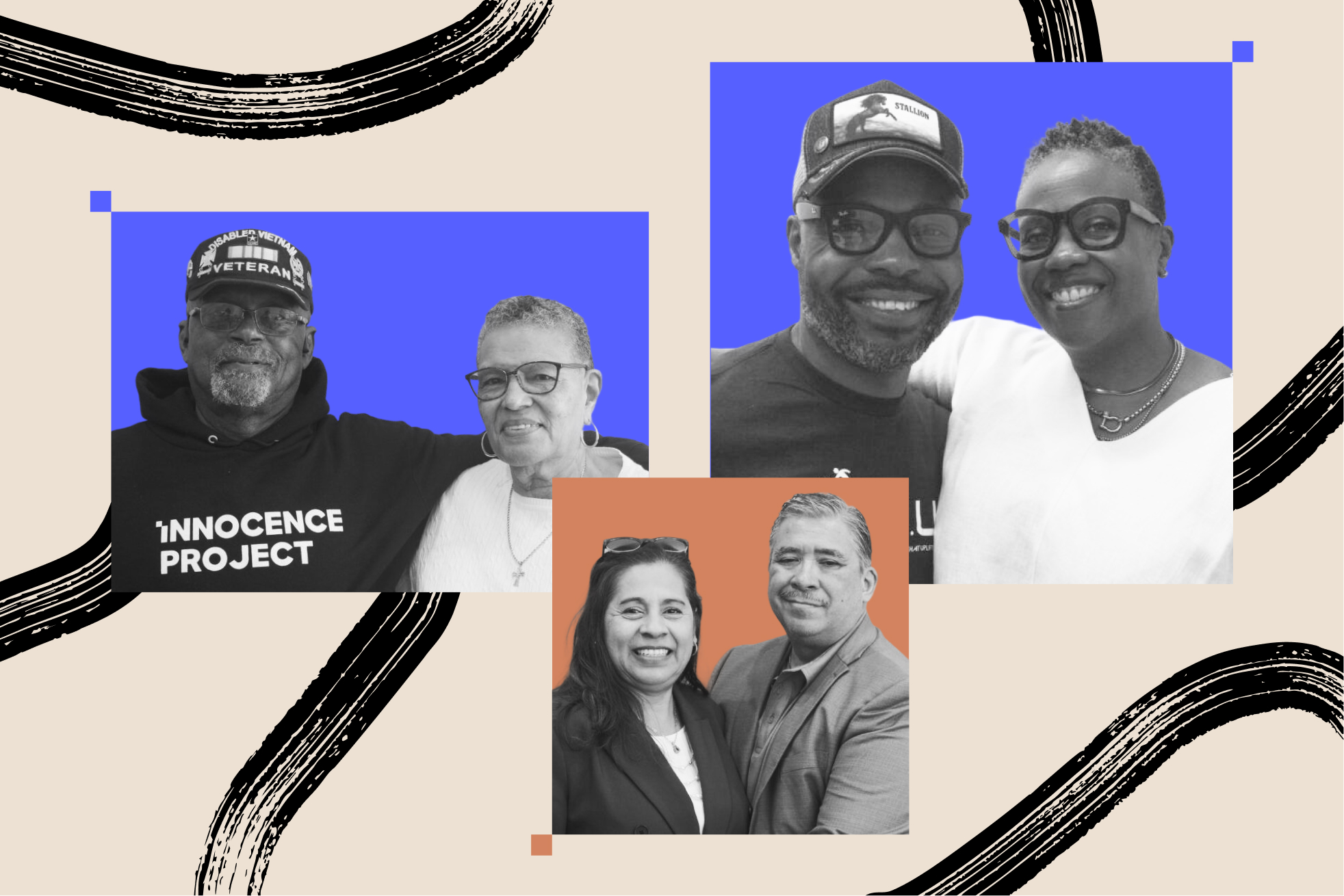
Image: Innocence Project/Ashia Shelton
Wrongful convictions are often defined by numbers: the number of lives upended, the number of years unjustly served, and the number of systemic failures that allowed such injustices to occur. Reduced to statistics, the personal stories of those wrongly convicted — marked by profound loss and resilience — too often go unheard.
Through a new partnership supported by grants from the Mellon Foundation and Robert Wood Johnson Foundation, the Innocence Project and StoryCorps Studios are working to change that. Together, we are building a permanent archive of conversations with people who have experienced wrongful convictions, their loved ones, and their champions.
These oral histories, which will live in the Library of Congress, ensure that current and future generations can better understand the tragic reality of our criminal legal system — and remember the courage, tenderness, and resilience of those who survived it.
Highlighted below are just four of the over 30 conversations that are now part of this growing archive.
1. John Nolley: Father and Son Maintaining Their Connection
John Nolley was exonerated in 2018 after DNA evidence proved he did not commit the murder that had sent him to prison for nearly two decades. During those years, he had to watch his son grow up from behind bars, finding ways to remain a present and intentional parent despite the distance and limitations imposed by incarceration. In conversation with his son, Tavan Seaton-Nolley, they discuss how they sustained their bond during the 17 years Mr. Nolley was wrongfully incarcerated and how they continue to navigate fatherhood, grief, and love after his exoneration.
2. Christopher Ochoa: Relearning How to Love After Years of Harm
Christopher Ochoa* was wrongly convicted of murder and sexual assault in Texas in 1989. He served 13 years in prison before DNA evidence and a confession from the actual perpetrator, Achim Marino, proved his innocence. Mr. Marino, who was then serving three life sentences for other convictions, sent letters confessing the 1988 murder and sexual assault to the police, then-Gov. George Bush’s office, and the District Attorney’s Office. Supported by the Innocence Project together with the Wisconsin Innocence Project, Mr. Ochoa was exonerated in 2002. In this conversation with his wife, Mercedes García, the couple reflects on how their relationship grew despite the weight of the past.
*Represented by the Innocence Project and Wisconsin Innocence Project
3. Leonard Mack: Shouldering the Past While Looking Forward
Army veteran Leonard Mack was wrongly convicted a 1975 rape in New York. Nearly 50 years passed before DNA evidence exonerated him, making his the second longest-known wrongful conviction overturned by DNA testing in U.S. history. In this interview with his wife, Mary, the couple reflects on their 23 years of marriage and the ways Mr. Macks’s past continues to shape their present. The two met in church after Mr. Mack had already served seven years in prison for a crime he did not commit.
4. Paul Hildwin: Building Friendship on Shared Survival
In this beautiful and heartfelt conversation, Paul Hildwin and Stephanie Spurgeon*, both of whom were wrongly convicted, discuss how they each became the other’s lifelines during and after their incarcerations. Mr. Hildwin served more than three decades for a 1985 murder he did not commit before his conviction was overturned in 2020. His connection with Ms. Spurgeon began when a mutual visitor passed messages between the two. Since then, they’ve helped each other navigate everyday challenges, including learning to use new technology and trying to sleep without the fear of waking up back inside prison.
*Ms. Spurgeon was a client of the Innocence Project of Florida. She was freed in 2020.
5. Huwe Burton: Finding Hope Through Music
Huwe Burton and rapper Brian “Saigon” Carenard reflect on their shared incarceration and how music — their lifeline — creativity, discipline, and belief in one another helped them survive an unjust system.
Mr. Burton was only 16 years old when he was wrongfully convicted of his mother’s murder. He spent 19 years in prison before being released in 2009 and was fully exonerated of all charges a decade later. Entering prison as a frightened teenager, Mr. Burton recalls feeling lost and overwhelmed by a world he did not understand. Mr. Carenard describes recognizing immediately that Mr. Burton did not belong in prison, which forced him to question his own place there.
6. Rosa Jimenez: Learning to Trust Again
In 2005, Rosa Jimenez was wrongfully convicted of the murder of a child she was babysitting. She was only 20 years old at the time and, as a young immigrant, had little family support in the United States. After spending 17 years in prison, Ms. Jimenez was exonerated and the child’s death ultimately ruled an accident. By then, she had missed out on raising her children and the experience had deeply eroded her faith in people and the criminal legal system. In their conversation with her wife, Mary (MJ) Flores, Rosa describes her life before incarceration as sheltered and innocent.
7. Termaine Hicks: Writing for Resolution
In conversation with his friend and attorney Karen Thompson, Termaine Hicks reflects on how creativity and purpose sustained him during nearly two decades of wrongful incarceration — and how his case reshaped Ms. Thompson’s understanding of justice.
Mr. Hicks was exonerated in 2020 after spending 19 years in prison for a crime he did not commit. As a young man, he was accused of sexual assault and shot three times in the back by Philadelphia police officers, who later concealed surveillance footage that would have cleared him of the crime. While incarcerated, Mr. Hicks turned to creative writing as a way to survive emotionally and make meaning of his confinement.
8. Carlos Sanchez: Letting Go of the Facade of Strength
When Carlos Sanchez was 17, his life changed in an instant. He was arrested for a murder and convicted based solely on a coerced confession after an eight-hour interrogation. Mr. Sanchez spent nearly 25 years in a New York prison before being paroled in 2017. He is still fighting to be exonerated. In this conversation with his niece, Angelica Apolinaris, Mr. Sanchez describes how his young adulthood was “clipped at the knees” just as he was starting to care for his younger siblings after his parents separated and how he held in so much while he was incarcerated, feeling he had to put on a “face and this strength for my family”.
These conversations offer an unfiltered record of resilience after injustice. Visit the landing page to listen to the full conversations and join us in ensuring these voices are never forgotten. Explore the full collection of recordings and to understand why safeguarding these voices matters now more than ever.

Leave a Reply
Thank you for visiting us. You can learn more about how we consider cases here. Please avoid sharing any personal information in the comments below and join us in making this a hate-speech free and safe space for everyone.