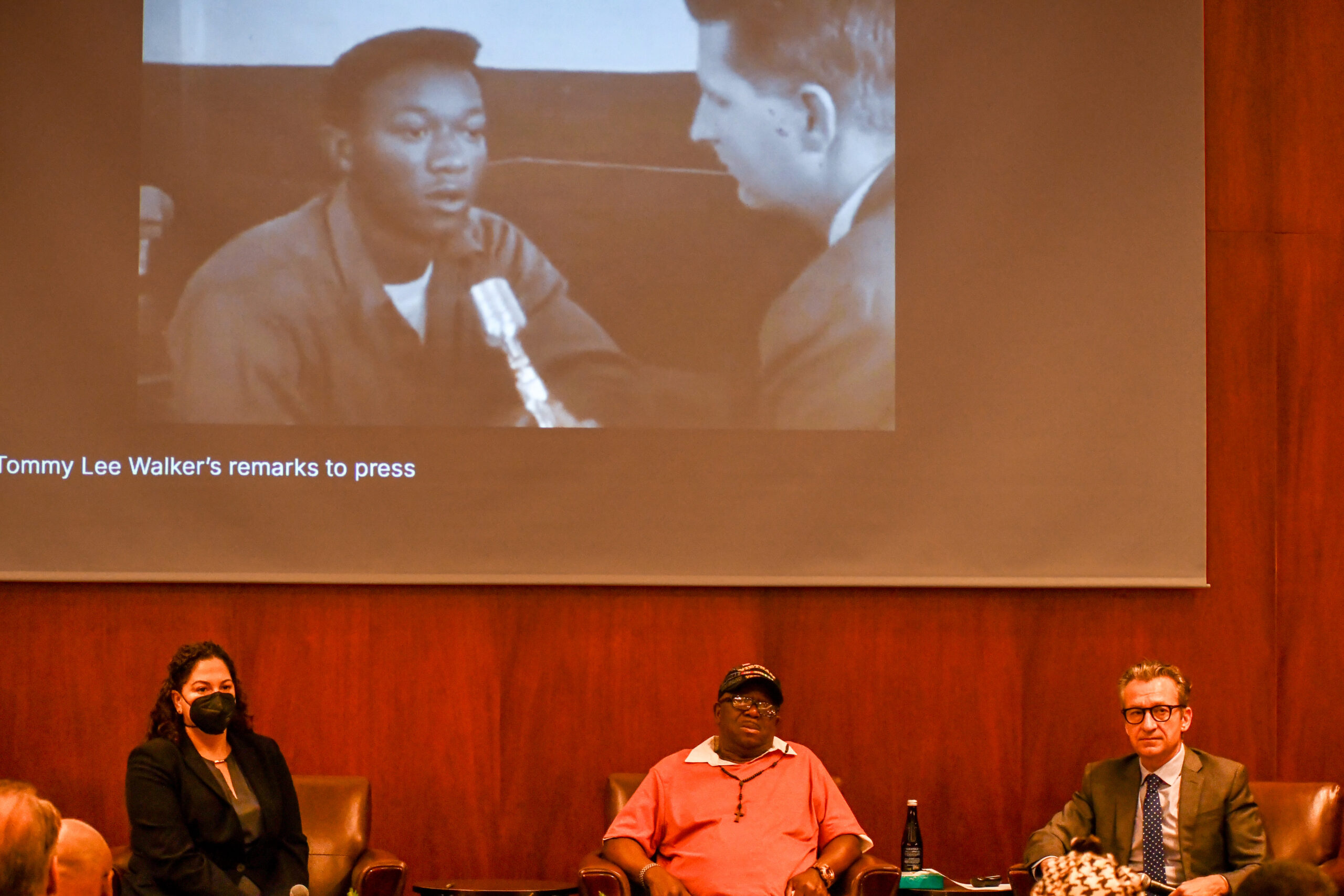
Innocence Project’s Lauren Gottesman (left) and Chris Fabricant (right), share the stage with Ed Smith as they listen to a clip of Tommy Lee Walker at the Race and Wrongful Conviction Symposium at NYU. (Image: ISAAC’S QUARTERLY LLC®)
At the Race and Wrongful Conviction Symposium on Wrongful Conviction Day, exonerees, scholars, and Tommy Lee Walker's son traced how racism shapes a criminal case at every stage, from the first suspect to the final appeal.
10.21.26 By Alyxaundria Sanford
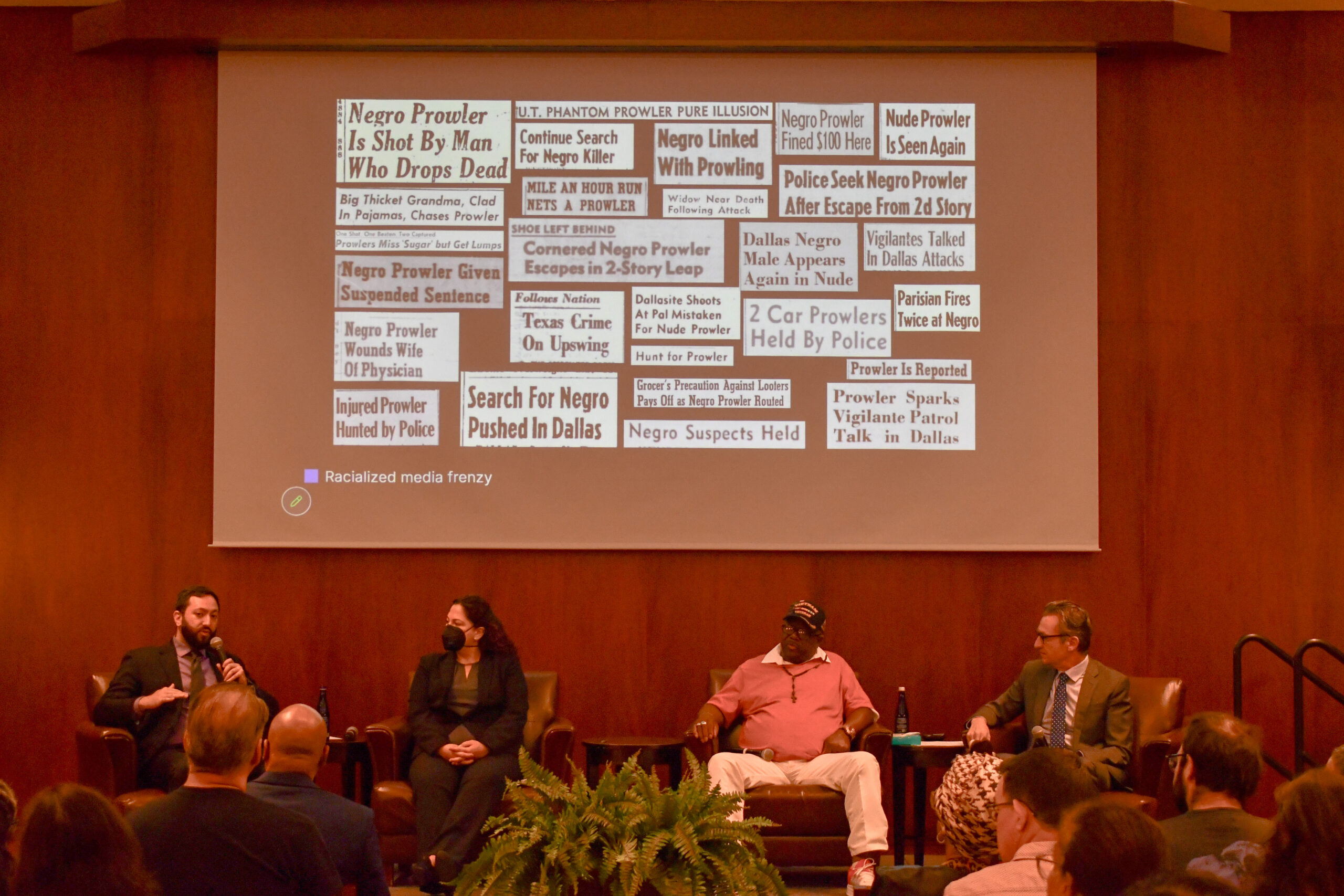
Innocence Project’s Director of Strategic Litigation Chris Fabricant (right), Staff Attorney Lauren Gottesman (second left), and Civil Rights and Restorative Justice Project’s Program Director Alex Stein (left) in conversation with Tommy Lee Walker’s son, Ed Smith, at the Race and Wrongful Conviction Symposium. (Image: ISAAC’S QUARTERLY LLC®)
Ten witnesses placed Tommy Lee Walker at his girlfriend’s bedside in 1953 as she was giving birth to their son. It didn’t matter. Dallas police arrested the 19-year-old for the killing of a white woman, extracted a confession under threat, and Texas executed him in 1956.
Seventy years later, in January 2026, the Dallas County Commissioners Court declared Mr. Walker innocent. The ruling followed a joint reinvestigation by the Dallas County District Attorney’s Conviction Integrity Unit, the Innocence Project, and Northeastern University School of Law’s Civil Rights and Restorative Justice Project.
On Oct. 2, Wrongful Conviction Day, Mr. Walker’s son, Ed Smith, sat before a New York audience to hear his father’s story told in full.
He was among the more than 400 people who joined the Race and Wrongful Conviction Symposium at New York University School of Law and online.
Hosted by the Innocence Project, NYU’s Center on Race, Inequality, and the Law, and NYU Law’s Review of Law & Social Change, the symposium used Mr. Walker’s case to trace how racism shapes the criminal legal system: the history of lynching, jury selection, police interrogations, and the long road to exoneration.
Innocence Project Executive Director Christina Swarns opened the day by explaining why that history matters.
“Any legitimate commitment to freeing the innocent, preventing wrongful convictions and creating fair, compassionate and equitable systems of justice for everyone requires an understanding of the ways in which racial discrimination undermines the accuracy and reliability of our criminal legal system,” Ms. Swarns said. “This symposium is one way of moving that ball forward.”
Here are seven takeaways from the day.
In 1953, Dallas, Texas, was gripped by racial panic over press reports of a “Negro prowler” breaking into homes and sexually assaulting women in white neighborhoods. Police responded by rounding up hundreds of Black men with no evidence tying them to the crimes.
When Mr. Walker was arrested in connection with the killing of a white woman, a police captain — who had been a member of the Ku Klux Klan — interrogated him for hours and threatened him with violence and execution. Mr. Walker signed a confession police had prepared, one riddled with factual errors that he later recanted while maintaining his innocence.
An all-white, all-male jury convicted him, despite the 10 witnesses who placed him miles away.
At the symposium, the audience heard directly from Mr. Walker in archival footage, recorded in 1954 at the sentencing hearing before his execution. Mr Walker powerfully insisted on his innocence, proclaiming to be “tricked out of my life.”
The audience also heard from Mr. Smith, Mr. Walker’s son who joined his legal team — which included Innocence Project’s Director of Strategic Litigation Chris Fabricant, Staff Attorney Lauren Gottesman, and Civil Rights and Restorative Justice Project’s Program Director Alex Stein — in conversation about the loss of his father at just two years old.
“It’s not a day that passes that I don’t think about my father,” said Mr. Smith, now 73.
Innocence Project’s Lauren Gottesman (left) and Chris Fabricant (right), share the stage with Ed Smith as they listen to a clip of Tommy Lee Walker at the Race and Wrongful Conviction Symposium at NYU. (Image: ISAAC’S QUARTERLY LLC®)
Mr. Walker’s case was not simply a story of a legal system stacked against him. It was also a story of a Black community organizing to fight back.
During a discussion of Mr. Walker’s case, Mr. Stein described how local churches and the Dallas branch of the NAACP rallied around Mr. Walker. His legal fees were paid almost entirely through donations, primarily collected by local churches and the local NAACP.
“As much as white supremacist institutions [like police departments and prosecutors’ offices] often have their minds made up to do racial violence, there’s oftentimes the Black community that rallies behind someone, or is putting resources into resisting the type of white supremacist violence that’s happening, and that was true in this case as well,” said Mr. Stein.
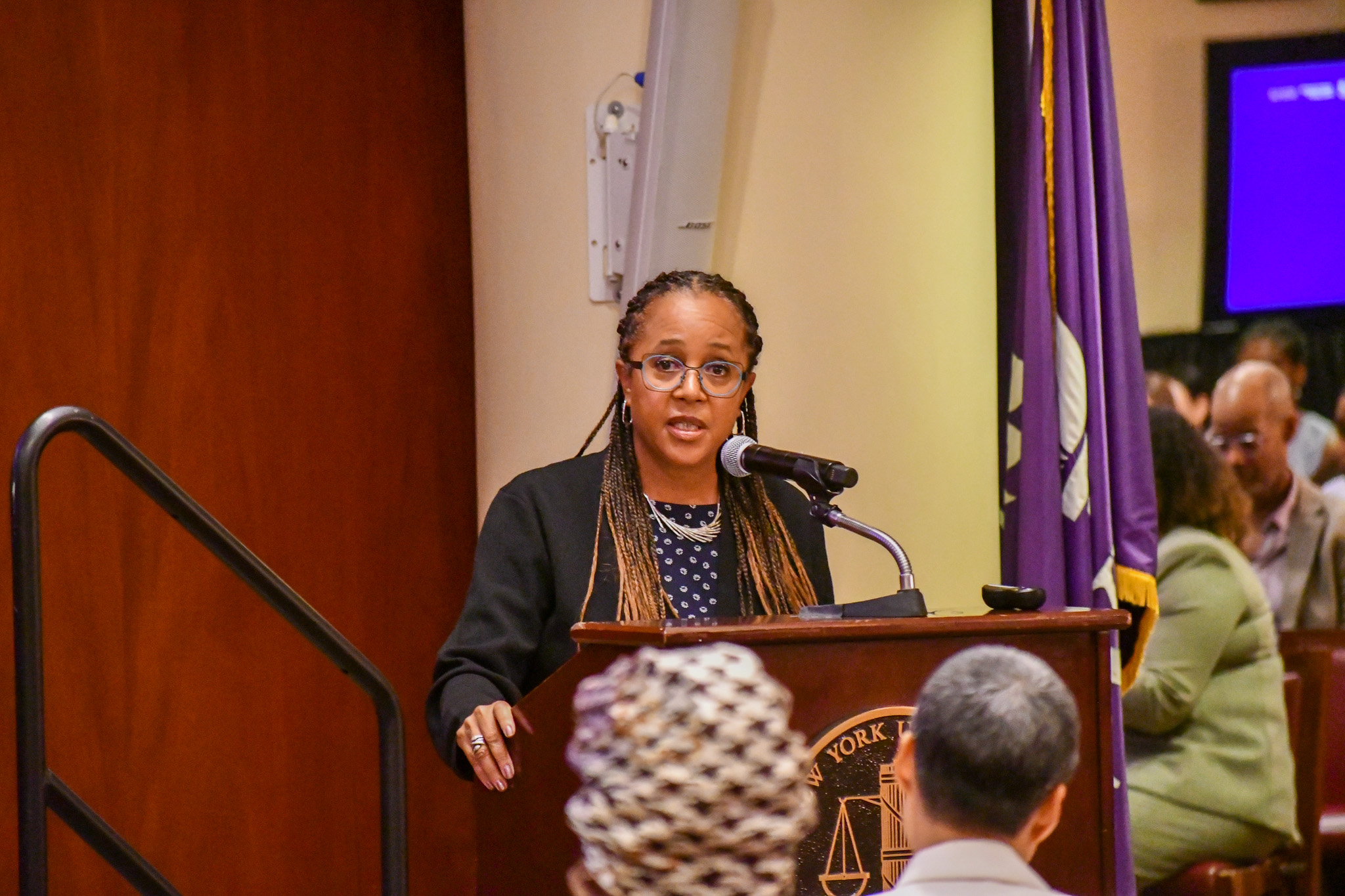
Innocence Project's Executive Director Christina Swarns' opening remarks. (Image: ISAAC'S QUARTERLY LLC®)
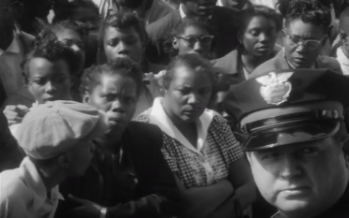
Dallas' Black community showed up to support Tommy Lee Walker. (Image: Dallas Public Library)
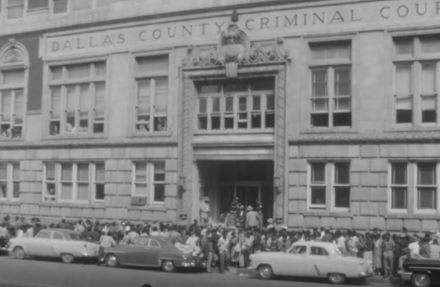
Tommy Lee Walker's community of support. (Image: Dallas Public Library)
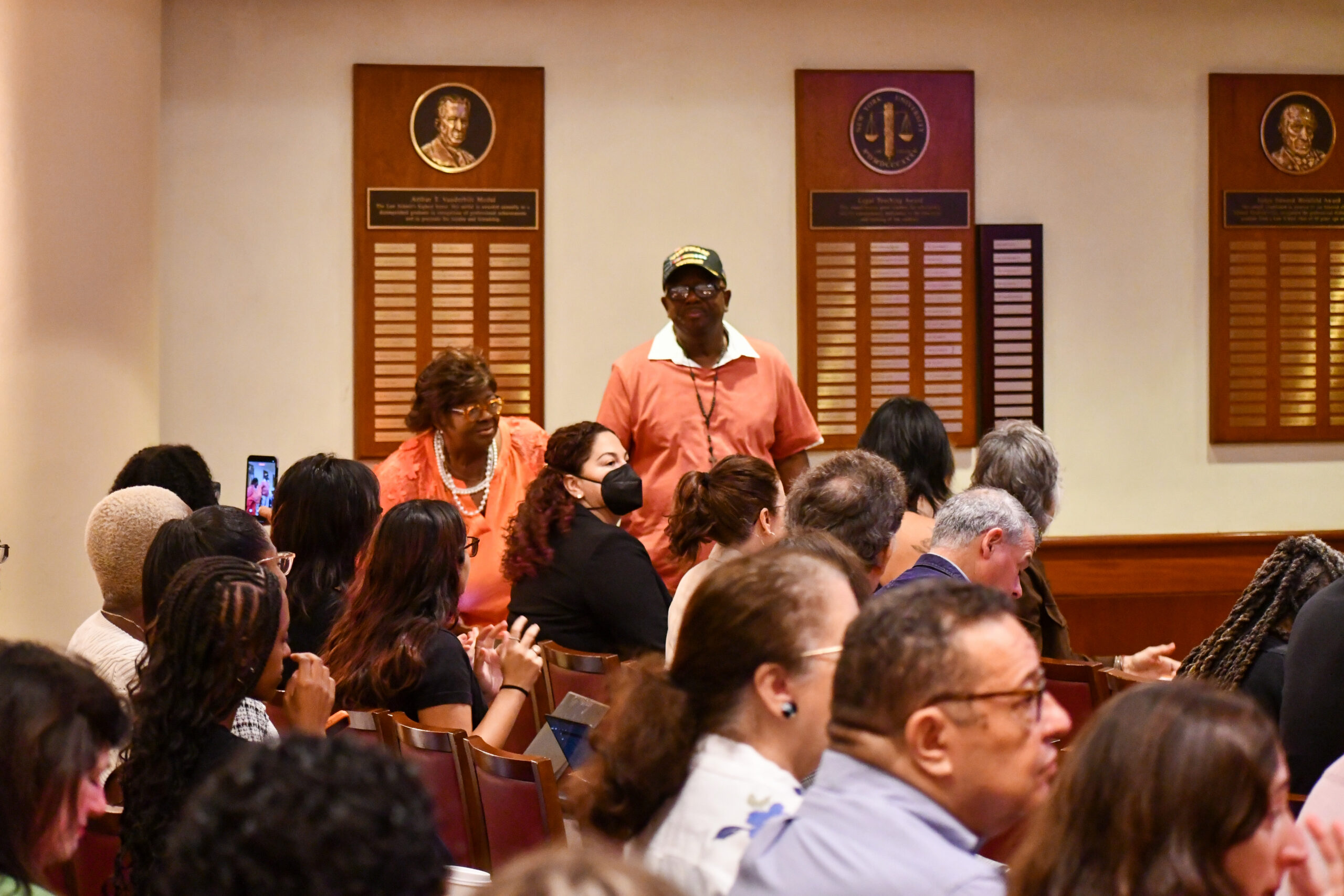
Tommy Lee Walker's son Ed Smith and his wife Dora are introduced to the audience. (Image: ISAAC'S QUARTERLY LLC®)
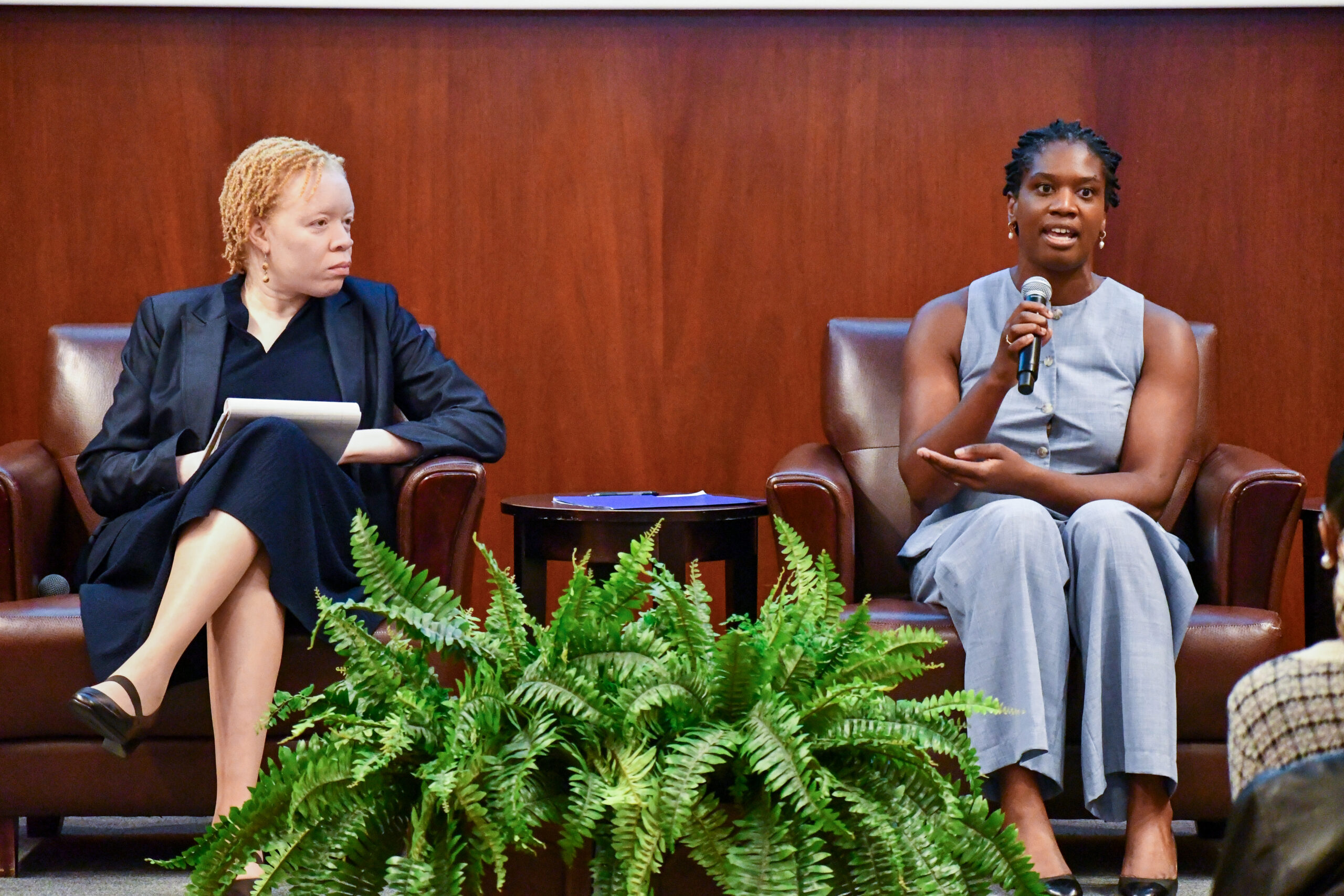
Associate Professor of law and Director of the Post-Conviction Criminal Defense Clinic at the University of the District of Columbia Ngozi Ndulue and Innocence Project's Ashley Burrell discusses race and capital punishment. (Image: ISAAC'S QUARTERLY LLC®)
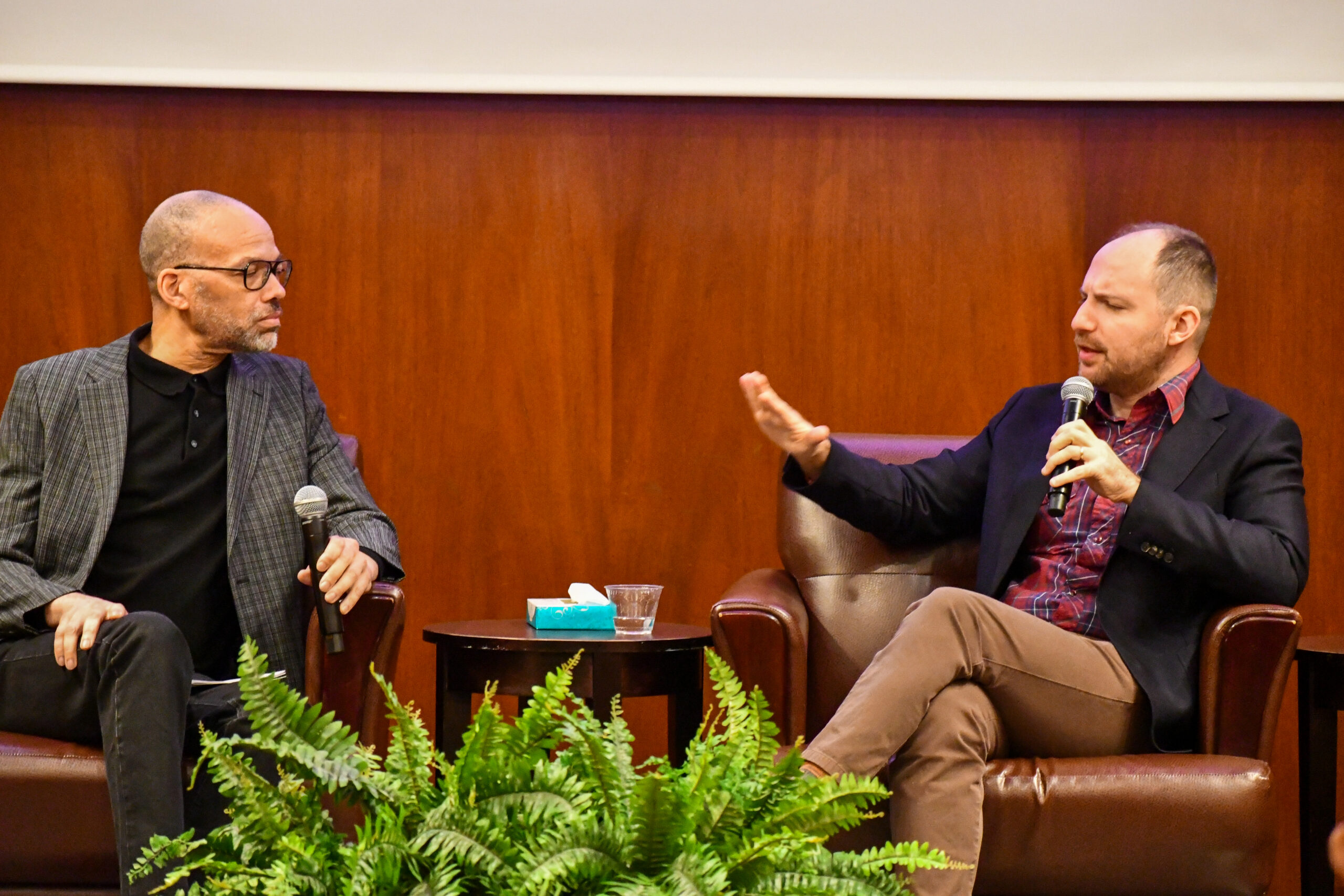
Innocence Project's Walter Katz and The Marshall Project's Maurice Chammah discuss the responsibility of storytelling. (Image: ISAAC'S QUARTERLY LLC®)
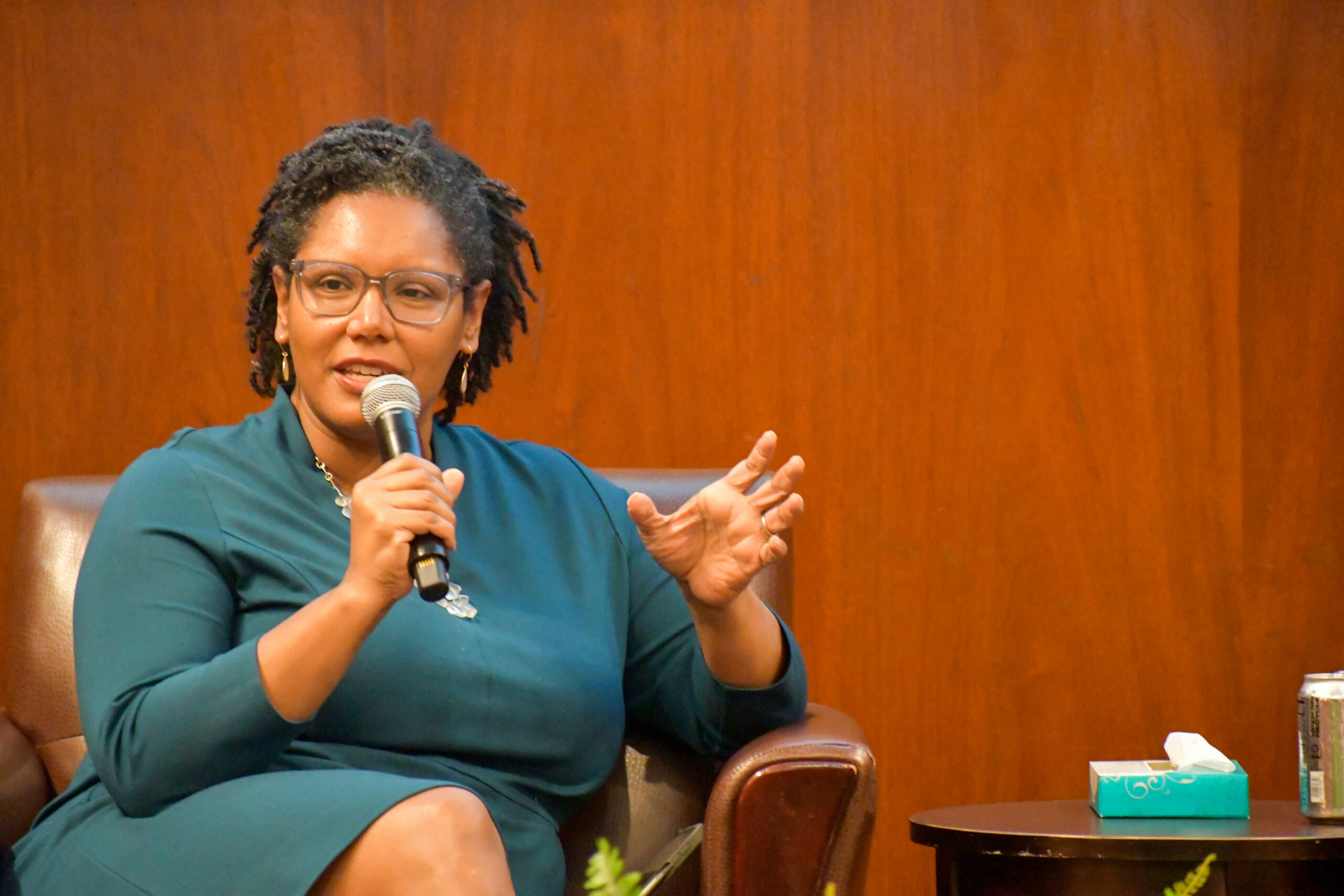
NYU Law Professor Alexis Karteron explained the importance of legal scholarship. (Image: ISAAC'S QUARTERLY LLC®)
One of the symposium’s historical discussions examined the relationship between racial terror, lynching, and the death penalty.
Ashley Burrell, Innocence Project’s special advisor on race and wrongful conviction, described how researchers can see the connection geographically.
“If you take a map of the United States and mark where the largest slave plantations were, where documented lynchings took place, and where Black men and women have been executed, you’ll see that the locations all overlap,” Ms. Burrell said.
According to a 2020 study by the Death Penalty Information Center, this trend reflects a direct progression from slavery to lynching and ultimately to capital punishment.
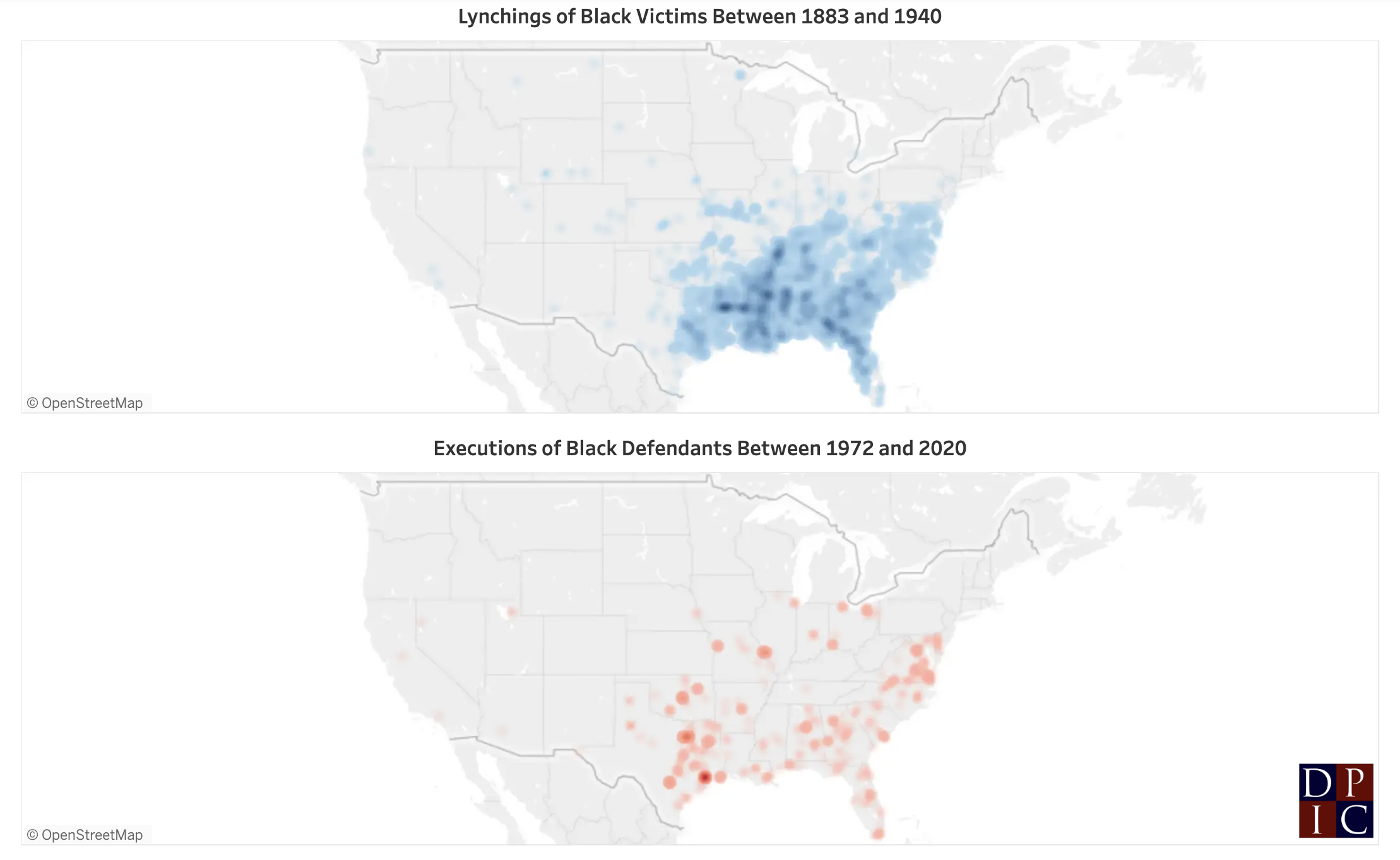
Screenshot of Death Penalty Information Center’s Lynchings v. Executions Interactive Visualization maps.
Who sits on a jury can determine whether a person tried for a crime lives or dies. Ms. Swarns noted that the United States has a long history of excluding Black people from jury service, even after laws and Supreme Court decisions formally established their right to serve. That exclusion continues today through the unlawful use of peremptory challenges, which let lawyers strike potential jurors without providing a reason. This is relevant to wrongful convictions because empirical evidence and social science research demonstrates that all-white and nearly all-white juries discuss fewer case facts, spend less time deliberating, involve more inaccurate statements, and are more likely to presume guilt than diverse juries.
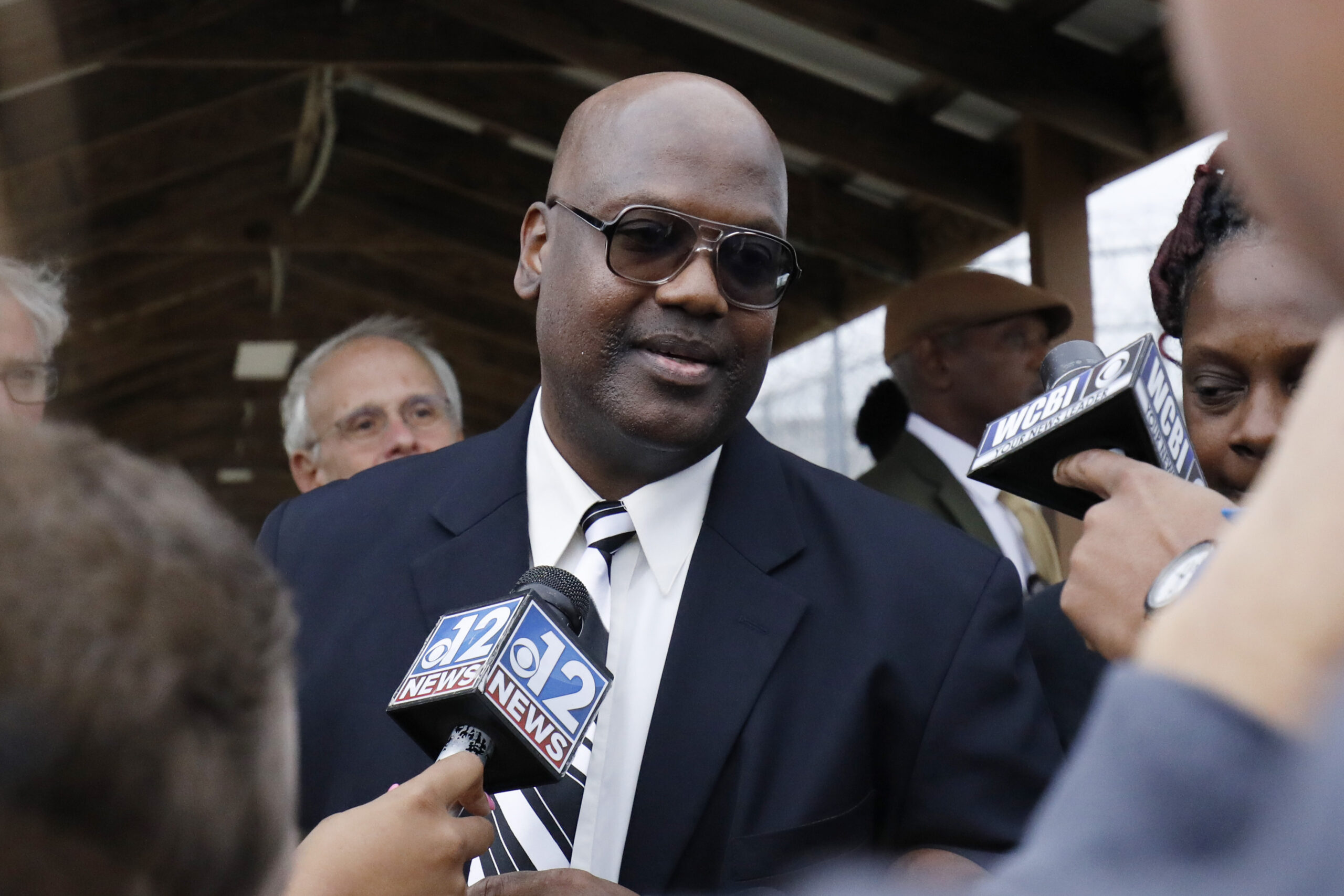
Ngozi Ndulue, associate professor of law and director of the Post-Conviction Criminal Defense Clinic at the University of the District of Columbia, explained how racial bias shapes perceptions of who is deserving of punishment, particularly in capital cases. First, the race of a victim heavily influences whether prosecutors and jurors seek or impose the death penalty. Second, death qualification — the removal of potential jurors who will not impose a death sentence — disproportionately excludes people of color who are statistically less supportive of the death penalty, resulting in significantly less diverse juries. Ms. Ndulue pointed to the case of Curtis Flowers, a Black man tried six times for the same crime in Mississippi. In the four trials where Mr. Flowers was convicted and sentenced to death, the prosecution struck nearly all Black prospective jurors. In the two trials with more than one Black juror, the jury could not reach a verdict and the court declared a mistrial.
Racial disparities persist long after a wrongful conviction. According to a 2021 Death Penalty Information Center study cited by Ms. Ndulue, Black people exonerated from death row spent an average of four years longer wrongfully imprisoned before being exonerated than their white counterparts. “One of the reasons that we could argue that might be true is that official misconduct is more likely in the cases of Black exonerees,” Ms. Ndulue said.
Storytelling helped convict Mr. Walker. Two eyewitnesses identified him only after newspapers had published his photo and labeled him the “confessed killer.”
In conversation with Innocence Project Director of Policy Walter Katz, Maurice Chammah, a staff writer at The Marshall Project, reflected on that coverage and the media’s role in wrongful convictions.
“A lot of becoming a journalist myself has been about understanding and reckoning with how our profession has contributed to the very ills that we now are often seeking to undo and rectify,” Mr. Chammah said.
That includes reconsidering commonly used terms that shape public opinion of those who come in contact with the criminal legal system.
“When I started at The Marshall Project 12 years ago, we had a very deliberate effort to think about what words we use for people,” Mr. Chammah said. “In a lot of written media, print media, and even radio and TV, there was this tendency to just unthinkingly use the word ‘inmate’ [for example].”
A conversation with the NYU Law Review of Law & Social Change explored how legal scholarship supports attorneys to challenge injustice beyond the courtroom. NYU Law Professor Alexis Karteron explained that scholarship helps litigators identify gaps in the law and develop new arguments, particularly in complex areas such as habeas corpus, the legal process through which people can challenge unlawful imprisonment.
“One thing I think legal scholarship can do that’s really helpful is point out areas in the law that are underdeveloped, areas in law that might have gone awry at some point,” Ms. Karteron said. Understanding what scholars are identifying — and “what people are missing, what judges are missing, what law clerks are missing” — can help attorneys bring new ideas into their litigation, she said.
The symposium’s final session brought the discussion of race and wrongful conviction back to the people who experienced it firsthand. Marvin Anderson, Kevin Richardson, and Huwe Burton described how racial bias influenced the investigations, accusations, and public narratives that contributed to their wrongful convictions.
Mr. Burton, who was 16 when he was accused of murdering his mother, said investigators focused on him after his homeroom teacher mistakenly reported that he had been absent from school. The teacher later corrected the error, but Mr. Burton said police never turned over that information. He believes his race affected how thoroughly investigators considered other possibilities.
“If I was a 16-year-old white child coming home to find his mother brutally murdered, I believe that there would have been a lot more of an investigation,” Mr. Burton said.
He also described how authorities used a story about an alleged drug debt to make the accusation against him more believable. Mr. Burton shared how exculpatory evidence — that he was in school at the time of the murder — remained hidden for 28 years.
Mr. Richardson, one of the Exonerated Five, described how racial stereotypes shaped the public portrayal of the five Black and Latino teenagers accused in the Central Park jogger case. He recalled how the young men were depicted in the media and how those images helped sustain the accusations against them.
“We basically judge off the color of our skin and not the content of our character,” Mr. Richardson said.
Mr. Anderson described a different way race influenced his case. The victim, a white woman, had described her attacker as a Black man who had a white girlfriend. Mr. Anderson said police knew he lived with a white girlfriend and that the arresting officer testified this was why he questioned him.
“It was the only reason why he questioned me because I was the only person he knew to live with a white girlfriend,” Mr. Anderson said.
This closing conversation perfectly and powerfully underscored a central message of the entire symposium: addressing wrongful convictions requires confronting, head-on, the racial biases that can undermine the pursuit of justice.
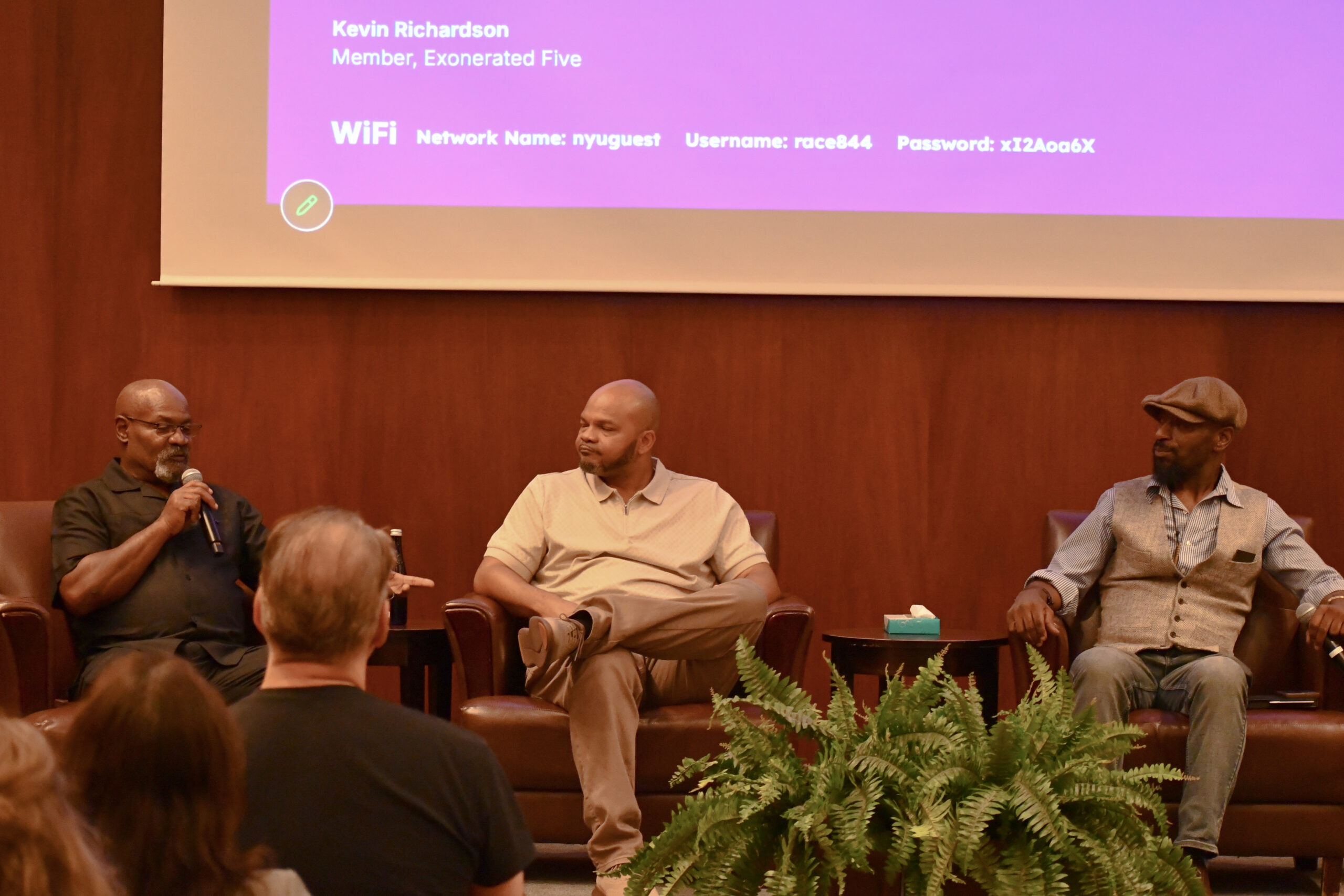
Marvin Anderson, Kevin Richardson and Hwue Burton share their stories at the Race and Wrongful Conviction symposium. (Image: ISAAC’S QUARTERLY LLC®)

Leave a Reply
Thank you for visiting us. You can learn more about how we consider cases here. Please avoid sharing any personal information in the comments below and join us in making this a hate-speech free and safe space for everyone.