It’s Time to ‘Stop Tinkering With the Machinery of Death’
Case after case has exposed the continued unreliability of our capital punishment system.
10.08.26 By Christina Swarns

From left to right: Melissa Lucio, Robert Roberson, Tommy Lee Walker, and Rodney Reed (Image: Jack Duran/Innocence Project)
Seven decades after Texas executed Tommy Lee Walker, a Dallas court delivered an overdue measure of justice.
In January, the Dallas County Commissioners Court declared Mr. Walker innocent after finding that he was the victim of a coerced confession and racial bias. With this decision, Mr. Walker joined the small community of people exonerated long after their deaths.
Their announcement coincides with the 50th anniversary of the reinstatement of the death penalty in the United States. In 1976, the United States Supreme Court declared that so-called “guided discretion” statutes — laws that restrict the factors upon which juries can rely in imposing a death sentence — would prevent the arbitrariness that led the court to declare the death penalty unconstitutional just four years earlier.
But in the decades that followed, case after case exposed the continued unreliability of our capital punishment system. Notwithstanding the Supreme Court’s 1976 prediction, we have learned through painful experience that innocent people are wrongfully convicted of murder, wrongfully sentenced to death and wrongfully executed. Our client, Marcellus Williams – who was put to death by the state of Missouri in 2024 despite powerful evidence of innocence – stands as a prime example. So do the exonerations of the 168 people who, according to the National Registry of Exonerations, were condemned to death since 1976.

Melissa Lucio at the Mountain View Unit in Gatesville, Texas. (Image: Ilana Panich-Linsman for the Innocence Project)
The Innocence Project therefore remains thoroughly committed to the fight for the freedom and exoneration of our condemned clients including Robert Roberson, Rodney Reed and, of course, Melissa Lucio. The Texas Court of Criminal Appeals recently rejected the recommended finding of actual innocence for Ms. Lucio even though powerful scientific evidence proved that the death underlying her capital murder conviction was a tragic accident – and not a crime – and the district attorney’s admission that his office had improperly withheld exculpatory evidence. Although this decision opens the door for the state to request a new execution date, we will not waver in our commitment to free and exonerate Ms. Lucio and reform the structural drivers of her wrongful conviction. Indeed, given our experiences in these — and many other — cases, we are committed to ending the death penalty overall and to preventing any related laws, policies, or practices that will heighten the already unreasonable risks facing innocent people in the criminal legal system.
That includes the Department of Justice’s current effort to allow states to fast-track death penalty appeals through federal courts even if those jurisdictions lack reliable systems for providing competent and adequately funded attorneys to people on death row. This measure would allow states to broadly define “competent” counsel and “adequate” attorney compensation without federal review or input from public and private stakeholders about how well — or how poorly — the state system is actually functioning. Indeed, states with abysmal records in both regards have sought such certification.
If the Department of Justice does fast-track federal appeals in this way, people on death row will be required to submit all claims of federal constitutional error to the federal courts within six months, instead of a full year, of the conclusion of their state appeals. This includes evidence of innocence based, for example, on government failure to disclose exculpatory evidence or the introduction of a coerced confession — claims that rely on evidence that is often hidden by law enforcement and is incredibly difficult and time-consuming to find. This rush ignores the significant time, expertise, thoroughness, and resources necessary to unravel a wrongful conviction, and it significantly increases the risk of executing an innocent person.
We know this firsthand.
Since 1992, the Innocence Project has freed or exonerated more than 250 people. On average, our clients spent 18 years wrongly convicted before their innocence was finally acknowledged by the criminal legal system. In order to achieve these successes, our attorneys, paralegals, and case analysts sift through mountains of documents (including transcripts, police reports, forensic examinations, legal pleadings and more), travel far and wide to locate physical evidence, extensively interview witnesses, pursue complex DNA testing and other expert analyses while simultaneously navigating dead ends, procedural roadblocks, and state actors hell bent on protecting even wrongful convictions. This is what it takes to prove innocence.
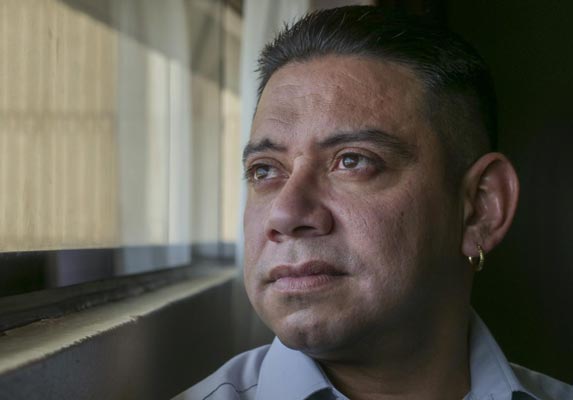
Clemente Aguirre-Jarquin (Image courtesy of the Innocence Project)
We did this for Clemente Aguirre-Jarquin, an innocent man who was sentenced to death for a 2004 double murder in Florida, a state which has long sought to speed up executions under this federal framework.
Mr. Aguirre-Jarquin’s wrongful conviction was based on unreliable forensic evidence, including fingerprint matching and bloodstain pattern analysis — and his trial attorney failed to test critical crime scene evidence. During his post-conviction appeals, his attorneys at the Capital Collateral Regional Counsel, contacted the Innocence Project for assistance with DNA testing for more than 84 pieces of evidence. That testing excluded Mr. Aguirre-Jarquin as the source of the DNA at the crime scene and instead matched the daughter of one of the victims — a woman with a long history of mental illness and violence who implicated herself in the murders during multiple statements to police. In 2016, 10 years after he was condemned to death, the Florida Supreme Court vacated Mr. Aguirre-Jarquin’s conviction and death sentence. Two years later, prosecutors moved to dismiss charges thereby formalizing his exoneration. Without the time – and outside resources – needed to conduct that critical DNA testing, Mr. Aguirre-Jarquin could have been executed for a crime he did not commit.
Florida is not the only state seeking to take advantage of this fast-track rule. Six additional states — Alabama, Mississippi, Ohio, Tennessee, Texas, and Oklahoma — have also sought to expedite the death penalty process. These states are responsible for a significant portion of the nation’s death row and almost half of all death row exonerations nationwide. And not one of them has the legal or investigative structures in place to justify such certification or to protect the lives of innocent people wrongly condemned to death. Nonetheless, the Department of Justice is committed to moving forward this year as it granted Tennessee certification in July. This effort flies in the face of what we know: the death penalty is arbitrary, unreliable, and inaccurate. Rushing the process will only increase the risk of executing an innocent person.
This is not breaking news. Eighteen years after voting to reinstate the death penalty, Justice Harry Blackmun concluded that continuing to uphold death sentences required adoption of a “delusion that the desired level of fairness had been achieved” in the capital punishment system. He therefore famously declared, “From this day forward, I no longer shall tinker with the machinery of death.” The subsequent 32 years have only reinforced the validity of that conclusion.
It took an execution and 70 years to win justice for Tommy Lee Walker. With your ongoing support and partnership, the Innocence Project will do everything in its power to ensure that no other innocent person suffers the same fate.
Related News
It’s Time to ‘Stop Tinkering With the Machinery of Death’
Statement From the Family of Melissa Lucio on the Texas Court of Criminal Appeals’ Ruling

Melissa Lucio Attorney Statement: Despite Agreement of All Parties, Sharply Divided Texas Court of Criminal Appeals Rejects Trial Court’s Finding of Constitutional Error

Leave a Reply
Thank you for visiting us. You can learn more about how we consider cases here. Please avoid sharing any personal information in the comments below and join us in making this a hate-speech free and safe space for everyone.