This Police Method Is Used to Infer Guilt From 911 Calls, But It’s Not Backed by Science
Research shows that how you sound on a 911 call can determine whether police treat you as a victim or a perpetrator.
06.15.26 By Alyxaundria Sanford
Audio Waveform Visual on Computer Screen (Image: Envato)
Police departments across the country are paying up to $3,500 — funds that often come out of taxpayer money — to learn how to tell a guilty 911 caller from an innocent one. These programs promise that with just eight hours of the “right” instruction, a dispatcher, detective, or prosecutor could learn to ascertain guilt from listening to a 911 call.
ProPublica investigative journalist Brett Murphy — and guest speaker in the Innocence Project’s latest Just Data conversation: “What’s Your Emergency? When Calling For Help Makes You a Suspect” — spent months documenting the adoption of these programs, which have never been backed by science.
Detailing his investigation at the live virtual conversation hosted by the Innocence Project’s Data Science & Research team on May 11, Mr. Murphy was joined by Dr. Jessica Salerno, an Associate Professor of Psychology and Associate Member of the law faculty at Cornell University, who presented her research on how police form suspicion based on the sound of someone’s voice. Their findings followed Huwe Burton’s personal account of being wrongfully convicted after calling for help.
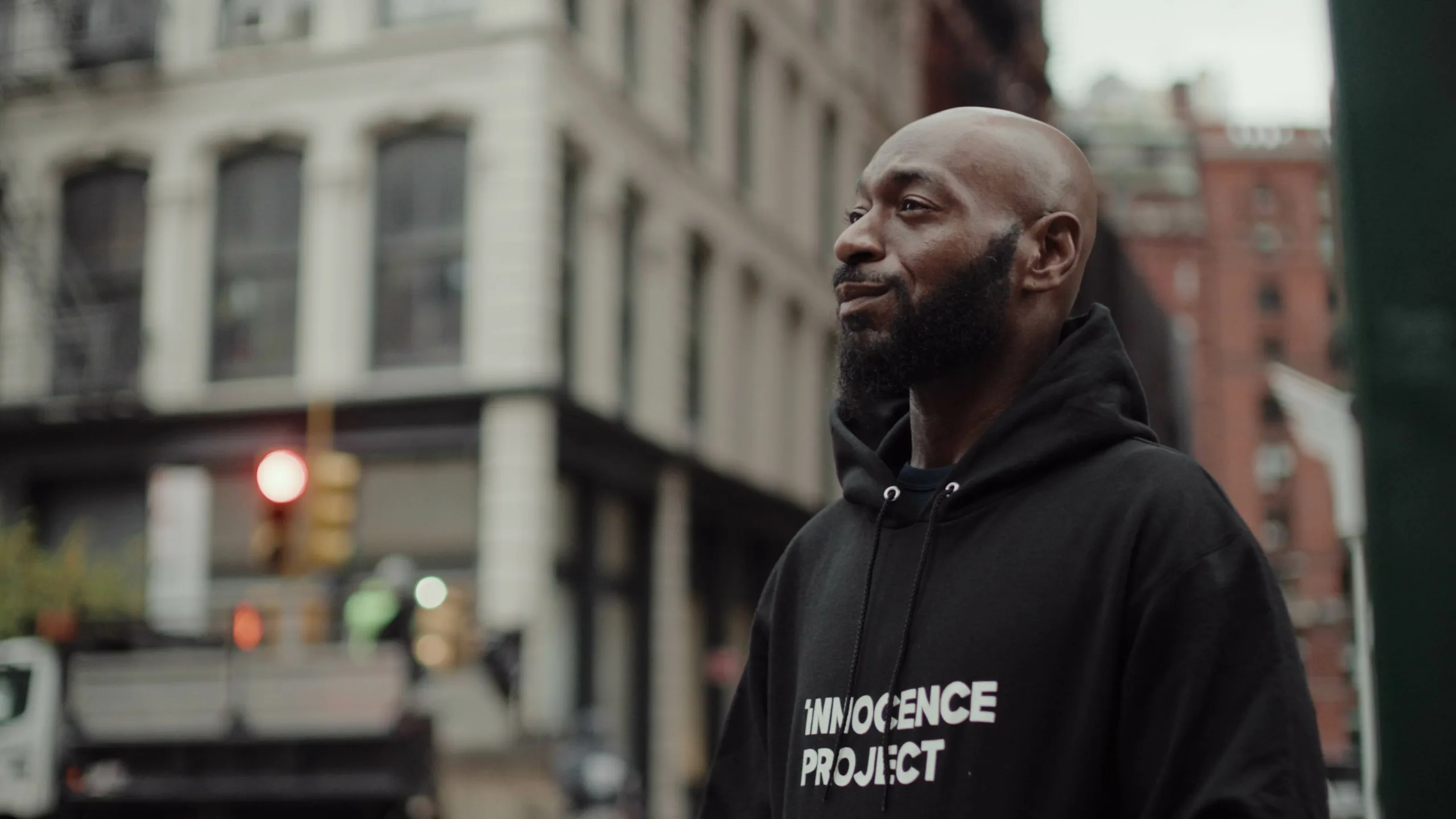
Mr. Burton was just 16 years old when he came home to find his mother, Keziah Burton, murdered in their Bronx apartment. He immediately called 911 and waited for officers to arrive and help. Just days later, he was charged with her murder.
At his trial, one of the officers who first interviewed the teenager said he did not seem emotional enough during questioning. The officer’s subjective observation and interpretation of grief set Mr. Burton’s wrongful conviction case in motion. He was exonerated in 2019 — three decades after his arrest and after serving more than 20 years in prison — with the help of the Innocence Project, Northwestern University, and Rutgers University.
Mr. Murphy’s investigation found that these “analysis” methods are built on a foundation that repeatedly failed scientific validation tests. Yet they have continued to gain acceptance in courts and police departments across the country.
The original study around which these 911 analysis methods were developed examined just 100 calls and was solely intended to be exploratory research. One of its co-authors even told Mr. Murphy its findings were not ready for real-world application. Since then, other researchers have published at least eight scientific studies attempting to replicate or test the method, repeatedly finding that its supposed indicators of guilt do not hold up under scrutiny. Those findings have directly challenged the reliability and validity of 911 call analysis. Yet 911 call analysis continued to be taught to law enforcement, cited in court proceedings, and credited by its creator with having helped solve more than 1,500 homicides.
Some prosecutors have acknowledged 911 call analysis “will not hold up to scientific scrutiny,” Mr. Murphy said. “So they get creative.”
Rather than introducing the method as expert testimony — where it could be challenged under scientific evidentiary standards — prosecutors often present it indirectly through testimony from detectives or dispatchers who have received the training. Jurors then hear testimony about “guilty” behavior inferred from word choice or tone of voice on 911 calls without learning that those observations were formed using a disputed methodology.
WATCH: Just Data | What’s Your Emergency? When Calling For Help Makes You a Suspect
Rather than guilt or deception, what jurors and investigators are often picking up on is the absence of an expected display of emotion, Dr. Salerno’s research suggests.
In one series of studies, Dr. Salerno and her colleagues asked participants to listen to identical 911 call scripts delivered with varying levels of emotion. Both civilians and police officers became significantly more suspicious when callers expressed low emotion. For police officers, even moderate emotion was not enough to reduce suspicion of a caller’s guilt or deception. Callers had to sound highly emotional before officers’ perceptions changed.
In follow-up studies using real 911 calls with known outcomes, the same pattern of associating low emotion displays with guilt emerged regardless of whether the caller was later convicted or later exonerated.
But this kind of subjective behavioral analysis extends beyond emergency calls.
Robert Roberson, was viewed with suspicion after bringing his critically ill daughter to the hospital. After his daughter died, medical personnel and investigators interpreted his flat affect as evidence of guilt. Mr. Roberson has always maintained his innocence and has spent more than two decades on Texas’ death row, narrowly avoiding execution on three occasions. Years after being convicted, Mr. Roberson was officially diagnosed with autism spectrum disorder, helping explain behaviors that authorities had previously characterized as cold or indifferent.
For Dr. Salerno, the lesson is clear: trauma, culture, personality, neurodivergence, and shock all influence how people respond during crises. Yet the criminal legal system continues to rely heavily on subjective assumptions about what grief, fear, and innocence should look like. And she worries about the impact of those unreliable assumptions.
“If the public learns that cops are using their behavior in the worst moments of their life against them, people are going to stop calling 911 to help others,” said Dr. Salerno during the Just Data event.
For Dr. Salerno, the first step to remedying this is straightforward: 911 call analysis training must stop. She added that accreditation organizations should evaluate such programs based on scientific evidence of their accuracy rather than simply whether they fall under the umbrella of policing. Additionally, law enforcement agencies should receive training grounded in trauma science and psychological research to prevent the interpretation of trauma responses as signs of guilt. And defense attorneys should learn to identify and challenge attempts to introduce 911 call analysis through lay testimony.
Most importantly, Dr. Salerno suggests that investigators must abandon the assumption that innocence has a predictable emotional script. When police decide a person is guilty based on how they sound during one of the most desperate and traumatic moments of their lives, confirmation bias does not stay confined to that single interaction. It also shapes the interrogations that follow, influences forensic interpretation, narrows investigative focus, and can determine which leads are pursued and which are ignored.
Mistaken suspicion is rarely corrected by the investigation that follows. More often, it shapes the investigation itself. And the wrong that results can take decades to right.
Researchers interested in contributing to open questions on this topic can visit the Innocence Project’s Call to Action document. Contact the data science and research team at [email protected] with your research, ideas, or questions.
Related News
Attorney Statement: Louisiana Supreme Court Affirms Lower Court’s Ruling Vacating Conviction of Jimmie “Chris” Duncan

This Police Method Is Used to Infer Guilt From 911 Calls, But It’s Not Backed by Science
Lost in Translation: How Language Barriers and Dialect Bias Are Sending Innocent People to Prison

Leave a Reply
Thank you for visiting us. You can learn more about how we consider cases here. Please avoid sharing any personal information in the comments below and join us in making this a hate-speech free and safe space for everyone.