8 Facts About James Genrich’s Case You Need to Know
Mr. Genrich’s murder charges were dismissed in April after 34 years, but he remains incarcerated.
News 05.13.26 By Innocence Staff
Mr. Genrich’s murder charges were dismissed in April after 34 years, but he remains incarcerated.
News 05.13.26 By Innocence Staff
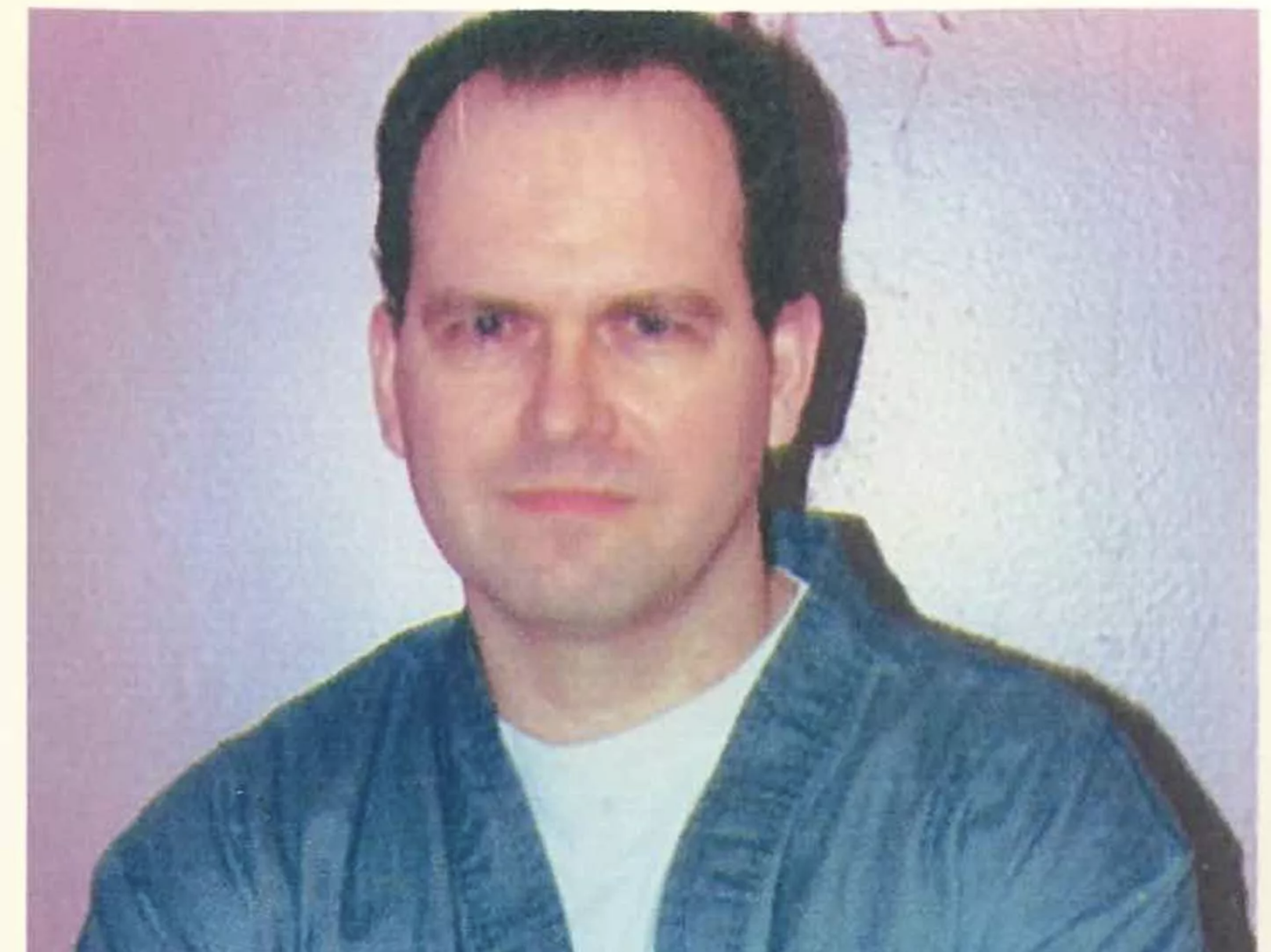
Jimmy Genrich, represented by the Innocence Project.
James Genrich spent 34 years in prison wrongfully convicted of multiple homicides that occurred in Grand Junction, Colorado, as a result of a series of pipe bombings. Decades later, he was granted a retrial because those convictions had been based on since-discredited junk science. In April 2026, the murder charges against him were dismissed entirely after the District Attorney’s Office and the Grand Junction Police Department concluded that a retrial is “no longer legally or practically viable.” However, Mr. Genrich remains incarcerated on related explosive charges.
The remaining convictions were secured using the same discredited evidence used to secure the murder convictions against Mr. Genrich. But he remains incarcerated on these lesser charges due to a technicality in calculating court-filing deadlines.
Mr. Genrich has always maintained his innocence. On top of the original evidence supporting Mr. Genrich’s innocence and the discrediting of the evidence used to convict him, compelling new evidence of Mr. Genrich’s innocence was uncovered during the prosecution’s aggressive reinvestigation of this case. In light of all this, the State of Colorado should dismiss the remaining charges against Mr. Genrich and free him.
Here are key facts you should know about his case:
- Mr. Genrich has always maintained his innocence. He had no prior criminal record, no connection to any of the victims, and no clear motive.
- The State’s seriously flawed investigation ignored not only Mr. Genrich’s alibi evidence but also other viable suspects, including those in the area known to be involved with explosives. The State’s case against Mr. Genrich alleged that he planted four “signature” bombs that must have been built by the same individual between 1989 and 1991. Yet they ignored viable suspects known to be involved with explosives, and instead narrowly focused on Mr. Genrich based on junk science that purported to connect Mr. Genrich’s tools to the bombs’ construction.
- Mr. Genrich presented an alibi at trial. At the time that one of the “signature” pipe bombs was planted and then discovered, Mr. Genrich proved through employment records that he was living in Phoenix, far away from Grand Junction.
- The pillar of the State’s case against Mr. Genrich was toolmark “matching” — a now discredited forensic practice that is scientifically unreliable. At his 1993 trial, the State presented supposed “scientific” testimony from a toolmark examiner, who opined that Mr. Genrich’s tools could be matched to miniscule marks on the bombs to the exclusion of every other tool ever manufactured. The marks used to supposedly connect Mr. Genrich to the crime scene measured only 1/100th of an inch. This was the only direct evidence against him.
Since then, the scientific community has categorically repudiated this type of toolmark testimony. Leading scientific institutions, including the National Academy of Sciences and the President’s Council of Advisors on Science and Technology, have since rejected such claims of toolmark-matching as unsupported by science. - On April 13, 2026, Mr. Genrich’s murder charges were dismissed. Due to the use of this faulty toolmark analysis in this case, Mr. Genrich was granted a new trial in 2023. The Colorado Court of Appeals unanimously affirmed the trial court’s decision to overturn the convictions in 2025. After the Colorado Supreme Court declined to hear the State’s appeal, the case went back to the Mesa County trial court. The District Attorney’s Office then concluded that a retrial was “no longer legally or practically viable” and sought dismissal because they could not prove their case beyond a reasonable doubt.
- New evidence of Mr. Genrich’s innocence was discovered during the State’s reinvestigation of this case, including:
– A previously undiscovered fingerprint recovered from one of the bombs that does not match Mr. Genrich. – An independent opinion of the State’s toolmark expert who was sent crime scene evidence and found no connection between any of Mr. Genrich’s tools and the pipe bombs. In fact, the toolmarks showed largely dissimilar microscopic details to Mr. Genrich’s tools. – The State interviewed Mr. Genrich’s past and present cellmates in search of jailhouse informants who could support the prosecution’s version of events and found none. Instead, Mr. Genrich has continued to maintain his innocence over decades of his wrongful conviction. - The State has gone to extreme lengths in its failed effort to generate evidence against Mr. Genrich. Both at trial and again during the reinvestigation, the State unsuccessfully attempted to enlist Mr. Genrich’s own family members — including his brother and mother — to obtain incriminating statements implicating him. Law enforcement even duped Mr. Genrich’s parents into secretly wearing a wire, by telling them law enforcement knew he did it and he could only avoid the death penalty if he confessed, and even then, he maintained his innocence.
- Mr. Genrich is still wrongfully imprisoned. He is currently serving a 72-year sentence for the explosives charges related to the murder charges of which he has been cleared. Despite the dismissal of his murder charges for the same crimes, the Mesa County District Court ruled that Mr. Genrich could not challenge the explosive convictions because of a filing deadline his prior legal counsel missed. That ruling is currently being appealed in the Colorado Court of Appeals.
Mr. Genrich is represented by M. Chris Fabricant and Marika Meis of the Innocence Project; Brian Liegel, Greg Silbert, Irwin Warren, Marina Masterson, Anastasia Zaluckyj, and Jill Jacobson of Weil Gotshal & Manges LLP; Kathleen Lord of the Korey Wise Innocence Project; and Colorado attorneys Rebekka Higgs and Scott Troxell.
Leave a Reply
Thank you for visiting us. You can learn more about how we consider cases here. Please avoid sharing any personal information in the comments below and join us in making this a hate-speech free and safe space for everyone.