My First Death Penalty Case Is Now a Broadway Play. Decades Later, This Story Still Matters.
Nick Yarris' case is one in which the truth sounds stranger than fiction, but so many wrongful conviction cases are.
Op-Ed 05.06.26 By Christina Swarns

Adrien Brody and Tessa Thompson in “The Fear of 13.” (Photo Credit: Emilio Madrid)
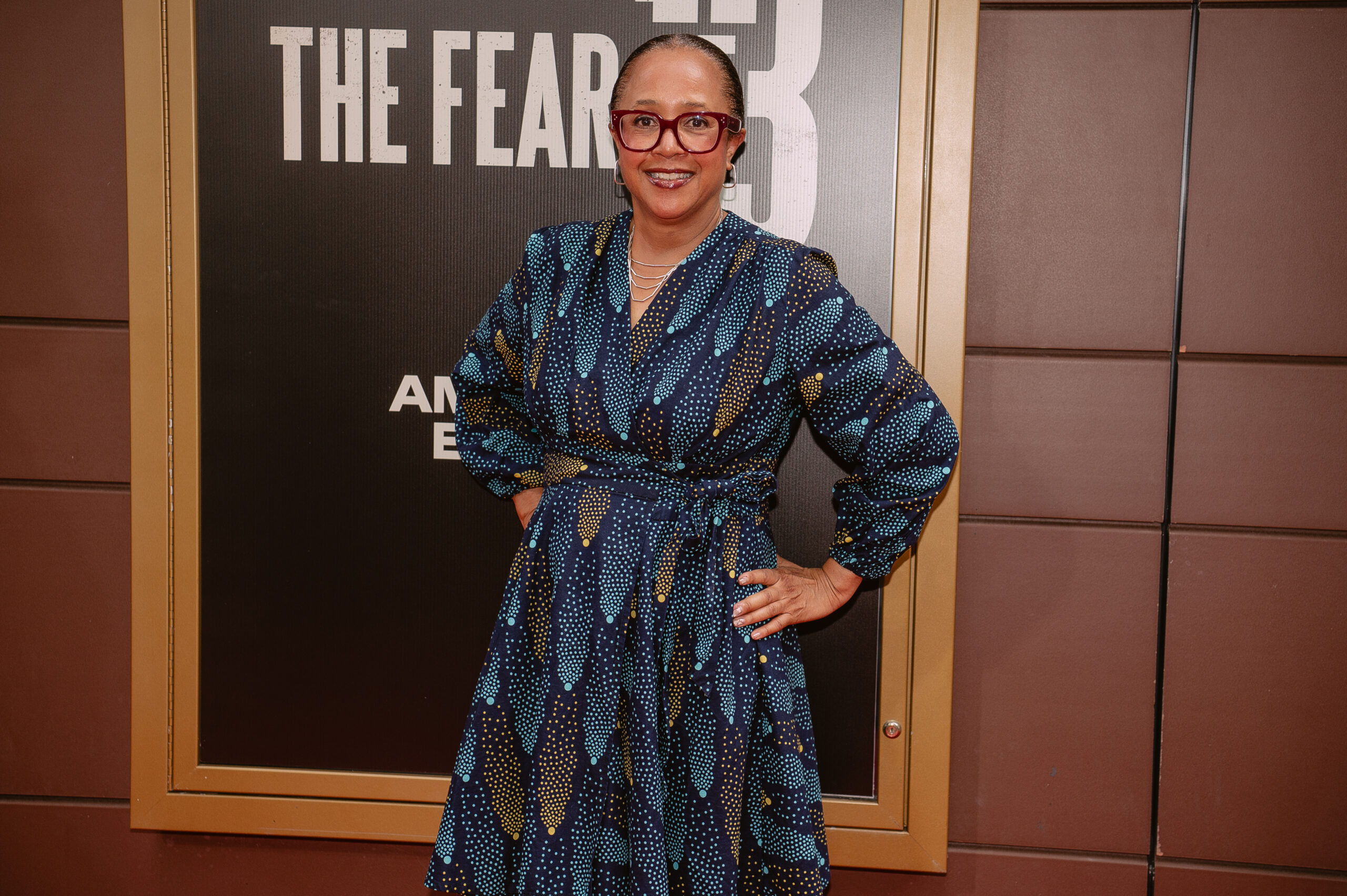
Christina Swarns on the opening night of “The Fear of 13” on Broadway. (Photo: Michaelah Reynolds)
My first death penalty case came just a few years after I graduated from law school. I had just started working at the Capital Habeas Unit of the Philadelphia Federal Defender and I was assigned to the legal team representing Nick Yarris, who is the subject of the new Broadway play “The Fear of 13.”
Mr. Yarris had been convicted of a rape and murder that took place just outside of Philadelphia and he was sentenced to death at the age of 21. By the time I joined Mr. Yarris’ legal team, he was over a decade into his sentence. During that time, he had escaped prison, absconded to Florida, turned himself in, returned to prison, and made repeated attempts to prove his innocence — without success.
Along the way, Mr. Yarris read an article about DNA technology and its power to prove that innocent people had been wrongfully convicted. And from that day forward, Mr. Yarris was unrelenting in his pursuit of DNA testing. But he faced one obstacle after another. First, DNA evidence in his case went missing. Then, after it was recovered, there was a spill in the package containing the DNA samples while it was en route to the laboratory. The samples were contaminated and the evidence was rendered useless.
So by the time that I got involved in his case, DNA testing seemed like a long shot. But we continued to pursue it because Mr. Yarris was insistent that it would one day prove his innocence.
At that time, DNA testing was new to the criminal legal system. So we reached out to the Innocence Project — which pioneered the use of DNA to exonerate innocent people — for advice. At their urging, we went back and examined all of the physical evidence in the case again. Luckily, we identified other items that contained biological evidence from which DNA could be extracted. But the first round of testing yielded inconclusive results. The sample was too degraded. Per protocol, we used only 50% of the sample in the testing, to allow for additional opportunities if or when the science evolved. But at Mr. Yarris’ insistence, in 2003, we took the unconventional step of requesting that the rest of the sample be tested, along with some other items of evidence we were able to recover.
I’ll never forget the moment I received the results. I was on a gangway, about to board a flight, when I got a phone call from an unknown number — I knew I had to answer. The DNA tests conclusively proved Mr. Yarris’ innocence. He became the first person sentenced to death in Pennsylvania to be exonerated by DNA evidence.
Mr. Yarris’ case is one in which the truth sounds stranger than fiction, but so many wrongful conviction cases are. Hurdles in accessing DNA testing arise more often than they should — albeit usually not all in one case.
In too many of the Innocence Project’s cases, potentially exonerating DNA evidence has gone missing, become degraded because of improper storage, or was never preserved at all.
Furthermore, prosecutors and/or judges too often deny people with credible claims of innocence access to evidence or testing. Just take Anthony Wright’s case where the district attorney fought the Innocence Project’s efforts to conduct DNA testing for more than five years and the question of access to testing had to go to the Pennsylvania Supreme Court. When testing was finally completed, it excluded Mr. Wright and identified the person who actually committed the crime. By then, Mr. Wright had lost 25 years of freedom.
Additionally, some states have restrictive statutes that require post-conviction DNA testing to be done within a few short years of the conviction. These laws are particularly problematic because they fail to account for the fact that science is continuously evolving. New technologies are constantly being developed to better analyze small amounts of damaged DNA, which is especially common in older cases. Thus, arbitrary time limits on post-conviction DNA testing surely obstruct justice for innocent people.
It was truly a full circle moment when — some 17 years after Mr. Yarris’ exoneration — I joined the Innocence Project. It is surreal to see his decades-long fight for innocence — a story I was a part of — replayed on a Broadway stage. And it is uniquely meaningful to see hundreds of audience members at the James Earl Jones Theater get a peek behind the curtain of wrongful conviction work.
The play leaves audiences with an understanding of how long it can take to overturn a wrongful conviction. The actors brilliantly captured the heartache and perseverance it takes to endure decades of incarceration, the threat of execution and separation from loved ones. In their portrayal, I saw the determination and resilience of so many of our clients’ and their loved ones.
But when I walked out of that theater, I found myself reflecting again on what it might look like if we invested in a system that provides people who are charged or convicted of crimes with the legal, investigative, and expert resources they actually need. How many wrongful convictions would be prevented from happening in the first place? How quickly could we identify and correct errors and injustices in the system? How many years of stolen freedom could be avoided?
These questions fuel the Innocence Project’s work to transform systems and advance the innocence movement. It’s why we champion legislation that sets higher standards for evidence preservation, expands access to post-conviction DNA testing, and is responsive to advances in science and technology. It’s why we hope that one day stories like this will live in the world of fiction — not fact.
Leave a Reply
Thank you for visiting us. You can learn more about how we consider cases here. Please avoid sharing any personal information in the comments below and join us in making this a hate-speech free and safe space for everyone.