Carmen Mejia Walks Free After 22 Years for a Crime That Never Happened
Her murder conviction was overturned based on new evidence that the child’s death was a tragic accident. “I never lost faith and hope — I never lost it in 22 years,” said Ms. Mejia.
Breaking 03.09.26 By Innocence Staff
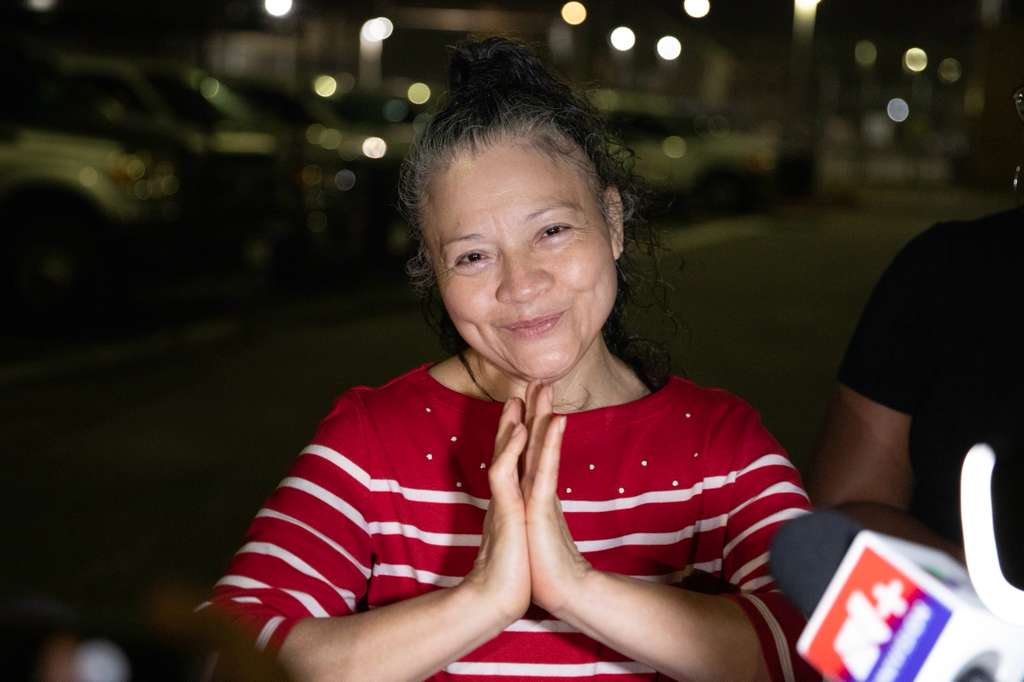
Carmen Mejia walks free after 22 years for a crime that never occurred (Image: Montinique Monroe for the Innocence Project)
UPDATE: Carmen Mejia was freed from the Travis County Correctional Complex on March 11, 2026 at 12:03 a.m. CT. While she was exonerated on March 9, she was not immediately released due to an immigration hold stemming from her wrongful conviction. On March 10, the U.S. Immigration and Customs Enforcement announced that in light of her exoneration they would lift the detainer to allow her to be released from local custody.
View this post on Instagram
Austin, TX – March 9, 2026 Carmen Mejia was exonerated today after Travis County District Court Judge P. David Wahlberg dismissed a 2003 murder charge against her, following a ruling from the Texas Court of Criminal Appeals (CCA) — the state’s highest criminal court — overturning her convictions and finding that new evidence established that Ms. Mejia is “actually innocent.”
The CCA’s decision, on Jan. 22, 2026, found Ms. Mejia actually innocent of the death of a 10-month-old infant in her care who was critically burned from scalding bathwater due to a water heater in her rental home that lacked safety technology. Ms. Mejia has spent the last 22 years in prison for what the State claimed to be murder but now agrees was, in fact, a tragic accident.
“While we are overjoyed that the courts finally recognize that Ms. Mejia is innocent, this grave injustice should have never happened in the first place,” said Vanessa Potkin, Ms. Mejia’s Innocence Project attorney. “Ms. Mejia is a woman of immeasurable strength, who has relied on her deep faith to withstand a traumatic period of her life that most people wouldn’t be able to survive. Her case is far from isolated. There is a clear pattern in our criminal legal system of wrongly accusing caregivers when a child in their care dies from an accident or illness, particularly when those caregivers are women of color. We have seen too many cases like Ms. Mejia’s where false and outdated medical testimony lead to wrongful convictions, and there are undoubtedly thousands more people still wrongly imprisoned because of such testimony.”
“Ms. Mejia, today we acknowledge that our office failed you,” said Sarah Byrom, Assistant District Attorney, Travis County District Attorney’s Office. “The State pursued and obtained a conviction against you for what we now understand was a tragic accident and that failure cost you over 20 years of your life. Nothing that I say, and nothing that we do in this courtroom today can restore the time that was taken from you or undo the pain and separation that you and your children have had to endure.”
A Tragic Accident and Lost Evidence
On July 28, 2003, Ms. Mejia was at home with her four children and babysitting a 10-month-old when the fatal accident occurred. While Ms. Mejia was nursing her youngest child, her eldest daughter tried to bathe the baby. The water heater in Ms. Mejia’s rental home lacked the now-standard safety features, allowing the tub water to quickly reach 147.8 degrees Fahrenheit. Within seconds of being exposed to this high water temperature, the baby suffered third-degree burns. He died in the hospital later that day as a result of complications from the burn injuries.
Instead of recognizing this as the terrible accident it was, police arrested Ms. Mejia for murder.
A combination of factors — in particular, invalid medical testimony and lost evidence supporting Ms. Mejia’s account of the accident — contributed to her wrongful conviction. No medical burn expert was called to testify at trial. Instead, the prosecution’s experts — a medical doctor and retired law enforcement investigator — incorrectly asserted that the baby’s injuries could only have been caused by an adult intentionally holding the child down in scalding water.
As part of their investigation, forensic interviews were conducted with Ms. Mejia’s children after the incident. The children’s statements, which were video recorded, supported Ms. Mejia’s account that this was an accident. However, the recordings disappeared from law enforcement’s custody before the trial, as a result, the jury never heard these corroborating accounts.
At trial, the State presented no evidence of prior mistreatment or violence. Ms. Mejia had no criminal history.
Ms. Mejia steadfastly maintained her innocence, including during her testimony at trial. Nonetheless, the jury returned a guilty verdict, convicting her of murder and injury to a child. She was sentenced to life in prison, lost her parental rights, and did not see her four children again for over two decades.
“In this case from the start, the worst was assumed: That this was an intentional act,” said Collin Bellair, Assistant District Attorney, Travis County District Attorney’s Office, at today’s hearing. “We could not have been more wrong, and it turned a tragic accident into a wrongful conviction.”
A Conviction Collapses Under Faulty Science
One significant person who believed in Ms. Mejia’s innocence during her trial was Art Guerrero, the courtroom bailiff. Ms. Mejia’s testimony and her vehement declarations of innocence stayed with Mr. Guerrero years after her conviction, so much so that he contacted the Innocence Project, the District Attorney’s Office, and another judge, urging a reexamination of Ms. Mejia’s case.
“From the time that you were taken from this place to prison, you were not forgotten … you were not forgotten. There was somebody thinking about you the whole time and just trying to figure out what to do and how to do it,” Mr. Guerrero said, addressing Ms. Mejia at her exoneration hearing.
After the Innocence Project took up Ms. Mejia’s case in 2021, the Conviction Integrity Unit of the Travis County District Attorney’s Office also agreed to investigate her innocence claim. During the reinvestigation, they located Ms. Mejia’s children, who had been adopted in a closed adoption and had spent the past two decades wondering what happened to their birth mother, even hiring a private investigator to no success.
In 2024, the Innocence Project filed a writ of habeas corpus in Travis County District Court, challenging Ms. Mejia’s wrongful conviction. Over the course of a year, Judge Wahlberg conducted hearings at which multiple experts presented evidence that — contrary to what the State’ presented at trial — the child’s injuries were consistent with an accidental scalding.
Wendy Shields, senior researcher at the Johns Hopkins Center for Injury Research and Policy — whose decades of research have focused on preventing injuries in the home with particular expertise in scald burns — testified in 2024 that the water heater in Ms. Mejia’s rental home lacked recommended plumbing safety features designed to prevent scald injuries. She explained that this situation is common in homes built prior to the 1980s, like Ms. Mejia’s, before building safety codes were revised to require tap-level protections against scalding.
“Burn injuries remain a leading cause of accidental injury and death among children. My research estimates that approximately 6,500 children experience tap-water scald burns each year in the United States. Between 2013 and 2022, there were approximately 1,600 tap-water scald injuries involving children under age 18 in incidents where another child was involved,” Dr. Shield said today.
“The technology to prevent these injuries already exists. Devices such as thermostatic mixing valves and other temperature-limiting plumbing protections can dramatically reduce the risk of tap-water scald burns. However, these protections are not consistently required in older housing, leaving many families without basic safeguards. This is particularly concerning for renters, who often do not control the maintenance or temperature settings of the water heater in their homes,” Dr. Shield added.
In 2024, Dr. James Gallagher, a burn surgeon and former director of the William Randolph Hearst Burn Center — one of the nation’s leading trauma burn centers — testified that the tub’s incredibly hot water could have caused accidental burn injuries “in a matter of seconds.” He found that “there is no medical evidence to support that this child’s injuries had to be the result of an intentional act by an adult,” directly refuting the 2003 trial testimony of the State’s experts.
One of Ms. Mejia’s daughters, now an adult who missed out on growing up with her mother, also testified about her recollections of the accident, including turning on the water.
At Ms. Mejia’s 2003 trial, the State’s medical examiner testified that the death was a homicide based on the available evidence at the time. Dr. Elizabeth Peacock, who performed the autopsy, reversed the manner of death determination from homicide to accidental in 2025 and testified that she would have “ruled this an accident,” if she’d had all of the information now available. When asked during post-conviction proceedings why she decided to take this step, Dr. Peacock responded with great clarity, because “it’s the right thing to do.”
As a result of the new evidence presented in these hearings, the State’s key experts recanted their testimony supporting the prosecution’s theory that an adult had to have intentionally caused the burns. Judge Wahlberg found that no crime took place and subsequently, the CCA ruled that Ms. Mejia had established her innocence and overturned her conviction.
In dismissing the case based on her “actual innocence,” Judge Wahlberg told Ms. Mejia, “There’s nothing that I can say at this point that will bring back those 23 years. Signing this piece of paper won’t bring it back. There is no amount of money that will ever compensate you for losing the best years of your life. I wish I had that power. What I can do is say to you that there is a reason to hope and believe that your future will be better every day from now on, and I pray that it is so.”
Carmen Mejia is free after 22 years.
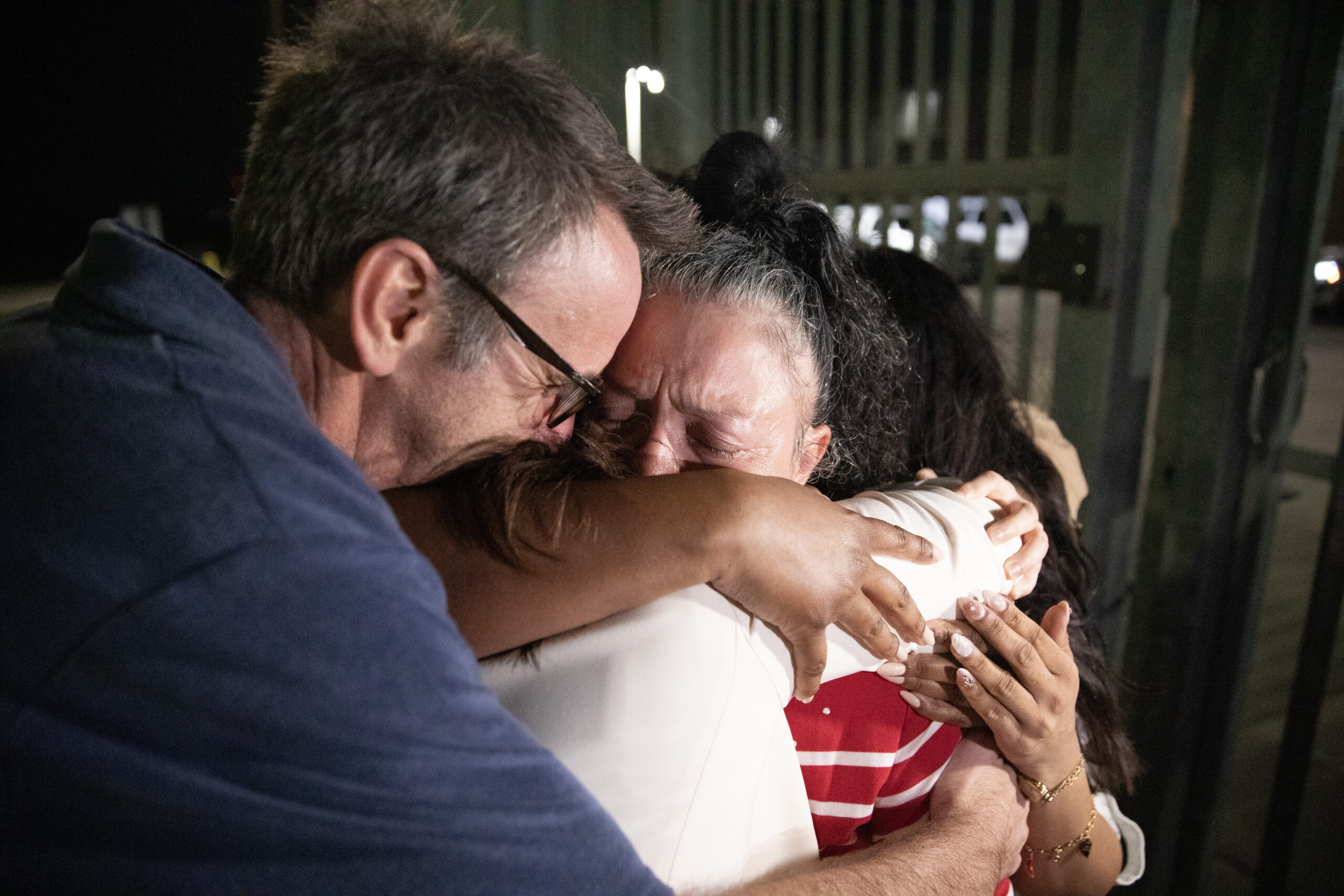
Ms. Mejia embraces her Innocence Project team. (Credit: Montinique Monroe for the Innocence Project.)
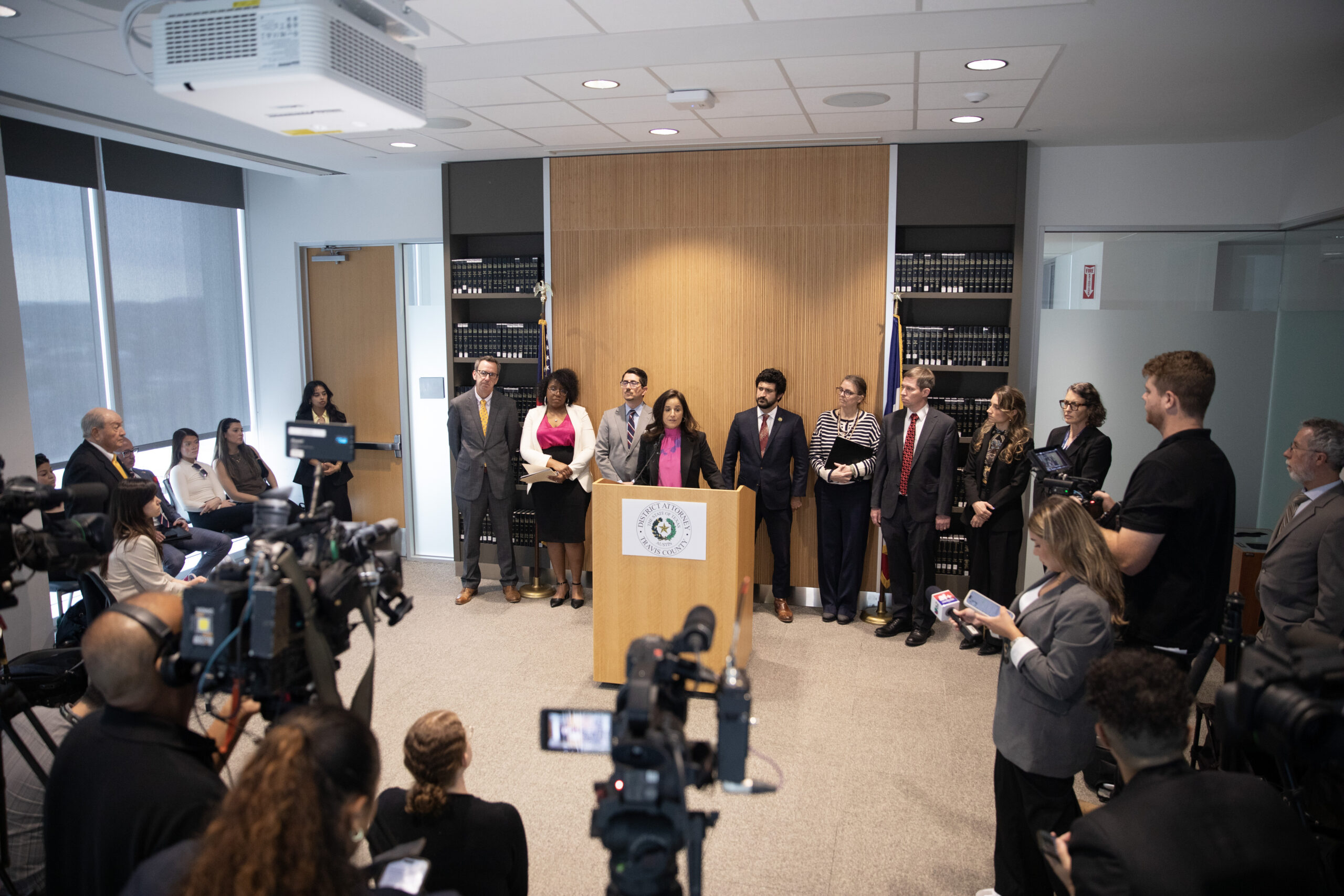
Carmen Mejia exonerated after Travis County District Court Judge P. David Wahlberg dismissed a 2003 murder charge against her, following a ruling from the Texas Court of Criminal Appeals (CCA) — the state’s highest criminal court — overturning her convictions and finding that new evidence established that Ms. Mejia is “actually innocent.” (Credit: Montinique Monroe for the Innocence Project.)
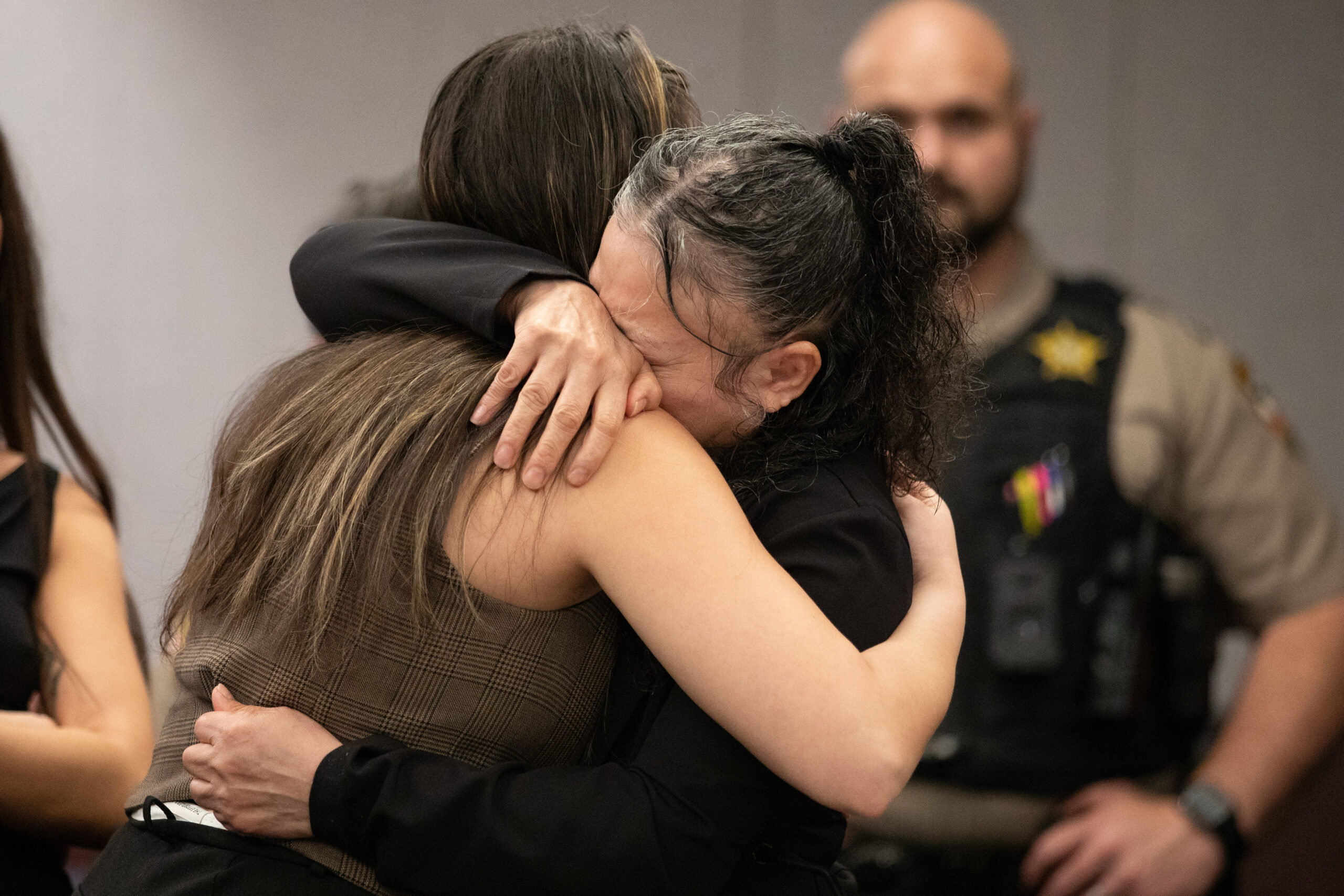
Carmen Mejia embraces her daughter after being exonerated. (Credit: Montinique Monroe for the Innocence Project)
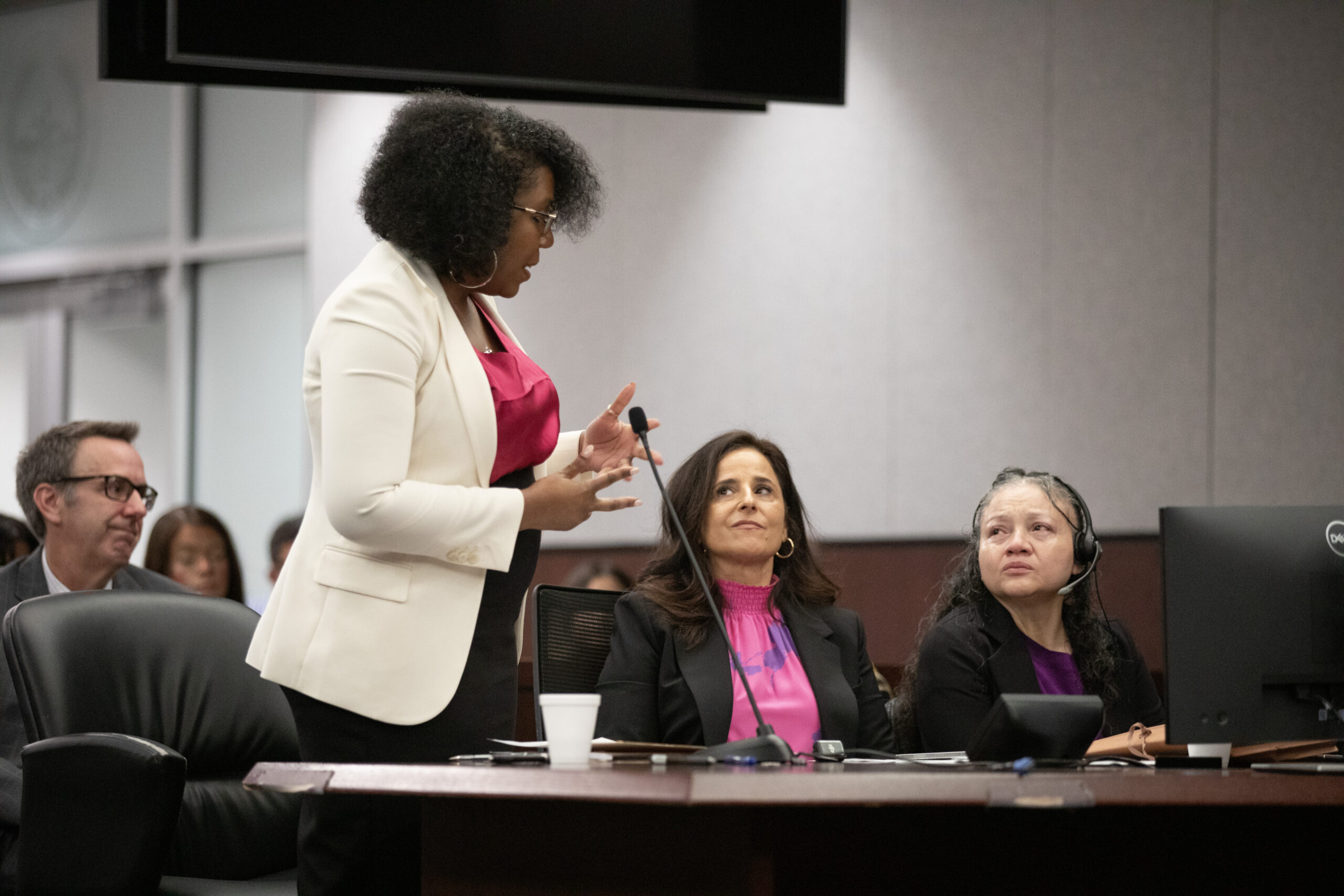
Carmen Mejia exonerated after Travis County District Court Judge P. David Wahlberg dismissed a 2003 murder charge against her, following a ruling from the Texas Court of Criminal Appeals (CCA) — the state’s highest criminal court — overturning her convictions and finding that new evidence established that Ms. Mejia is “actually innocent.” (Credit: Montinique Monroe for the Innocence Project.)
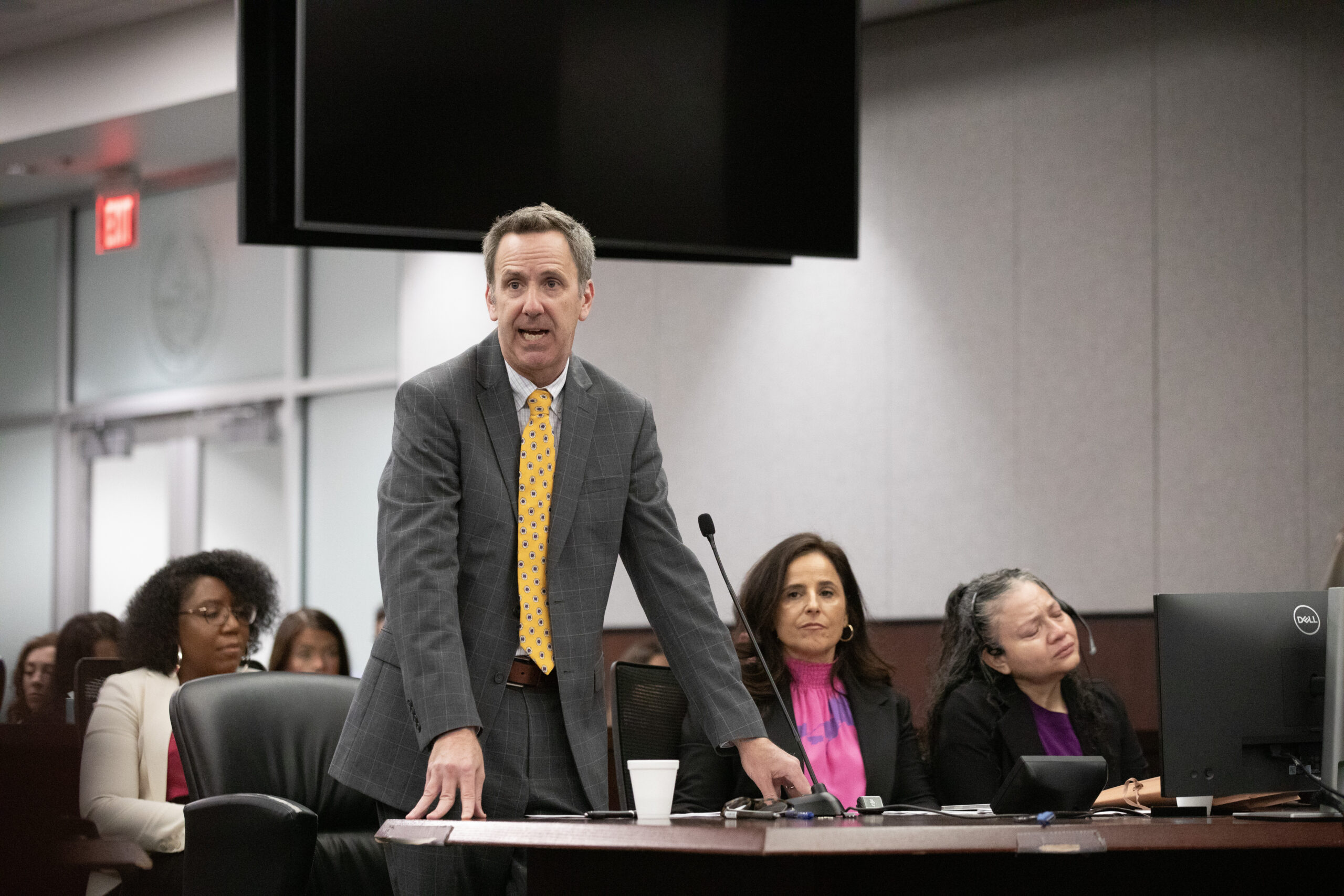
Carmen Mejia exonerated after Travis County District Court Judge P. David Wahlberg dismissed a 2003 murder charge against her, following a ruling from the Texas Court of Criminal Appeals (CCA) — the state’s highest criminal court — overturning her convictions and finding that new evidence established that Ms. Mejia is “actually innocent.” (Credit: Montinique Monroe for the Innocence Project.)
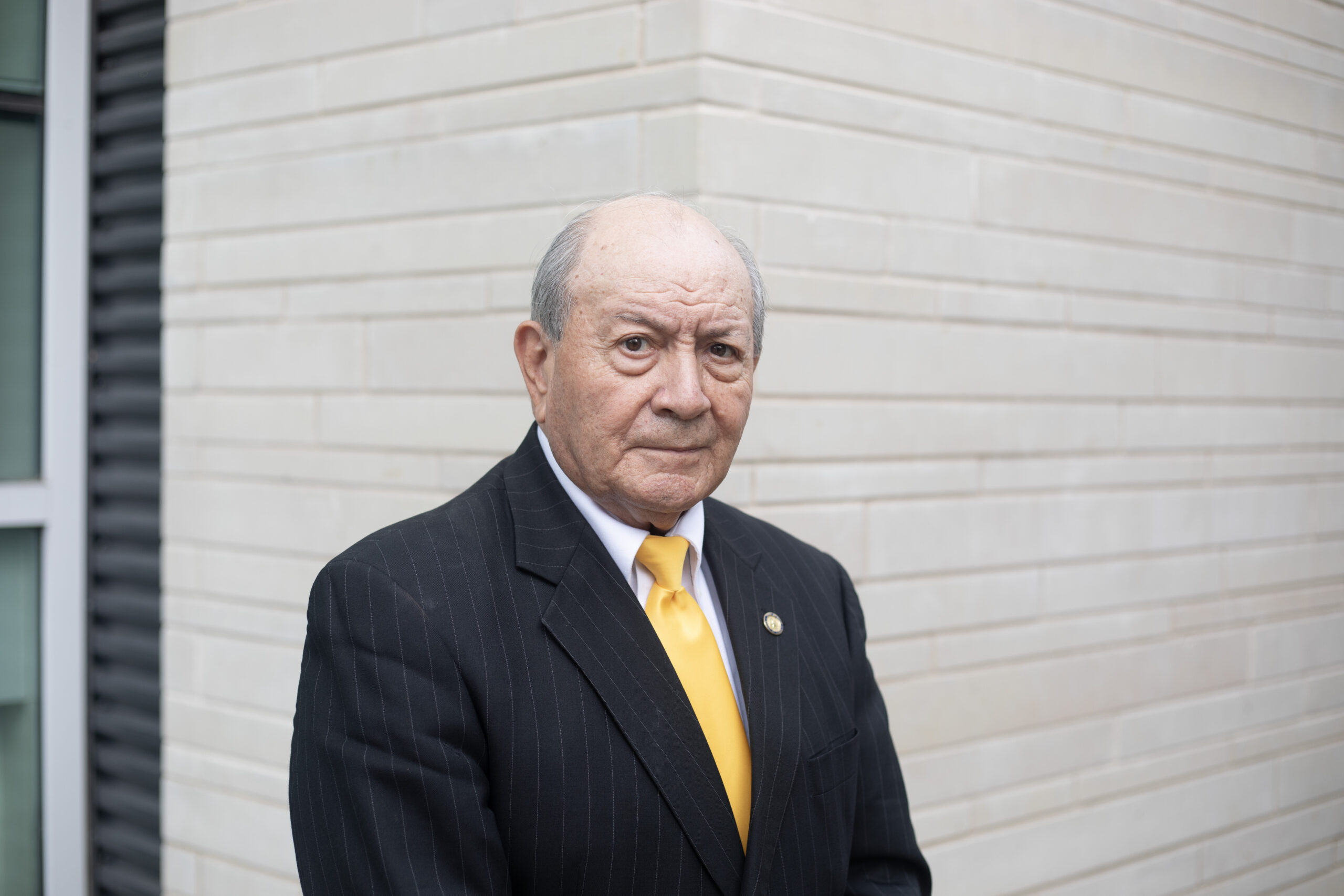
One significant person who believed in Ms. Mejia’s innocence during her trial was Art Guerrero, the courtroom bailiff. (Credit: Montinique Monroe for the Innocence Project.)
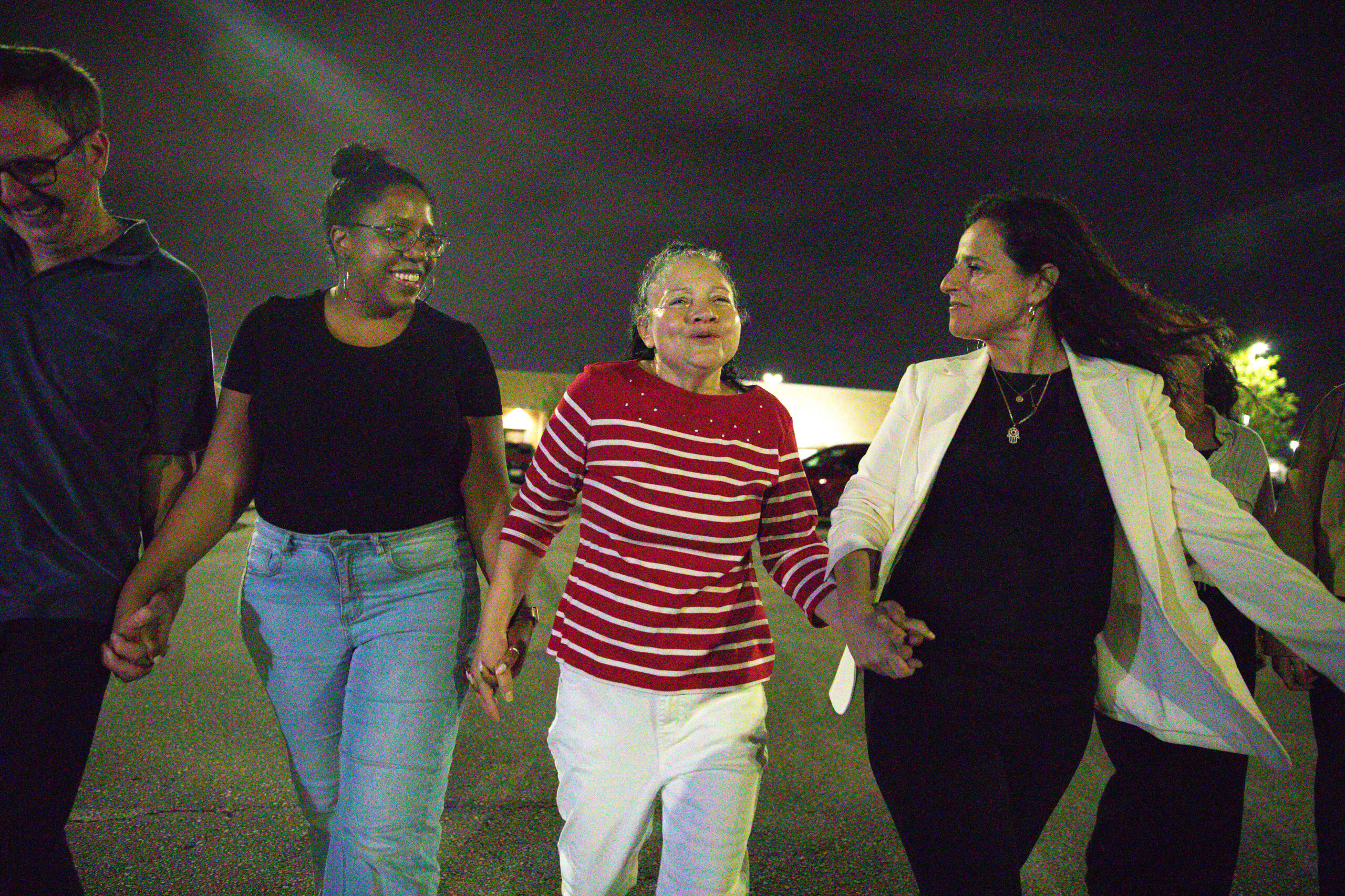
ICE announced that in light of the exoneration they would lift the detainer so that she could be released from local custody. (Credit: Montinique Monroe for the Innocence Project.)
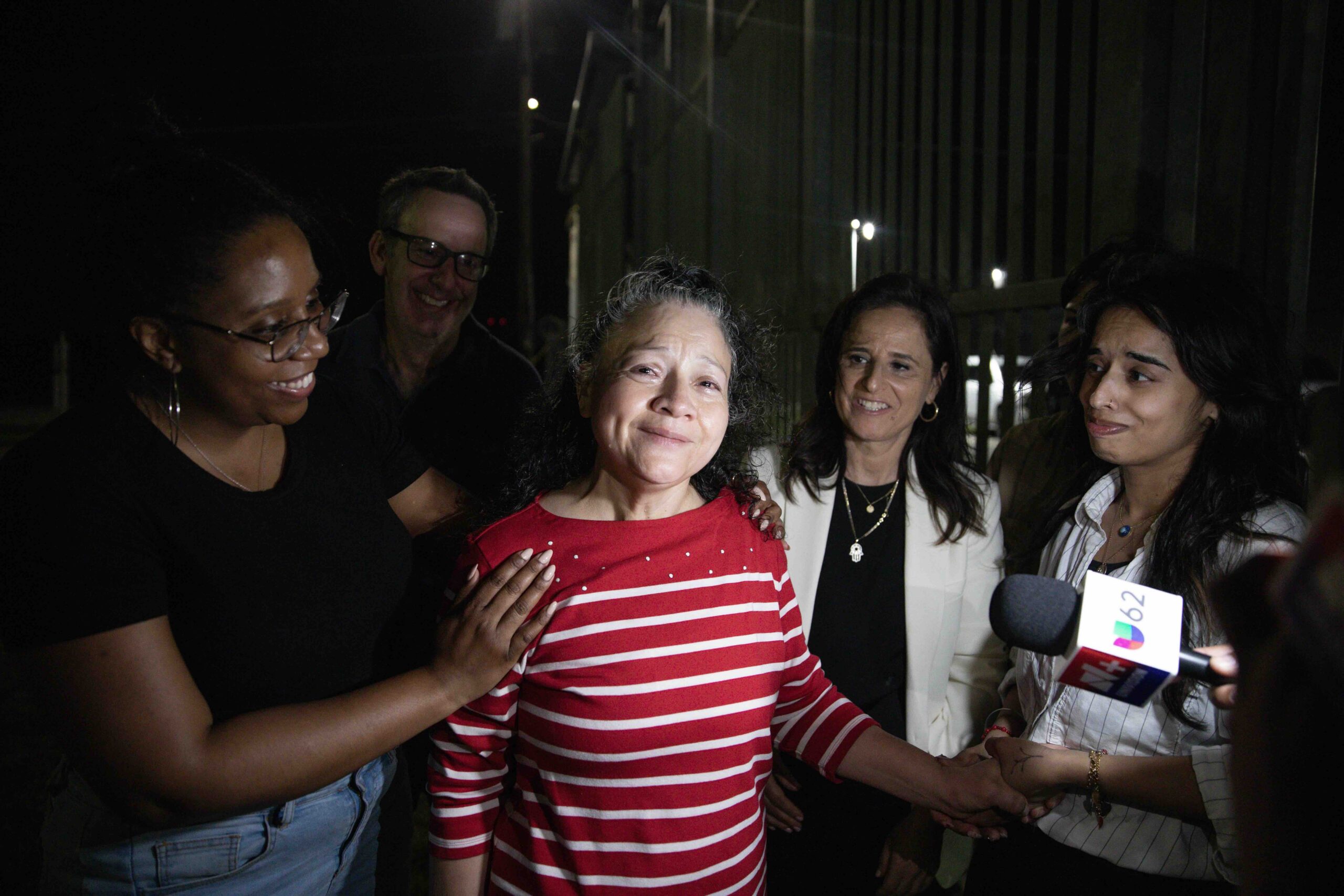
“I never lost faith and hope — I never lost it in 22 years,” Ms. Mejia said. (Credit: Montinique Monroe for the Innocence Project.)
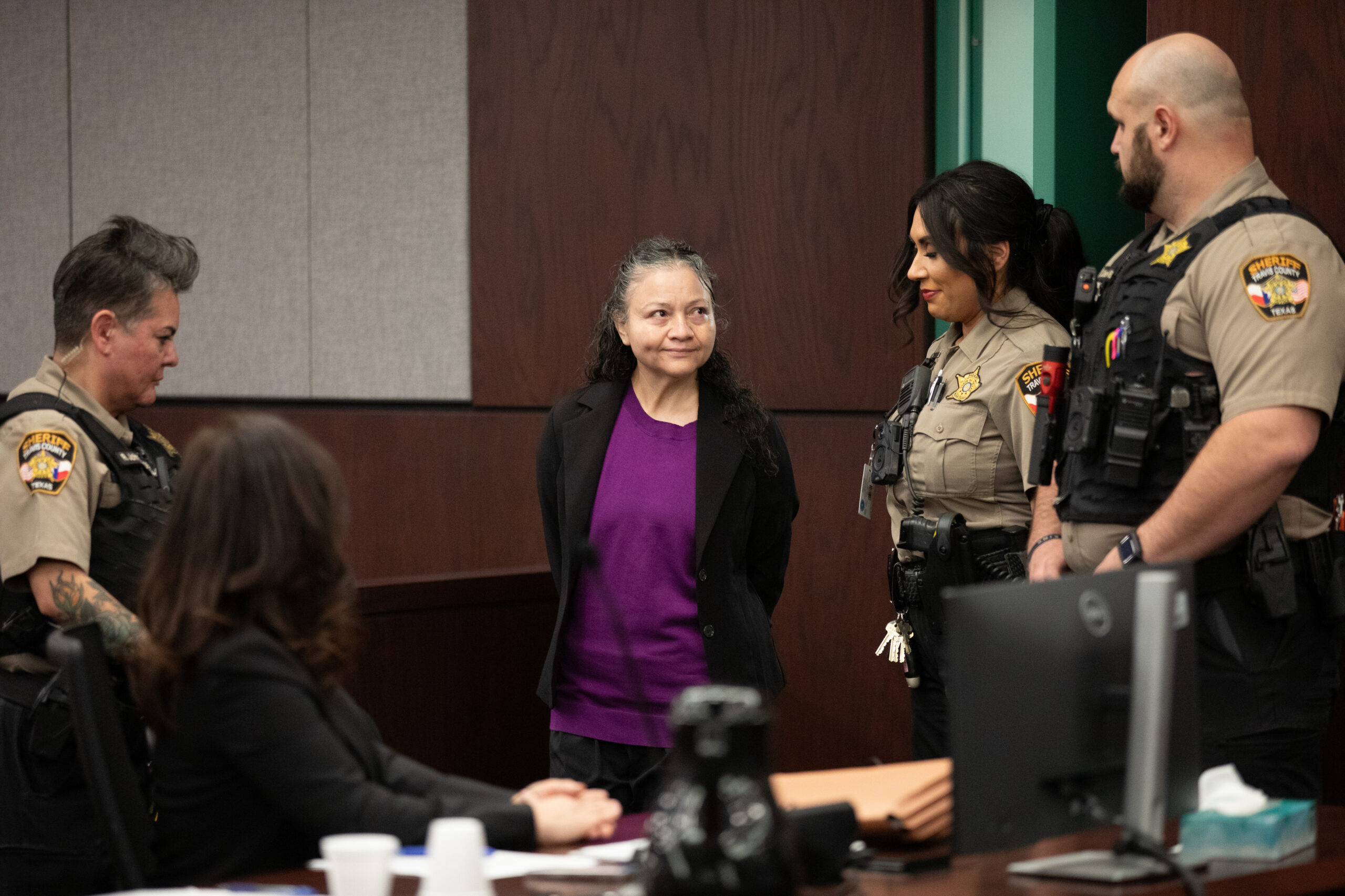
Carmen Mejia at her exoneration hearing in Austin, on March 9, 2026. (Image: Montinique Monroe/Innocence Project)
After Years of Wrongful Incarceration, Another Obstacle
Ms. Mejia has suffered immeasurable loss over these past 22 years as a result of her wrongful incarceration. When she was convicted and sentenced to life, her children were all under the age of 8. Ms. Mejia was completely cut off from her children. The next time she had the chance to see her three daughters again, during her post-conviction hearings in 2024, they were fully grown adults.
Now 54 years old, Ms. Mejia is eager to regain her freedom, to rebuild her life alongside her children, and heal their relationship with the dignity and love they have always deserved and that she always wanted to provide.
Each of Ms. Mejia’s three daughters gave heartfelt statements at her exoneration hearing.
“The judge’s recognition of Carmen’s innocence means more to me than words can fully express. For most of my life, our family has lived with the consequences of a conviction that should never have happened,” said Carmen’s eldest daughter Anna. “Even during the years of confusion, pain, and unanswered questions, we held on to faith that one day justice would prevail. As it says in Scripture, ‘The Lord works righteousness and justice for all the oppressed.’ (Psalm 103:6). Today, as the court recognizes Carmen’s innocence, I see that prayer being answered. My hope is that this moment will not only restore her freedom, but also begin to bring healing to our family after so many years of loss and separation.”
Ms. Mejia’s second daughter, Jenny, said, “I grew up my whole life with a huge piece of me missing — my real mom. There hasn’t been a time in my life when I wasn’t sad thinking about her. So when the DA’s office reached out about our birth mom and the review of her case here in Travis County, my sisters and I were there immediately.”
“For more than 20 years, I never had the chance to talk with my mother about the things daughters normally share with their mothers — asking for advice or simply feeling a mother’s unconditional love. I hope that I can finally build a real relationship with her,” said her youngest daughter. “I want her to meet my partner and his family. I want to spend holidays together: Christmas, Thanksgiving, birthdays and even simple moments like cooking dinner and sharing a meal. Something that may sound small to others, but means everything to me, is knowing what it will feel like to hug my mother for the first time.”
Leave a Reply
Thank you for visiting us. You can learn more about how we consider cases here. Please avoid sharing any personal information in the comments below and join us in making this a hate-speech free and safe space for everyone.