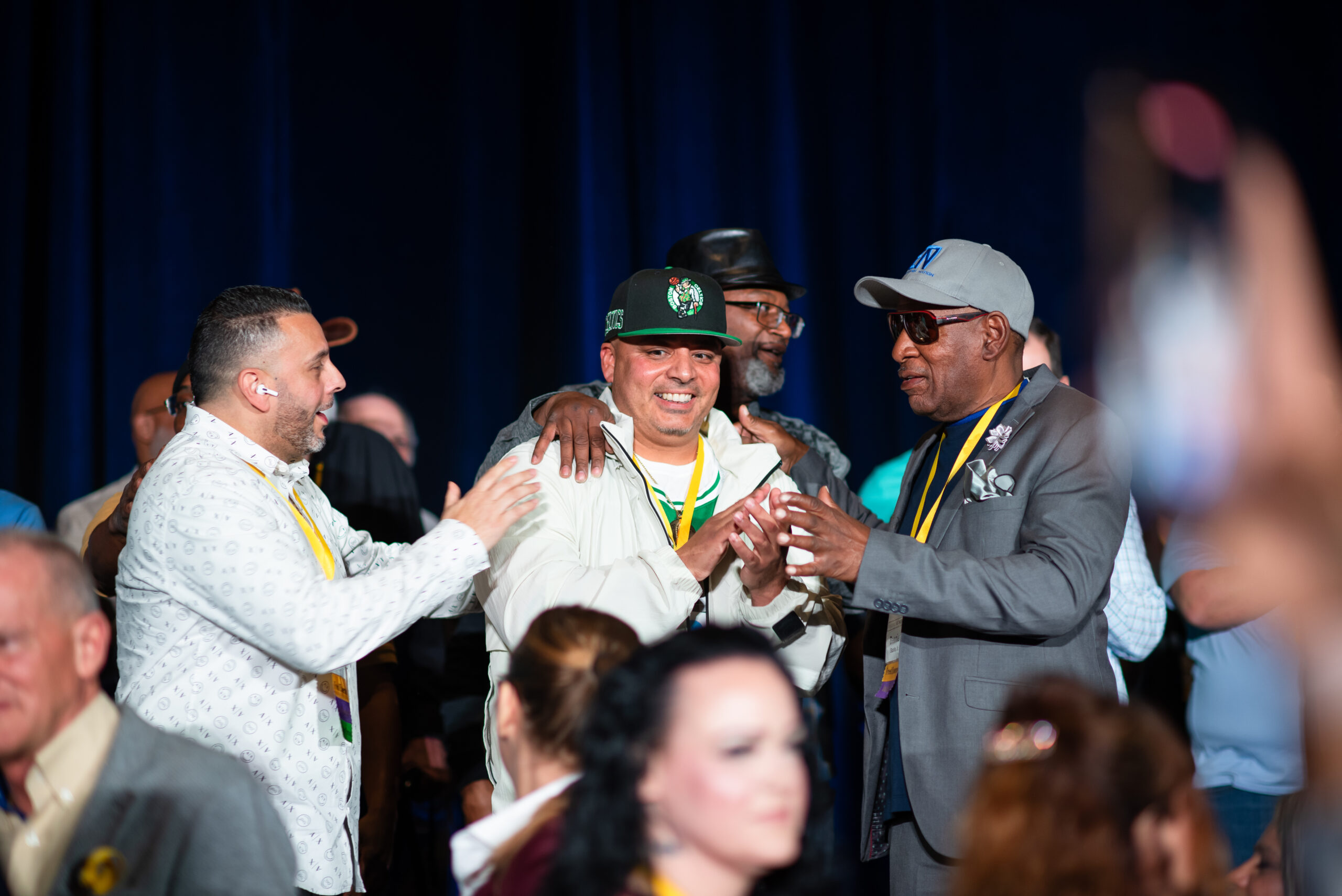
Freed and exonerated community members celebrate at the 2025 Innocence Network Conference in Seattle. (Photo: Lyra Photography for Innocence Project)
2025 revealed the extraordinary power of persistence, people, and the pursuit of justice.
12.10.25 By Alicia Maule
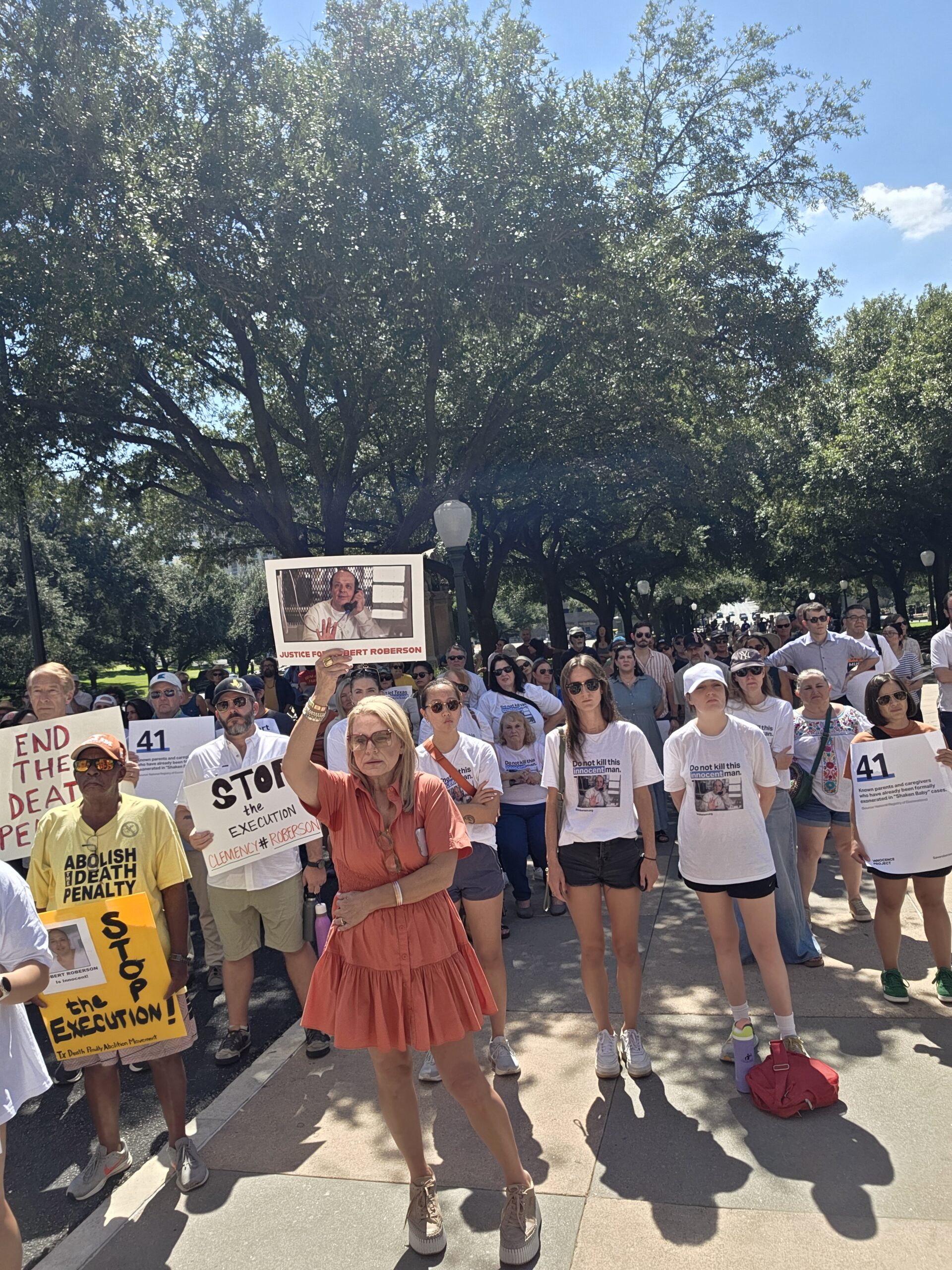
Supporters for Robert Roberson showed up to rally for his life at the Texas Capitol on Oct. 4, 2025 (Alyxaundria Sanford for the Innocence Project).
A stay of execution, the triumph of due process over political expediency, and the long awaited release of a man on death row for a crime he didn’t commit. 2025 was a massive year for the Innocence Project — a year where the truth stood firm against a background of threats to our democracy, due process, and to our constitutional rights. Across the country, courtroom by courtroom and story by story, we witnessed our hard-won progress bring us closer — however slowly — to justice.
The Texas Court of Criminal Appeals stayed Robert Roberson’s execution for a crime that never occurred. This decision in a case based on the “shaken baby syndrome” hypothesis, gave sound science and compassion another chance to be heard. In New York, Tennessee, Illinois, and Louisiana, Brian Boles, Scott Minton, Danny Davis, and Jimmie “Chris” Duncan were freed after decades lost to wrongful conviction.
Through the Just Data series, we examined how flawed death investigations contribute to wrongful convictions, and how scholars who’ve experienced the criminal legal system firsthand are redefining what justice-centered science and research can look like. Pioneering artists like actor Joe Morton joined the movement by becoming an Innocence Ambassador, helping to amplify the stories of our clients on new stages.
Every moment carried a singular, powerful message: Justice is not only fought for in the courts, but built together through community and everyday action.
Below are nine defining moments of 2025 — a year of vindication, voice, and unyielding hope in the ongoing pursuit of more fair, compassionate, and equitable systems for all.
In October, the Texas Court of Criminal Appeals (CCA) stayed the execution of Robert Roberson, an autistic father sentenced to death in 2003 for the tragic death of his daughter, just one week before it was scheduled to occur. His conviction had rested on the discredited “shaken baby syndrome” theory.
The CCA’s decision to send Mr. Roberson’s case back to the district court to determine whether he is entitled to relief offers hope — not just for Mr. Roberson, but for all whose lives have been derailed by flawed science and injustice.
Across New York, Tennessee, Illinois, and Louisiana, four Innocence Project clients — Brian Boles, Scott Minton, Danny Davis, and Jimmie “Chris” Duncan — finally reclaimed their freedom after collectively spending more than 125 years behind bars for crimes they did not commit.
In New York, Mr. Boles, along with Charles Collins (who was represented by attorneys at Ropes & Gray), was exonerated after new DNA testing and long-hidden evidence confirmed what they had always said was true: they were innocent. Teenagers at the time of their arrest, they both gave false confessions after enduring intense questioning by police, with no parent or guardian present. Their cases underscored the urgency of strengthening interrogation practices and ensuring that exculpatory evidence, including reports that question the reliability of a confession, is never buried again.
In Tennessee, Mr. Minton walked free after more than three decades behind bars after he was wrongly convicted based on a single and highly questionable identification. His case reveals how eyewitness misidentification can warp the pursuit of justice. He was represented by the Innocence Project and the Tennessee Innocence Project.
In Illinois, just one day after the anniversary of his release from prison, Mr. Davis saw all charges dismissed — more than 32 years after a coerced false confession tore his life apart. His case, built on threats, abuse, and fear, stands as a stark reminder of the human cost of coercive police tactics and the power of persistence. He was represented by attorneys from the Innocence Project, Illinois Innocence Project, and Exoneration Project.
And in Louisiana, just a day before Thanksgiving, Jimmie “Chris” Duncan was released on bail after 27 years on death row at Louisiana’s Angola prison following a wrongful conviction for a crime that never occurred. In May 2025, a judge ruled that clear and convincing evidence proves Mr. Duncan is factually innocent in the alleged murder of Haley Oliveaux, a charge based entirely on unreliable science proffered by discredited forensic analysts Michael West and Steven Hayne, who are responsible for at least nine other wrongful convictions. He was represented by attorneys from the Innocence Project, Mwalimu Center for Justice, and Bryan Cave Leighton Paisner LLP.
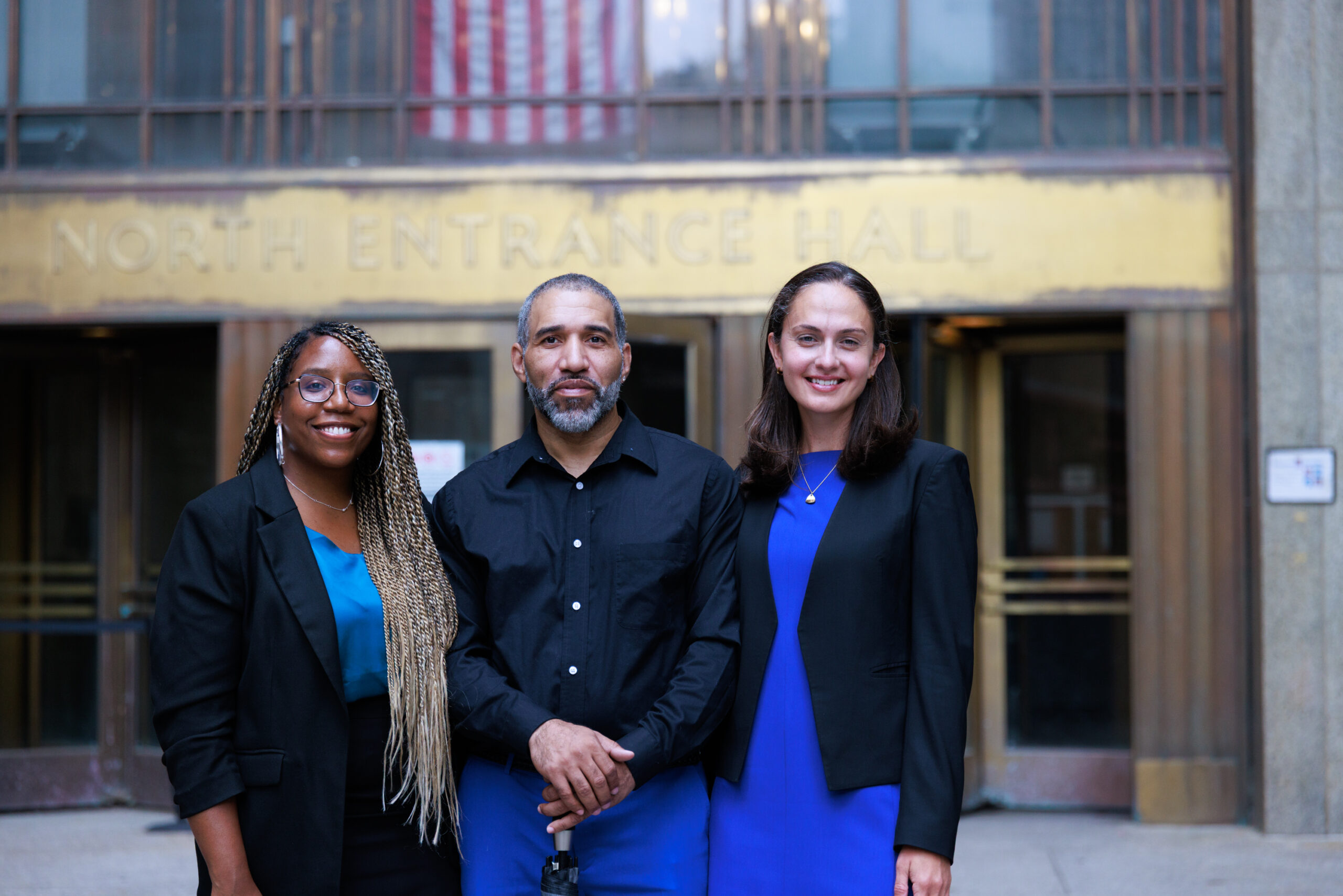
Brian Boles, joined by Foderaro Post-conviction Litigation Fellow Shabel Castro and Senior Staff Attorney Jane Pucher, is exonerated in New York on July 10, 2025. (Image: Nick Castle/Innocence Project)
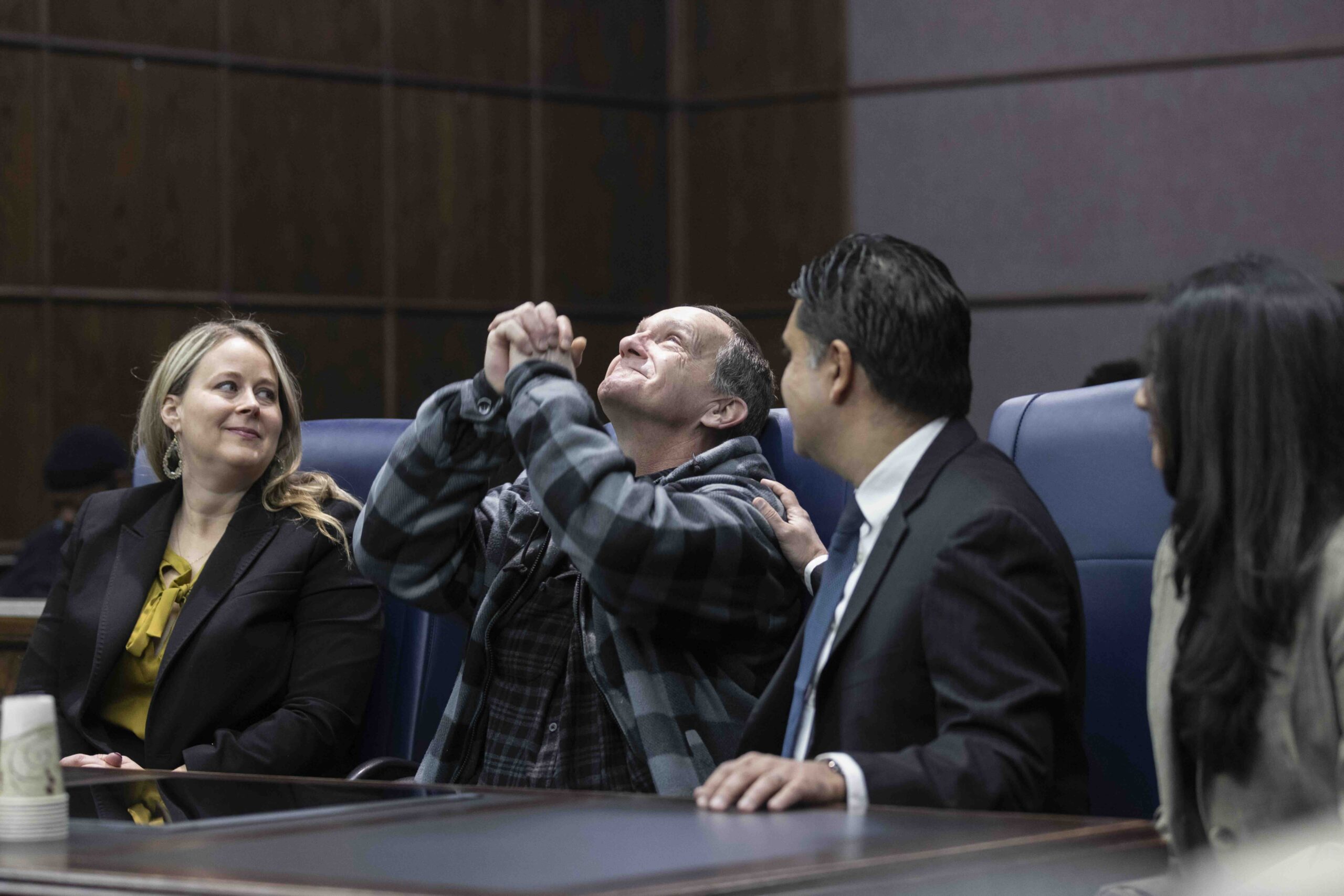
Scott Minton in Chattanooga, Tennessee, Thursday, January 23, 2025 (Image: Alyssa Pointer for the Innocence Project).
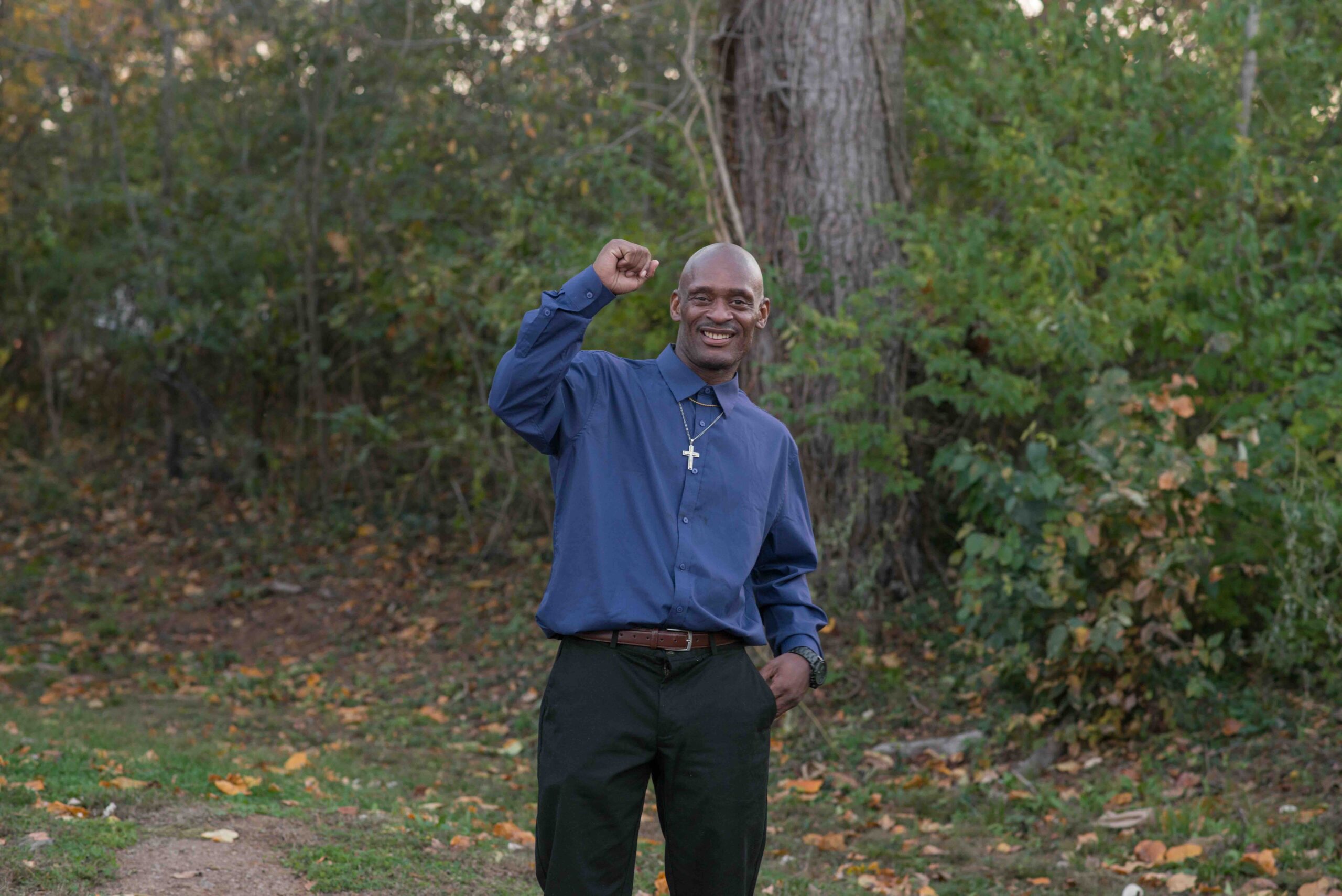
Danny Davis poses for a portrait outside his home in Carbondale, Ill., on Nov. 12, 2025. (Image: Neeta Satam/Innocence Project)
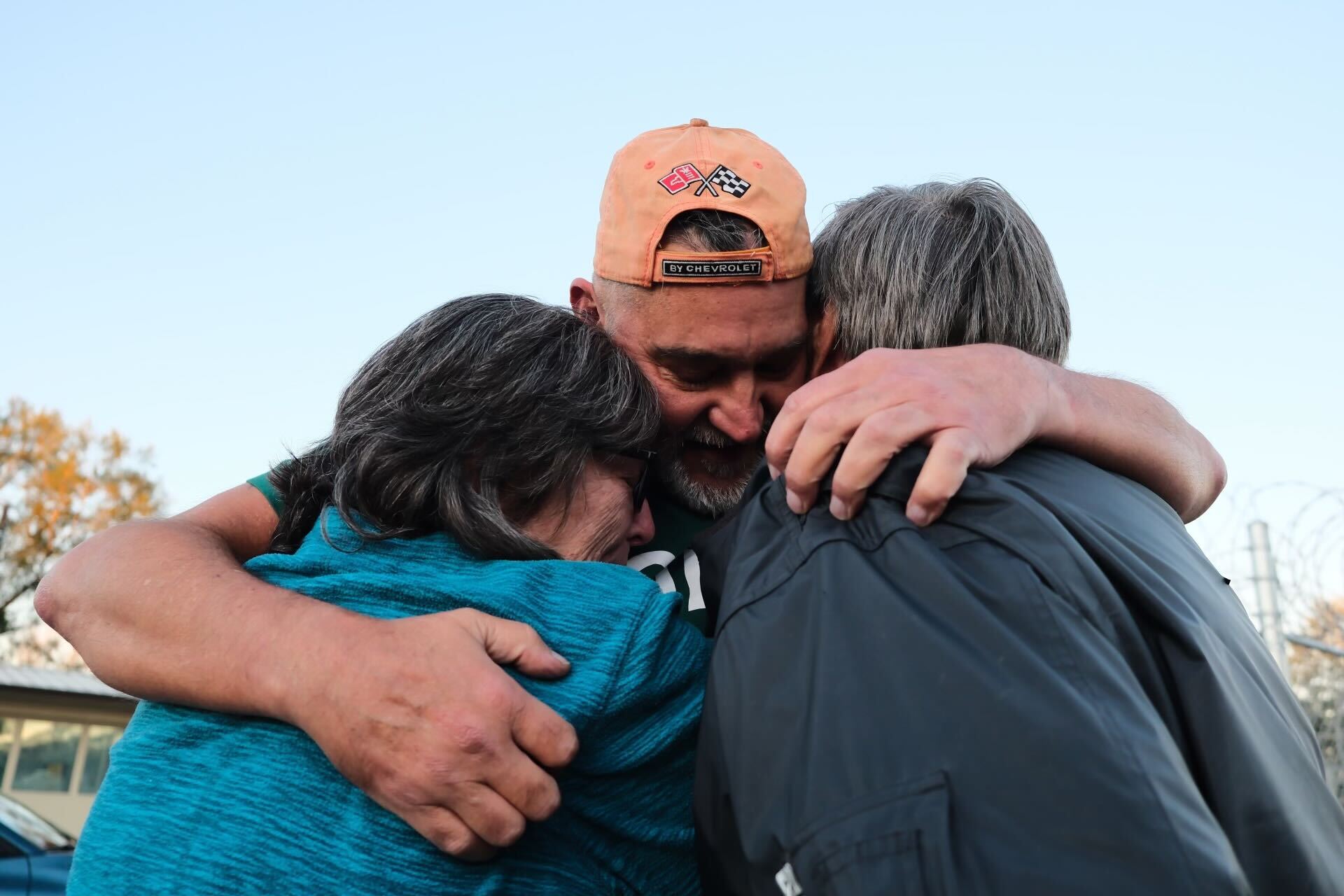
Jimmie "Chris" Duncan embracing family members after being released in Louisiana on Nov. 26, 2025. (Image: Jamal Barnes for the Innocence Project)
Ten years following the tragic death by suicide of Kalief Browder — a Bronx teenager who spent three years at Rikers Island awaiting trial — public defenders, families impacted by the criminal legal system, community organizers, and policy advocates joined forces to protect a landmark 2019 New York discovery reform secured in his name. Known informally as Kalief’s Law, the statute ensures people accused of crimes receive critical evidence early enough to defend themselves.
This year, that progress came under threat when prosecutors and Governor Kathy Hochul pushed to weaken Kalief’s Law during state budget negotiations, arguing it was too burdensome for prosecutors and caused delays. Proposed changes would have gutted the timelines and requirements that hold prosecutors accountable, and would have reversed progress in New York by potentially reopening the door to indefinite pretrial detention, last-minute evidence dumps, and cases built on secrecy rather than fairness.
Leading the fight to protect these protections were the Alliance to Protect Kalief’s Law, a coalition that includes the Innocence Project;Akeem Browder, Kalief’s older brother and founder of the Kalief Browder Foundation; and Renay Lynch, a recently exonerated New Yorker whose story underscored exactly why these safeguards matter.
Earlier this year, the Innocence Project and NYU School of Law formed a groundbreaking partnership that will deepen the Innocence Project’s capacity to fight wrongful convictions by tapping into NYU’s centers of academic excellence. Students will gain invaluable hands-on experience by working on Innocence Project cases and learning about post-conviction wrongful conviction litigation.
The partnership aims to shape the next generation of legal minds who will carry the torch of justice forward
What began in February as a Black History Month collaboration with Nashville’s Bongo Java Roasting Co. and the Tennessee Innocence Project has since grown into a lasting celebration of freedom and resilience.
With 15% of all profits from sales of the “Grounds for Innocence” blend going to both projects, each cup honors the strength of those who have reclaimed their freedom and the ongoing fight for others still waiting to come home.
This holiday season, the collaboration expanded with a limited-edition merch bundle featuring a mug, tote bag, and coffee bag.
Freed and exonerated community members celebrate at the 2025 Innocence Network Conference in Seattle. (Photo: Lyra Photography for Innocence Project)
At the 2025 Innocence Network Conference in Seattle, exonerees and their families, advocates, and lawyers gathered in what many described as “a family reunion.” It was a weekend of shared strength and joy — a living testament to community as both refuge and catalyst for change.
More than 1,100 people from across the country convened in Seattle, including 285 freed and exonerated people — 90 of whom were experiencing the conference for the first time. Every session and activity was charged with emotional weight and filled with warmth, gratitude, and solidarity.
Learn more about registering for the 2026 Innocence Network Conference in Chicago.
In 2025, more than 2,000 people registered to attend two Just Data virtual events. The initiative continued to bridge science and lived experience with two powerful programs that exposed how systemic flaws create and perpetuate wrongful convictions.
The first, How Faulty Forensics and Flawed Systems Distort Death Investigations, brought together exoneree Rosa Jimenez — whose wrongful conviction was based on a medical examiner’s flawed investigation —, researchers, and forensic experts to unpack how unreliable death-investigation practices and outdated forensic methods can impede justice. Flawed investigations which are often the result of unconscious biases, a lack of standards, and insufficient training and oversight can deliver misleading and inaccurate findings that in turn may lead to wrongful convictions and leave victims’ families without justice.
The conversation pushed for reforms that would strengthen transparency and scientific integrity across the medicolegal system.
Later in the year, Injustice to Insight: Applying Wrongful Conviction Experience to Research featured two social scientists who discussed how their personal experiences with wrongful conviction shape their research, including pioneering studies on how children and families are impacted by wrongful convictions. Hosted virtually in September, the program turned data into dialogue, demonstrating how lived experience can drive more empathetic, human-centered research and reform.
Acclaimed actor Joe Morton joined the Innocence Project in 2025 as an Innocence Ambassador, bringing his powerful voice and creative platform to amplify the stories of people whose lives have been forever altered by wrongful conviction. He joins a distinguished group of cultural figures — including Whoopi Goldberg, Tony Goldwyn, and Stephen Colbert — who use their visibility to champion truth, freedom, and reform. You can explore the full roster on our newly updated Ambassadors page, where you can learn more about how each Ambassador has advanced the fight for justice
This year, the Innocence Project also joined Coldplay on the road, again! Ambassador Chris Martin invited the Innocence Project to join Coldplay’s Music of the Spheres tour stop in Nashville. It was a meaningful homecoming: in 2016, we traveled the country during the band’s A Head Full of Dreams tour, engaging thousands of fans about our work with the help of devoted volunteers.
This year’s return to the Coldplay tour carried that same spirit of connection, but with a deeper partnership — this time, we were joined by the Tennessee Innocence Project, our collaborators in Scott Minton’s exoneration and our “Grounds for Innocence” collaboration with Bongo Java Roasting Co. Together, we shared stories, met fans, and helped build a community of supporters committed to transforming the criminal legal system.
The Speakers Bureau Program had a remarkable year, bringing freed and exonerated voices and wrongful conviction expertise to audiences around the world. In 2025, the program organized nearly 150 speaking engagements — both in-person and virtual — across 25 states and seven countries, including Australia, Colombia, France, Spain, Germany, and the United Kingdom.
These engagements reached classrooms, boardrooms, and high-profile stages through partnerships with top academic institutions, law firms, government agencies, and the private sector. Each event offered audiences a direct window into the lived realities of wrongful conviction, creating space for learning, empathy, and action.
This year also marked the expansion of the Summer Associates Program, now in its second year, which reached 850 participants across eight prominent law firms. Designed to engage incoming summer associates at the very start of their legal careers, the program introduces future attorneys to the Innocence Project’s mission, core legal issues, and the human toll of wrongful convictions.
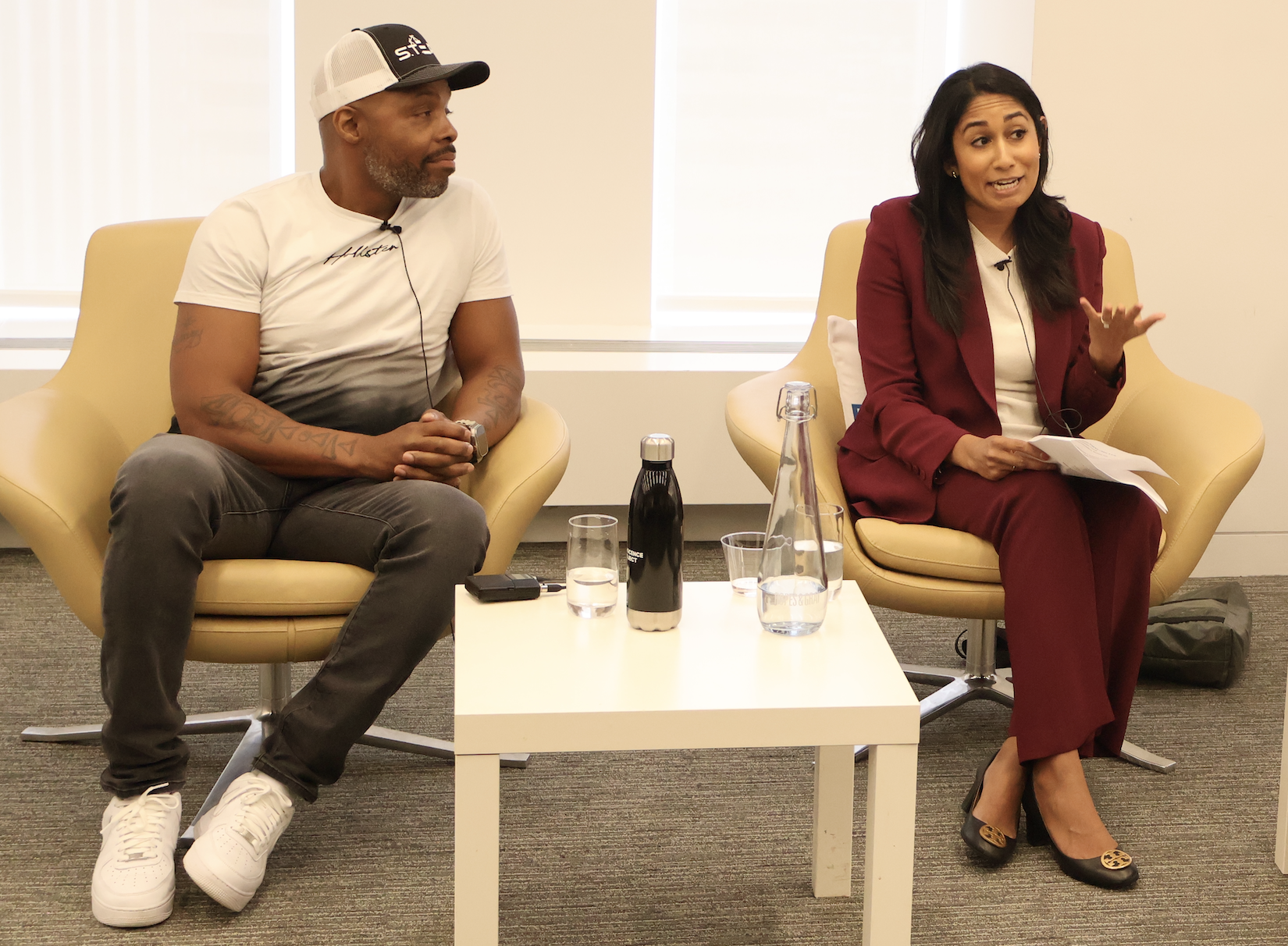
Innocence Project Exoneree Termaine Hicks and Intake Strategic Initiatives Attorney Yosha Gunasekera speak to associates at Ropes & Gray. (Photo: Louise Liu for Innocence Project)
2025 was a year of breakthroughs and reunions, and of new partnerships and enduring truths. From courtrooms to classrooms, and from coffee roasters to conference halls, the movement for justice grew more united, more creative, and more determined.
As we look to 2026, the mission remains clear: to dismantle the systems that lead to injustice and create fair, compassionate, and equitable systems of justice for everyone.
Leave a Reply
Thank you for visiting us. You can learn more about how we consider cases here. Please avoid sharing any personal information in the comments below and join us in making this a hate-speech free and safe space for everyone.