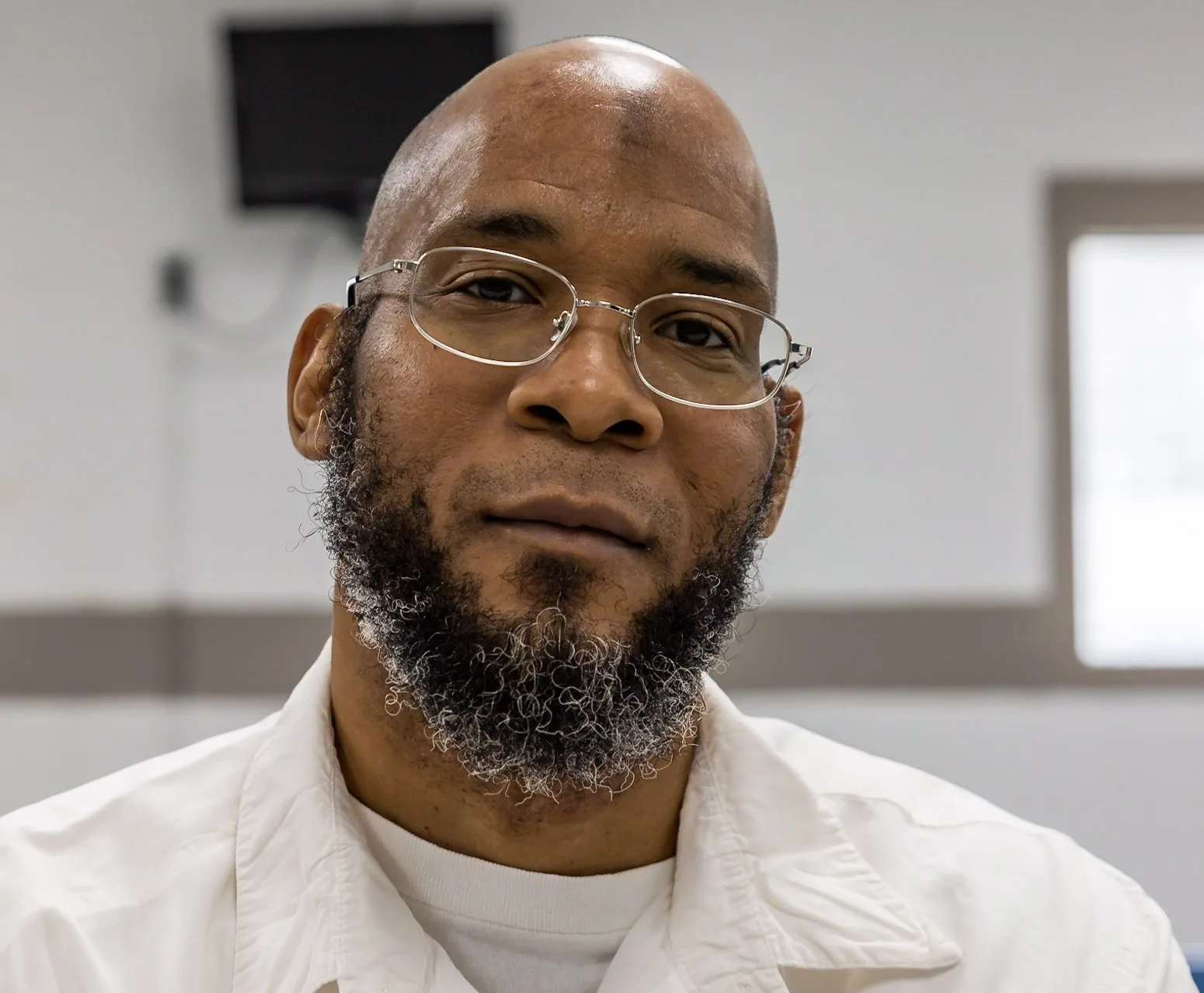
Marcellus Williams
Executed by the state of Missouri
September 24, 2024
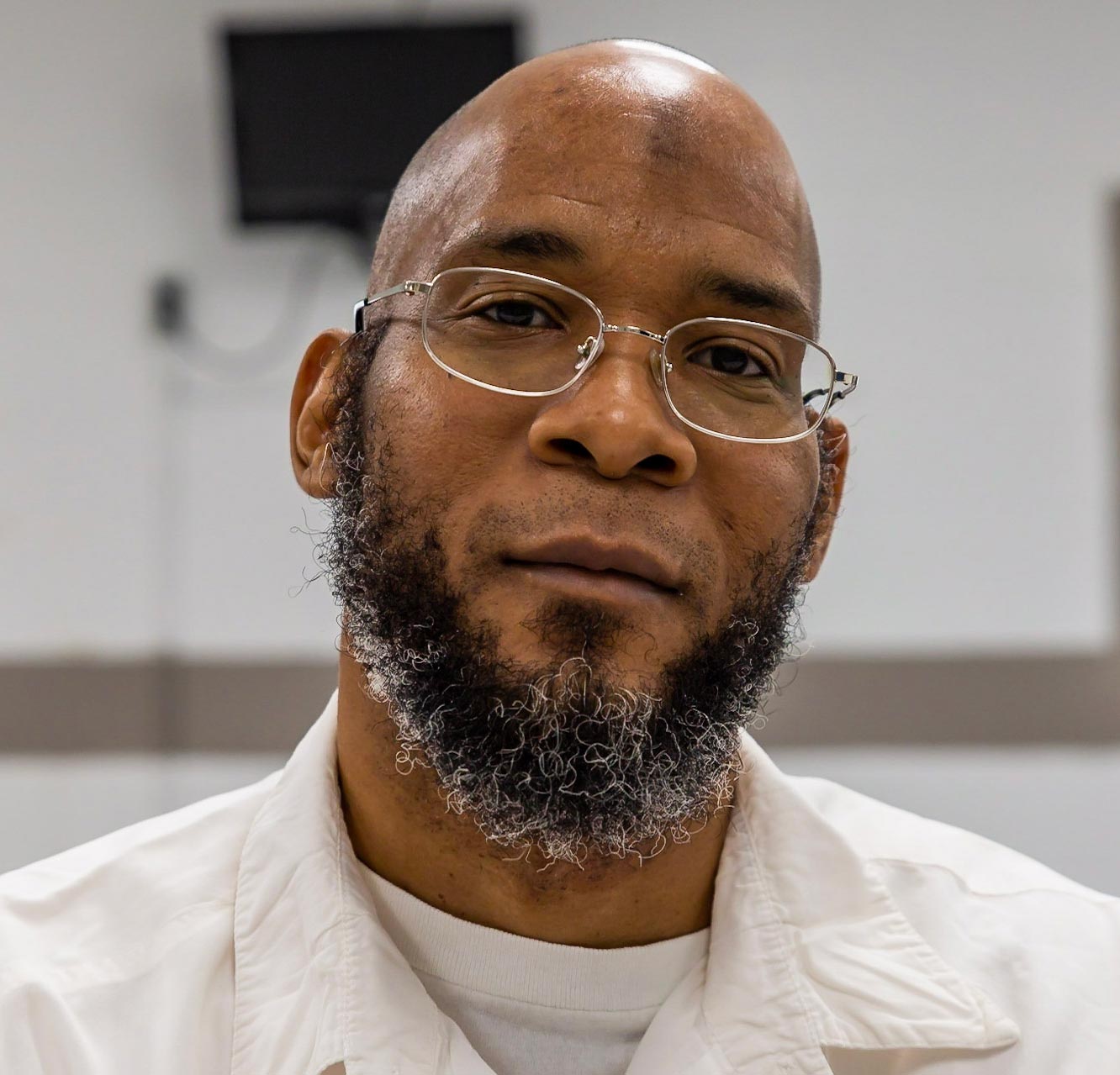
Marcellus Williams. (Image: Courtesy of Marcellus Williams’ legal team)
On Sept. 24, 2024, the state of Missouri executed 55-year-old Marcellus Williams, despite longstanding claims of innocence and against the wishes of the victim’s family. Mr. Williams had been convicted of murder in 2001 and sentenced to death. At one point in his lengthy legal battle, the prosecution agreed to allow Mr. Williams to enter an Alford plea and be resentenced to life in prison, only to be overridden by the Missouri Attorney General’s Office and Missouri Supreme Court.
The Crime
On the evening of Aug. 11, 1998, the body of 42-year-old Felicia Gayle was found stabbed to death in her home in University City, a suburb of St. Louis, Missouri. The murder weapon, a carving knife from her kitchen, was still embedded in her neck. She had been stabbed or cut more than 40 times.
A window pane next to the front door had been knocked out, suggesting that the attacker had entered by reaching through the frame and unlocking the door.
Ms. Gayle’s purse and a jacket were missing, as was a laptop computer belonging to her husband, a radiologist who discovered her body when he came home from work. Ms. Gayle was a former reporter for the St. Louis-Dispatch newspaper.
The Investigation
In June 1999, Henry Cole was released from the St. Louis City Workhouse, the jail for St. Louis City. He went to University City police and asserted that he had been housed at the Workhouse with Marcellus Williams from April 1999 until Mr. Cole was released.
Mr. Cole claimed that he and Mr. Williams were watching the television news and saw a report on Ms. Gayle’s murder. According to Mr. Cole, Mr. Williams confessed to committing the crime.
The case was still unsolved in November 1999 when police located Laura Asaro, who was Mr. Williams’ former girlfriend. She said that Mr. Williams had picked her up on the day of the murder. Ms. Asaro told the police that, despite the summer heat, Mr. Williams was wearing a jacket. When he took off the jacket, she noticed that his shirt was bloody and that he had scratches on his neck. She said Mr. Williams told her that he had been in a fight. Later in the day, Mr. Williams put his bloody clothes in his backpack and threw them into a sewer drain, claiming he no longer wanted them. Ms. Asaro also said she saw a laptop computer in the car.
The next day, Ms. Asaro said she went to retrieve some clothes from the trunk of the car. Mr. Williams did not want her to look in the trunk and tried to push her away. Before he could, Ms. Asaro snatched a purse from the trunk. She looked inside and found Ms. Gayle’s Missouri state identification card and a black coin purse. Ms. Asaro, believing the purse was evidence of infidelity by Mr. Williams, demanded an explanation. Ms. Asaro said Mr. Williams then confessed that the purse belonged to a woman he had killed. He allegedly explained in detail how he went into the kitchen, found a knife, and waited for the woman to get out of the shower. According to Ms. Asaro, Mr. Williams said that when the woman came downstairs, he stabbed her in the arm and then put his hand over her mouth and stabbed her in the neck, twisting the knife as he went. Ms. Asaro said Mr. Williams then grabbed her by the throat and threatened to kill her, her children, and her mother if she told anyone.
Ms. Asaro said that a day or two after the murder, Mr. Williams had sold the laptop to Glenn Roberts. She pointed out the house where Mr. Roberts had been at the time.
The next day, the police located the car that Mr. Williams had been driving, a Buick LeSabre owned by Mr. Williams’ grandfather. In the trunk of the car, the police found a Post-Dispatch ruler and a calculator that belonged to Ms. Gayle.
The police located Mr. Roberts, who said he had given cash to Mr. Williams and took the laptop as collateral. Mr. Roberts still had the laptop and turned it over to the police. Ms. Gayle’s husband confirmed that the laptop was his.
On Nov. 29, 1999, Mr. Williams was charged with first-degree murder, two counts of armed criminal action, burglary, and robbery.
The Trial
Mr. Williams went to trial on June 8, 2001 in St. Louis City Circuit Court.
The prosecution’s case was tethered to the testimony of Ms. Asaro, Mr. Roberts, and Mr. Cole. Mr. Cole admitted that he hoped to get the $10,000 reward that had been offered by Ms. Gayle’s family, and that he had asked if he could get some of it up front.
The defense noted there was no evidence at the crime scene linking Mr. Williams to the murder. His DNA was not found under Ms. Gayle’s fingernails. A bloody shoeprint did not resemble any footwear belonging to Mr. Williams. A blue synthetic fiber found in Ms. Gayle’s hand did not resemble fibers in Mr. Williams’ shirt. The prosecution noted that Ms. Asaro said Mr. Williams had disposed of his clothing in the sewer and that that a rug under Ms. Gayle’s body had blue fibers and never been compared to the fiber in her hand.
On June 15, 2001, the jury convicted Mr. Williams of first-degree murder, two counts of armed criminal action, burglary, and robbery. On June 19, 2001, the jury voted to impose the death penalty.
The Appeals
Mr. Williams’ initial appeal was denied by the Missouri Supreme Court on March 4, 2003. He filed a motion for post-conviction relief, contending he received ineffective assistance of counsel. Mr. Williams asserted that his trial counsel intended to present expert testimony to explain his social history and criminal conduct, but the psychologist they hired was unable to establish a rapport with Mr. Williams because he was hired too late. According to Mr. Williams, a proper investigation of his background would have revealed that Mr. Williams was subjected to brutally violent physical and sexual abuse by family members; that he was abandoned and resented by his parents; that his family condoned and encouraged criminal behavior and substance abuse; that he came from an impoverished and dysfunctional household; and that he was exposed to guns, drugs, and alcohol at a young age.
Mr. Williams contended that this evidence would have included testimony that he had been diagnosed as suffering from significant mental illnesses, including depression, drug and alcohol dependence, and post-traumatic stress disorder. This contributed to his past criminal behavior, he contended.
The petition was denied and the denial was upheld on appeal.
In 2006, Mr. Williams filed a federal petition for a writ of habeas corpus on numerous grounds. One was sustained – that his trial counsel had failed to conduct an adequate investigation and present evidence regarding his background and social and medical history. However, in 2012, the Eighth Circuit U.S. Court of Appeals overturned that decision and denied the petition for habeas corpus.
In December 2014, the Missouri Supreme Court set an execution date of Jan. 28, 2015. Mr. Williams then filed a petition for a writ of habeas corpus in the Missouri Supreme Court alleging he was entitled to DNA testing to demonstrate actual innocence. The Court vacated Mr. Williams’ execution date and appointed a special master to ensure complete DNA testing and to report the results of the additional DNA testing.
The special master provided the Missouri Supreme Court with the results of additional DNA testing conducted on hair and fingernail samples from the crime scene and of the knife used in the murder. The testing showed that Mr. William’s DNA was not on the knife used to kill Ms. Gayle.
The Missouri Supreme Court denied Mr. Williams’ habeas petition, ruling that the DNA testing did not demonstrate Mr. Williams’ actual innocence. The U.S. Supreme Court denied Mr. Williams’ petition for a writ of certiorari. An execution date of Aug. 22, 2017 was set.
Just hours before Mr. Williams’ execution, then-Governor Eric Greitens stayed the execution and appointed a board of inquiry to consider Mr. Williams’ claim of innocence. The work went on for years and was still in process in June 2023, when Gov. Greitens’ successor, Michael Parson, dissolved the board of inquiry.
Mr. Williams’ legal team, which included the Midwest Innocence Project, Innocence Project, the law firm of Bryan Cave Leighton Paisner, the capital habeas unit in the Office of the Federal Public Defender for the Western District of Missouri, and attorney Kent Gipson, filed a petition for a declaratory judgment alleging that Gov. Parson lacked authority to rescind an executive order issued by Gov. Greitens.
On Jan. 26, 2024, the St. Louis County Prosecuting Attorney Wesley Bell, filed a motion to vacate Mr. Williams’ conviction and death sentence.
Four claims were raised: (1) that Mr. Williams may be actually innocent of first-degree murder; (2) that Mr. Williams’ trial counsel provided ineffective assistance in failing to better impeach Ms. Asaro and Mr. Cole, who had testified that Mr. Williams confessed to them; (3) that Mr. Williams’ trial counsel provided ineffective assistance in failing to present different mitigating evidence “contextualizing” Mr. Williams “troubled background”; and (4) that the prosecution improperly stricken prospective jurors on the basis of race.
At the time, Trisha Rojo Bushnell, director of the Midwest Innocence Project, who was part of Mr. Williams’ legal team, said, “The decision of a prosecutor to move to vacate a murder conviction and death sentence is not done lightly. Prosecuting Attorney Bell filed a motion because there is overwhelming evidence that Marcellus Williams’ trial was constitutionally unfair, including revelations that the State contaminated the most critical evidence in the case[s] trial was constitutionally unfair, including revelations that the State contaminated the most critical evidence in the case – the murder weapon.”
On June 4, 2024, the Missouri Supreme Court dismissed Mr. Williams’ lawsuit against Gov. Parson for dissolving the board of inquiry and set an execution date of Sept. 24, 2024.
On July 2, 2024, the circuit court scheduled a hearing to assess the “clear and convincing evidence” of actual innocence that led Prosecuting Attorney Bell to move to vacate Mr. Williams’ wrongful conviction and death sentence.
On Aug. 19, 2024, Bode Technology, a DNA testing firm, reported that it had developed DNA profiles on the knife that belonged to Keith Larner, the assistant prosecuting attorney who prosecuted Mr. Williams’ criminal case, and Edward Magee, a former investigator for the St. Louis County Prosecuting Attorney’s office.
At that point, Mr. Williams entered into a consent judgment vacating his first-degree murder conviction and death sentence in exchange for an Alford plea to first-degree murder carrying a sentence of life without parole.
Although the circuit court accepted the agreement, the Missouri Attorney General’s Office objected, and the Missouri Supreme Court overturned the agreement pending the hearing.
However, Mr. Williams was allowed to amend his petition to add a claim of bad-faith evidence destruction of DNA evidence on the knife.
On Aug. 28, 2024, Circuit Judge Bruce Hilton held a hearing on Prosecuting Attorney Bell’s motion during which numerous witnesses testified. The trial prosecutor testified under oath that “part of the reason” he struck a potential juror from Mr. Williams’ trial “was because Venireperson 64, a Black man, looked like Mr. Williams, also a Black man.” Prosecuting Attorney Bell’s motion also contended that Mr. Cole and Ms. Asaro were known liars and informants.
On Sept. 12, 2024, Judge Hilton denied Prosecuting Attorney Bell’s motion, ruling that the defense had not proved Mr. Williams’ innocence.
On Sept. 24, 2024, the U.S. Supreme Court rejected two separate requests to intervene and halt the execution. The requests were made on behalf of Prosecuting Attorney Bell.
A clemency petition was also filed emphasizing Ms. Gayle’s family’s opposition to Mr. Williams’ scheduled execution.
“The family defines closure as Marcellus being allowed to live,” the petition stated. “Marcellus’[s] execution is not necessary.”
Shortly after 6 p.m. at the Eastern Reception and Diagnostic Correctional Center in Bonne Terre, Missouri, the execution commenced — despite mounting evidence pointing to his innocence.
You can read the Innocence Project’s statement on Mr. Williams’ execution here.
Marcellus Williams. (Image: Courtesy of Marcellus Williams’ legal team)
Time Served:
24 years
State: Missouri
Conviction: First-degree Murder, Robbery, and Burglary
Sentence: Death
Incident Date: 08/11/1998
Conviction Date: 06/15/2001
Accused Pleaded Guilty: No
Contributing Causes of Conviction: Informants
Death Penalty Case: Yes
Race of Victim: Caucasian
Press
Op-ed: Is Missouri About to Execute an Innocent Man?
New York Times 06.21.24
Execution date set for Missouri inmate, even as he awaits hearing on claim of actual innocence
AP News 06.04.24
Related News
We're Keeping Our Eyes on the Prize
A Poet, an Imam, a Life Cut Short: Remembering Marcellus Williams on His Birthday
The Injustice of Death Row: The Profound Tragedy of Marcellus Williams and the Fight to Save Robert Roberson

Statement Regarding the Execution of Khaliifah Ibn Rayford Daniel, Also Known as Marcellus Williams, From Larry Komp