Anthony Gray
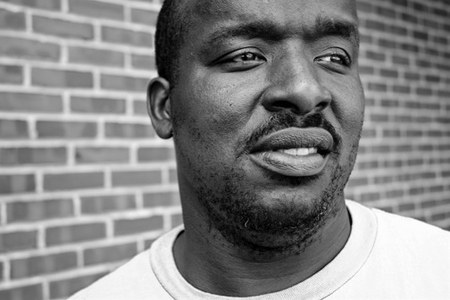
In 1999, Anthony Gray was exonerated of a 1991 rape and murder in Chesapeake Beach, Maryland. DNA testing excluded him as the source of biological evidence in the crime and identified the true perpetrator.
The Crime
On May 13, 1991, an intruder raped and murdered 38-year-old Linda May Pellicano at her home in Chesapeake Beach, Maryland. She had been stabbed once in the chest, and a bloody kitchen knife with a nine-inch blade was found next to her body. The house had been ransacked, and Mr. Pellicano’s purse was dumped out. Five personal checks were missing, and her car was gone.
The Investigation
On June 19, 1991, police arrested Paul Holland and Leonard Long on unrelated charges. During questioning, they said they had smoked crack cocaine with 23-year-old Anthony Gray on the day of the crime, in the vicinity of Ms. Pellicano’s house. When detectives showed Mr. Long one of the stolen checks that had been cashed, he said the handwriting on the check looked like Mr. Gray’s.
The following day, Mr. Holland told detectives that he happened to see Mr. Gray and Mr. Long near Ms. Pellicano’s house, and that they had told him they intended to “get some money out of the house.” The two men asked him to be a lookout while they headed to the back of Ms. Pellicano’s house. At about that time, Ms. Pellicano pulled into the driveway and so Mr. Holland ran away.
At approximately 6:00 p.m. on June 20, Maryland State Police Trooper Brian Newcomer, accompanied by Calvert County Sheriff Lawrence Stinnett, took Mr. Gray into custody for questioning. At the state police barracks, Mr. Gray was questioned for approximately 30 minutes. Trooper Newcomer later said that when he picked up Mr. Gray, he gave him a Miranda warning. Mr. Gray, however, claimed that he was never given a Miranda warning, and that his repeated requests to call an attorney or his family were denied.
Mr. Gray was interrogated intermittently throughout the night. He later said that the officers told him that Mr. Long had implicated him, proving his guilt. Sheriff Stinnett told Mr. Gray that if he didn’t plead guilty, he would “fry in the electric chair.”
Mr. Gray also said that the detectives fed him details about the crime, and would turn the audio recorder on and off during the interrogation so they could correct his statement.
According to the officers, Mr. Gray gave multiple versions of events. After about 20 minutes of questioning, Mr. Gray admitted that on the day of the crime, he had met Mr. Long and Mr. Holland on his way to buy crack cocaine. The two men were planning to “break into a house” to “get some money.”
A little later, Mr. Gray gave a second version, in which he saw Mr. Long and Mr. Holland walk down Ms. Pellicano’s driveway before he left.
Mr. Gray then gave a third story, in which he had merely been standing at a nearby intersection when he saw Mr. Long and Mr. Holland go behind the victim’s house. When he saw Ms. Pellicano pull into her driveway, he left.
At about 4:00 a.m. on June 21, Mr. Gray gave a recorded statement, which began with a confirmation that he had been advised of his rights and had agreed to make a statement. Mr. Gray then gave a fourth version of events. In this version, he had agreed to be a lookout for Mr. Long and Mr. Holland, but left when he saw Ms. Pellicano pull into the driveway.
Mr. Gray, who was mentally challenged and had a reported IQ of 79, later said he was given no food and not allowed to sleep that night.
At the end of the interrogation, he was charged with first-degree murder and first-degree rape.
In August 1991, Mr. Gray gave yet another statement, claiming that he had entered the house with Mr. Long and Mr. Holland. They had been surprised when Ms. Pellicano came home, and Mr. Holland had grabbed Ms. Pellicano around the neck to strangle her. Mr. Gray then saw Mr. Holland stab the woman with a knife that Mr. Long had grabbed from the kitchen.
All three men were charged with murder and rape.
The Trial
In exchange for a 30-year sentence, Mr. Gray initially agreed to plead guilty to murder and rape, and to testify against Mr. Long and Mr. Holland. However, he was misled by Mr. Long’s attorney — who would later be disbarred for unrelated reasons — that if he refused to testify, all three men would go free. Hearing this advice, he chose not to testify. He ultimately pleaded guilty on Oct. 7, 1991, and was sentenced to two concurrent life sentences.
Later in 1991, Mr. Long and Mr. Holland went to trial separately. By that time, their lawyers had learned that there were fingerprints at the scene of the crime that didn’t match Mr. Gray, Mr. Long, Mr. Holland, or anyone who lived in Ms. Pellicano’s home. In addition, DNA tests on sperm recovered from the crime scene body excluded all three men. A handwriting analyst said that the handwriting on the cashed stolen checks did not resemble that of Mr. Gray, Mr. Long, or Mr. Holland. In addition, a witness reported seeing a white man driving away from Ms. Pellicano’s home. Mr. Gray, Mr. Long, and Mr. Holland were Black.
Mr. Long and Mr. Holland both were acquitted.
The Exoneration
After Robert Riddle was elected Calvert County State’s Attorney in 1994, he agreed to review the case and became concerned that Mr. Gray might not have been involved. As a result, he urged police to re-examine the case.
In 1997, Arthur Fleming, an auto mechanic from Prince Frederick, Maryland, was arrested on a burglary charge. In an attempt to cut a deal on the burglary charge, Mr. Fleming offered to provide information about the murder of Ms. Pellicano. During questioning, however, he implicated himself in the crime. DNA testing was performed and identified Mr. Fleming as the source of the DNA profile identified in the sperm recovered from Ms. Pellicano’s body. In addition, a handwriting analyst said the writing on the forged checks was similar to Mr. Fleming’s handwriting.
Mr. Fleming subsequently pleaded guilty to first-degree murder and was sentenced to life in prison without parole.
On Feb. 8, 1999, Calvert County Circuit Court Judge Graydon McKee III granted Mr. Gray a new trial and the case was dismissed.
Later that year, a bill was introduced in the Maryland legislature to compensate Mr. Gray, but the legislation did not pass. Mr. Gray also filed a federal civil rights lawsuit seeking damages, but the case was dismissed.
Time Served:
7.5 years
State: Maryland
Charge: Murder, Rape
Conviction: Murder, Rape
Sentence: Life
Incident Date: 05/13/1991
Conviction Date: 10/07/1991
Exoneration Date: 02/08/1999
Accused Pleaded Guilty: Yes
Contributing Causes of Conviction: False Confessions or Admissions, Government Misconduct
Death Penalty Case: No
Race of Exoneree: African American
Race of Victim: Caucasian
Status: Exonerated by DNA
Alternative Perpetrator Identified: Yes
Type of Crime: Homicide-related, Sex Crimes
Year of Exoneration: 1999