Malcolm Alexander
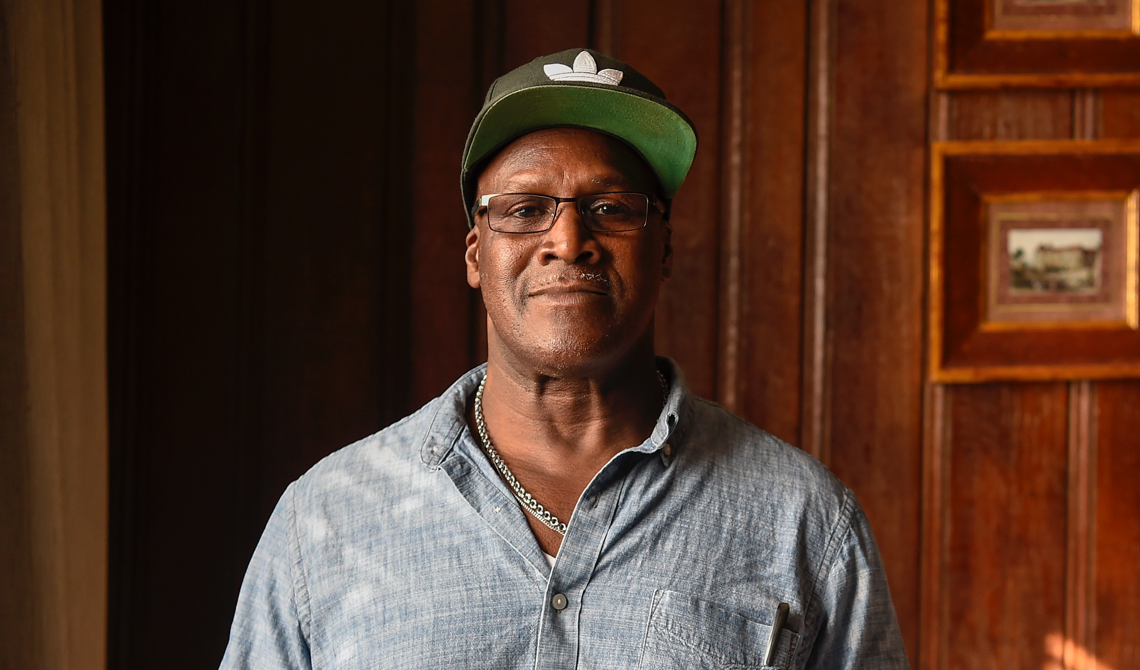
In January 2018, Malcolm Alexander was exonerated in Louisiana of a 1989 rape that he did not commit. After DNA testing obtained by the Innocence Project proved his innocence, Mr. Alexander was released after spending nearly 38 years in prison.
The Crime
At about 11:30 a.m. on Nov. 8, 1979, a Black man walked into an antique store in Gretna, Louisiana. When the owner, B.N., a 39-year-old white woman, attempted to lead him to furniture outside, he grabbed her from behind and clubbed her in the head with a handgun. He then forced her into a bathroom at the rear of the shop and raped her.
After the man fled, B.N. used a towel to clean herself and called the police.
The Investigation
Police found three pubic hairs on the floor of the bathroom and also took the towel into evidence.
B.N. said the attacker was a Black man with a medium complexion, in his early 20s, about six feet tall, and 165-170 pounds. She said he was wearing blue jeans, a dark windbreaker, and a navy blue watch cap. B.N. said that he arrived at the store on a dark orange 10-speed English racing bicycle.
Ten minutes later, police stopped a Black man with his jeans unzipped riding an orange 10-speed bicycle. The man was brought to the antique store, and B.N. viewed him through the front window. She said the man was not her attacker.
B.N. then was taken to a hospital where a rape kit was taken.
On Nov. 30, 1979, B.N. saw a man she thought might be her attacker. When police investigated him, they learned he worked at Superior Pontiac, a car dealership. The man’s fellow employees said he was a hard worker and was not the type of person to commit a sexual assault. On Dec. 18, 1979, police showed B.N. a photographic lineup, which included the man from Superior Pontiac, but she did not identify anyone as her attacker.
In February 1980, police arrested 20-year-old Malcolm Alexander after a woman accused him of sexually assaulting her. After Mr. Alexander told police the sex occurred after he gave the woman money and that it was consensual, he was not charged. But a detective believed that Mr. Alexander fit B.N.’s description, even though he was only 5 feet 9 inches tall.
On March 24, 1980, Jefferson Parish Sheriff’s Department Detective O’Neil De Noux Jr. asked B.N. to view another photographic lineup that included Mr. Alexander’s photo. De Noux’s report said that B.N. made a “tentative” identification of Mr. Alexander.
Three days later, on March 27, B.N. viewed a live lineup that included Mr. Alexander. He was the only person who was in both lineups. This procedure is considered suggestive because a person can subconsciously convert the memory of seeing a person in the first lineup into a memory of that person being the perpetrator. Detective De Noux was not present because he was in court. Detective Marco Nuzzolillo, who conducted the lineup, checked off the box “possible” in his report and next to it wrote “tentative.”
Three hours after the live lineup, Detective De Noux returned from court and interviewed B.N. privately. Afterward, he reported that B.N. now said she was more than 98 percent sure that Mr. Alexander was her attacker.
Mr. Alexander was arrested and charged with aggravated rape.
The Trial
Mr. Alexander went to trial in Jefferson Parish District Court on Nov. 5, 1980. The entire trial was over in a day. The trial transcript was only 87 pages long, and his lawyer, Joseph Tosh, did virtually nothing to defend him. It wasn’t the first or last time Mr. Tosh would fail a client. In 1999, he was disbarred based on more than 50 incidents where he took fees and did little or, frequently, nothing and refused to refund his fees.
Despite the existence of a rape kit and the towel, both of which contained semen, and the three hairs found on the floor where the rape occurred, no forensic tests were performed. Neither the prosecution nor the defense requested any testing.
Despite his report that B.N.’s identification was “tentative,” Detective De Noux told the jury that B.N. “without hesitation identified the photograph of Malcolm Alexander as the man who perpetrated the rape on her.”
Detective Nuzzolillo, who had conducted the second lineup and filled out the report marked “possible” and “tentative,” testified simply that B.N. identified Mr. Alexander.
The prosecution failed to correct the detectives’ testimony or elicit any testimony regarding the police reports listing the identifications as “tentative.”
Mr. Alexander’s attorney never asked any questions on cross-examination about those descriptions. Years later, attorneys for Mr. Alexander would be unable to determine whether the prosecution withheld the reports documenting the identifications as “tentative,” or if Mr. Alexander’s attorney had the reports, but was so incompetent that he failed to realize their significance.
B.N. testified and identified Mr. Alexander as her attacker.
Mr. Tosh presented no defense witnesses and never investigated whether Mr. Alexander, who had a steady job with a contractor at the time of the rape, had a viable alibi. Mr. Tosh made no opening statement to the jury and his closing argument took up just four pages of the trial transcript.
The jury was sent out to deliberate at 5:20 p.m. By 6:16 p.m., 56 minutes later, they had voted to convict, returned to announce the verdict, and been dismissed. The judge sentenced Mr. Alexander to life in prison without parole.
Mr. Tosh assured Mr. Alexander and his family that he would file an appeal, but never did. When this was discovered, another lawyer was allowed to file an appeal, but this was denied by the Louisiana Court of Appeal.
The Exoneration
In 1996, after reading a news article about DNA testing, Mr. Alexander asked the Innocence Project for help. However, a search for the physical evidence was unsuccessful. Court officials informed the Innocence Project that the evidence had been inadvertently destroyed in 1984 during a mass destruction of several hundred boxes of evidence from closed cases. A deputy clerk attributed the destruction to “human error, which should not have happened.”
Mr. Alexander kept fighting. In 2004, after Louisiana enacted a post-conviction DNA testing law, he filed a motion for testing, hoping it would spark further searches for evidence. In 2013, his efforts were rewarded when the Jefferson Parish Sheriff’s Department crime laboratory discovered the hairs that were recovered from the bathroom floor where B.N. was raped.
The Innocence Project and the prosecution agreed to DNA testing on the hairs in 2015, and testing was performed in 2016. The tests showed that all three came from the same person. Mr. Alexander was excluded as the source of the hairs.
In 2017, Innocence Project lawyers Barry Scheck and Vanessa Potkin, joined by Innocence & Justice Louisiana (formerly Innocence Project New Orleans), filed a motion seeking to vacate Mr. Alexander’s conviction, citing the DNA evidence as well as the failure of Mr. Alexander’s trial defense attorney to provide an adequate legal defense.
“The most reasonable conclusion is that the hairs originate from the man who repeatedly raped B.N. from behind, on the floor in the very location where these hairs were collected,” the petition said.
On Jan. 30, 2018, Mr. Alexander’s conviction was vacated after Judge June Berry Darensburg dismissed the case. Mr. Alexander was released after spending nearly 38 years in prison.
After a legal battle spanning five years, Mr. Alexander was awarded $480,000 in state compensation.
Time Served:
38 years
State: Louisiana
Charge: Aggravated Rape
Conviction: Sexual Assault
Sentence: Life without parole
Incident Date: 11/08/1979
Conviction Date: 11/05/1980
Exoneration Date: 01/30/2018
Accused Pleaded Guilty: No
Case Year: 1980
Contributing Causes of Conviction: Eyewitness Misidentification, Government Misconduct, Inadequate Defense
Death Penalty Case: No
Race of Exoneree: African American
Race of Victim: Caucasian
Status: Exonerated by Other Means
Alternative Perpetrator Identified: No
Type of Crime: Sex Crimes
Year of Exoneration: 2018