Carlos Lavernia
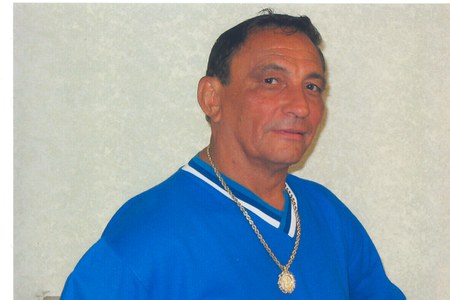
In 2000, Carlos Lavernia was exonerated of a 1983 rape in Austin, Texas. DNA testing excluded him as the source of biological evidence. He spent nearly 16 years in prison for a crime he did not commit.
The Crime
Between June 1981 and July 1983, the Barton Creek Greenbelt in Austin, Texas, was the scene of seven rapes and one murder — that of Sally Tullos. Like Ms. Tullos, all the victims were women who were walking or jogging in the area. The news media reported that police believed a single suspect, dubbed the “Barton Creek Rapist,” was responsible.
The attacks stopped in the summer of 1983, after the police began patrolling the area on horseback, on foot, and in squad cars. The police attempted to find the culprit among those who had been arrested around the time the attacks ceased.
In the summer of 1984, the police focused on a 34-year-old Carlos Lavernia, a Cuban immigrant who had been living in Austin until he was detained that January by U.S. Immigration and Naturalization Service agents. He had been transferred to a federal prison in Atlanta, Georgia, awaiting disposition of his immigration charges.
A review of Mr. Lavernia’s record showed that he had been convicted in 1982 of indecency with a child and sentenced to 10 years on probation. On at least one occasion, Mr. Lavernia had been stopped while in the Barton Creek area and questioned, but had been released.
On Aug. 29, 1984, a woman identified as L.W., who had been attacked on June 2, 1983, identified Mr. Lavernia in a photographic lineup and he was charged with aggravated sexual abuse. Mr. Lavernia was charged with another rape when the victim of that attack also identified him in a photographic lineup.
The Trial
In January 1985, Mr. Lavernia went to trial in Travis County District Court for the June 2, 1983 attack. Although he was only charged with two rapes, authorities believed that he was the Barton Creek Rapist.
L.W. testified that late in the afternoon on June 2, 1983, she had set out on her daily jog through the Barton Creek Greenbelt. While heading east from her apartment toward Gus Fruh Park, she walked past a Hispanic man, about 5 feet 6 inches, in his early to mid-twenties, wearing a maroon shirt and baggy maroon polyester pants. After jogging another half a mile, the victim decided to turn around and head home. However, the man from earlier emerged and sexually assaulted her. She identified this man as Mr. Lavernia, who was 5 feet 3 inches tall.
The victim in the other attack also testified and identified him as her attacker.
Serological testing had been conducted on semen from the rape kit taken from L.W., and the results were consistent with blood group markers of both L.W. and Mr. Lavernia. The analyst misleadingly testified that 67% percent of people were excluded as possible perpetrators, and that Mr. Lavernia was included. In reality, because the evidence was a mixture of semen and vaginal secretions, the victim’s blood group markers could have been masking the perpetrator’s blood group markers, meaning no one could be eliminated as a suspect.
Mr. Lavernia did not testify and the defense presented no evidence.
On Jan. 23, 1985, Mr. Lavernia was convicted by the jury of aggravated sexual abuse. He was sentenced to 99 years in prison. The prosecution then dismissed the other rape charge.
His conviction was upheld on appeal. Mr. Lavernia, acting without a lawyer, filed several motions seeking DNA testing, but the motions were denied. He filed a federal petition for a writ of habeas corpus, but that was denied.
The Exoneration
In 1999, Austin police detective J.W. Thompson, who was continuing to investigate the murder of Ms. Tullos, visited Mr. Lavernia in prison. He obtained a DNA sample in an attempt to link Mr. Lavernia to the murder. During their conversation, Mr. Lavernia told Detective Thompson that he was innocent of the rape of L.W. He later wrote Detective Thompson a letter asking for help in obtaining DNA testing.
At the time, Detective Thompson talked to Bryan Case, a prosecutor in the Travis County District Attorney’s Office. The conversation took place as the District Attorney’s office was contemplating a new policy to review murder and sexual assault cases in which identity was an issue and where DNA testing, had it been available, could have affected the verdicts.
Mr. Case decided to seek DNA testing in Mr. Lavernia’s case. He discovered the court records had been destroyed. However, he found a manila envelope stuffed with evidence in the case, including the swabs from the rape kit and the victim’s stained running shorts, in a Travis County warehouse. The evidence was sent out for DNA testing.
On Sept. 8, 2000, the testing showed that Mr. Lavernia was excluded as the source of the semen.
On Oct. 11, 2000, ruling on a writ of habeas corpus filed by Mr. Lavernia’s lawyers, Travis County District Judge Mike Lynch recommended that Mr. Lavernia’s conviction be vacated. The recommendation was sent to the Texas Court of Criminal Appeals.
On Nov. 29, 2000, the Texas Court of Criminal Appeals granted the writ, vacated Mr. Lavernia’s conviction, and remanded the case to Travis County District Court. The case was dismissed the following day.
Subsequently, Mr. Lavernia was awarded $435,000 in state compensation plus a monthly annuity of $8,900.
Mr. Lavernia remained in custody for three years after the exoneration, fighting to avoid deportation. Ultimately, in October 2003, he was released after the indecency case was dismissed, clearing the way for the end of his immigration battle.
Time Served:
16 years
State: Texas
Charge: Aggravated Sexual Assault, Rape
Conviction: Aggravated Sexual Abuse
Sentence: 99 years
Incident Date: 06/02/1983
Conviction Date: 01/23/1985
Exoneration Date: 11/29/2000
Accused Pleaded Guilty: No
Contributing Causes of Conviction: Eyewitness Misidentification, Inadequate Defense, Unvalidated or Improper Forensic Science
Death Penalty Case: No
Race of Exoneree: Latinx
Race of Victim: Caucasian
Status: Exonerated by DNA
Alternative Perpetrator Identified: No
Type of Crime: Sex Crimes
Forensic Science at Issue: Flawed Serology
Year of Exoneration: 2000