From Injustice to Influence: The Enduring Legacy of the Exonerated Five

What began as one of New York’s most infamous cases of wrongful conviction now stands as a testament to survival, solidarity, and systemic change.

12.18.25 By Bella Bromberg

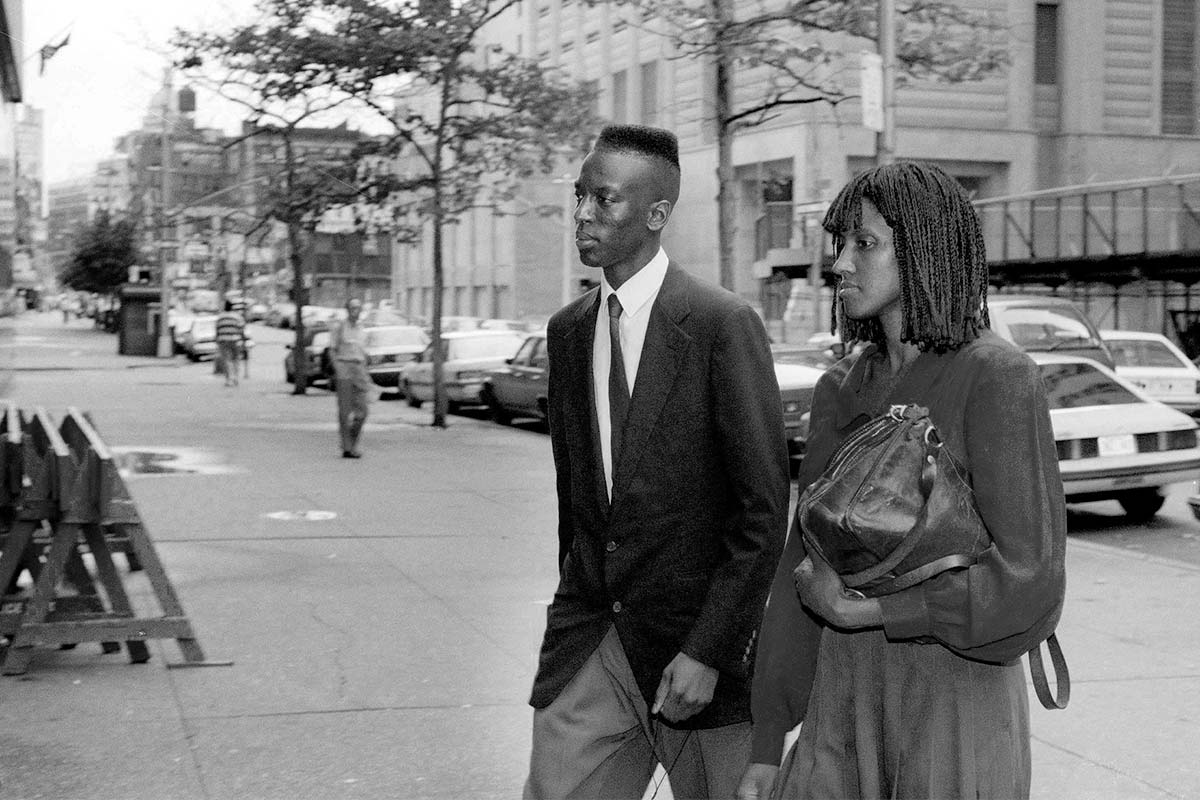
In this Aug. 11, 1990 file photo, Yusef Salaam enters State Supreme Court in Manhattan with his mother, Sharonne Salaam, on the third day of deliberations in the Central Park jogger trial. (Image: Phillip Schoultz/AP Photo)

In this Aug. 11, 1990 file photo, Yusef Salaam enters State Supreme Court in Manhattan with his mother, Sharonne Salaam, on the third day of deliberations in the Central Park jogger trial. (Image: Phillip Schoultz/AP Photo)

On Dec. 19, 2002, the Central Park Five became the Exonerated Five. In the years since, their story has inspired a raft of powerful productions and their activism has moved the needle in policy and perception surrounding wrongful convictions and police deception.

Their case became a prime example of the racial profiling and bias intrinsic to the criminal justice system. Today, 36 years after their wrongful arrests and 23 years since their rightful exonerations, their story resonates across media, government, and policy reform, leaving an indelible mark.

The Exonerated Five — Antron McCray, Kevin Richardson, Yusef Salaam, Raymond Santana, and Korey Wise — were all between the ages of 14 and 16 at the time of their wrongful arrest for assault and rape in 1989. In a case of police deception now notorious, interrogators lied to each of the teenagers by saying that all of the others had confessed to the crime — and that if they too confessed, they could go free.

In 2002, after they had already spent between 7 to 13 years in prison, the truth came to light: known rapist Matias Reyes confessed to the crime, along with new DNA evidence that proved his guilt. The Manhattan district attorney subsequently recommended that all charges against the five be withdrawn. 

From the Screen to the Stage

Over the years, the Exonerated Five’s story has been retold across multiple platforms reaching audiences far beyond those who followed the case in real time. 

Ten years after their exoneration, famed filmmaker Ken Burns collaborated with his daughter, Sarah Burns, to direct the first documentary about the case, “The Central Park Five,” which they released to critical acclaim in November of 2012.

The story’s June 2019 arrival to an operatic stage speaks to its ubiquitous cultural resonance. Anthony Davis’s Pulitzer-Prize winning Opera about the Central Park Five may seem an esoteric, surprising medium to properly render the exonerees’ ordeal. But for director Nataki Garrett, it is the perfect one. “Opera is the space for the epic story,” she explained. “The viewer gets to witness something they recognize, but in this kind of vastness.”

Actor Justin Hopkins portrayed Mr. McCray in the most recent Detroit run and shared his experience with the Innocence Project.

“It’s unavoidable to feel weighed down by the heaviness of it,” he said of acting in the show. “It was important that we stayed dynamic human beings onstage, relatable to the audience, so that they could see they weren’t just watching stock characters — that these are human beings: they’re our sons; they’re our brothers; they’re our family.”

For Mr. Richardson, who met the original opera cast at the show’s Long Beach, Calif. premiere in June of 2019 and has seen parts of the show online, watching the opera’s interrogation scene brought back difficult emotions. “It made me feel like 14-year-old Kevin again,” he said. “It definitely was emotional. It’s hard to see. But it’s necessary.”

Just a month earlier, Ava DuVernay’s Netflix miniseries “When They See Us” had premiered as a four-episode limited series. Before filming, Ms. DuVernay made sure to talk extensively with Mr. Richardson and the other members to ensure they felt comfortable with her telling their story. 

“Ava’s my sister from another mister,” he said. “We knew we had a bond.”

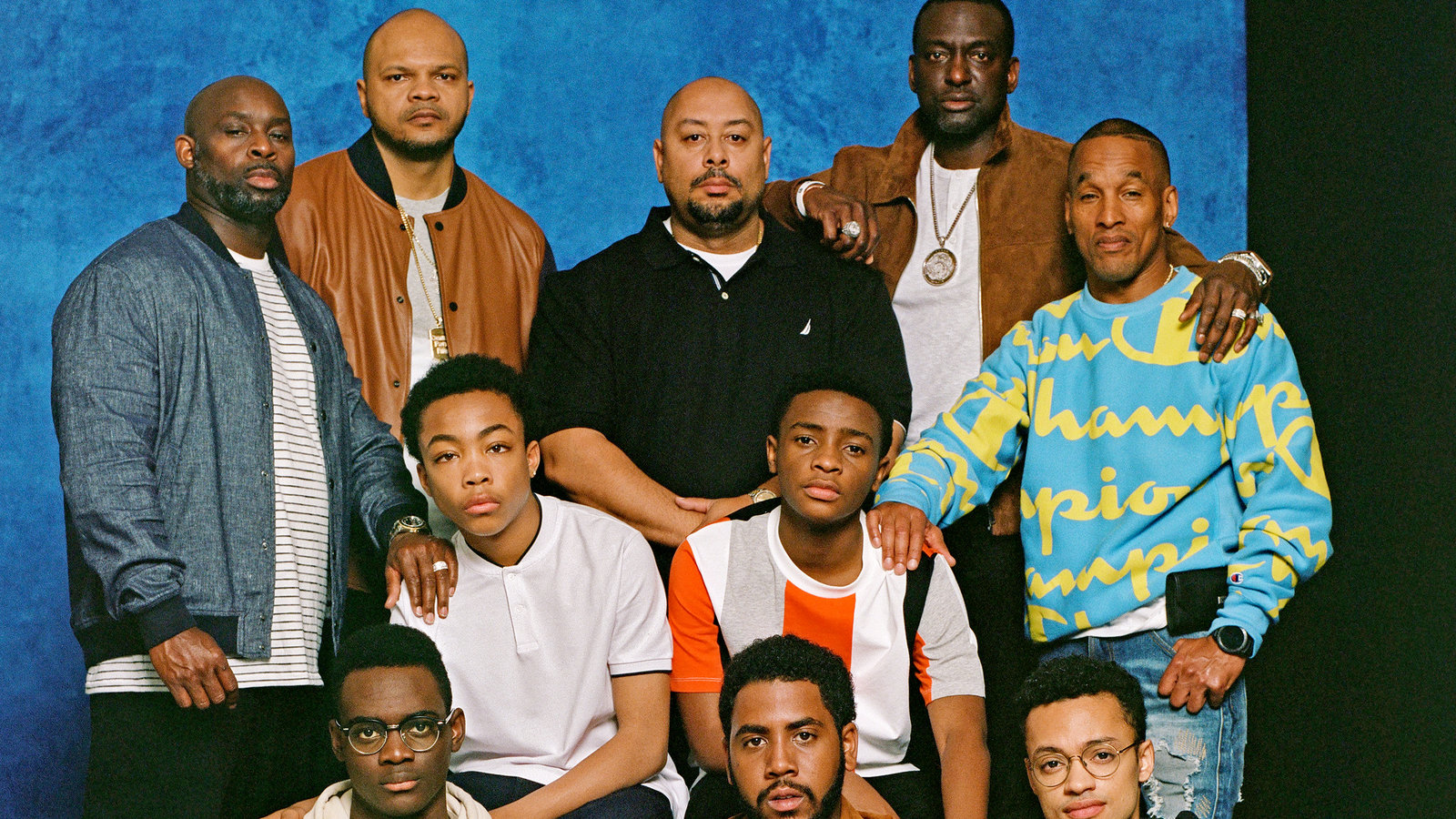
The Exonerated Five pose with the When They See Us actors who portray them. Clockwise from top left: Antron McCray, Kevin Richardson, Raymond Santana, Yusef Salaam, Korey Wise, Marquis Rodriguez, Jharrel Jerome, Ethan Herisse, Asante Blackk, and Caleel Harris. Credit: Brad Ogbonna for The New York Times.

The Exonerated Five pose with the When They See Us actors who portray them. Clockwise from top left: Antron McCray, Kevin Richardson, Raymond Santana, Yusef Salaam, Korey Wise, Marquis Rodriguez, Jharrel Jerome, Ethan Herisse, Asante Blackk, and Caleel Harris. Credit: Brad Ogbonna for The New York Times. 

Within its first four weeks, Netflix reported that some 25 million accounts had streamed the series worldwide. The show received widespread praise, earning a 97% approval rating on Rotten Tomatoes and taking home trophies in 10 categories at the 71st Primetime Emmy Awards. Its release re-ignited public conversations about the Exonerated Five case, reaching a new generation of viewers. 

“When it came out, it took us to a whole ‘nother stratosphere,” Mr. Richardson recalled. Although their case always held historical relevance, he admitted, the Netflix series re-disseminated the story to Gen Z viewers. 

“We became more relevant with this generation — people that weren’t even born when this happened,” he said. “It started the conversations again.”

A Legacy Cemented 

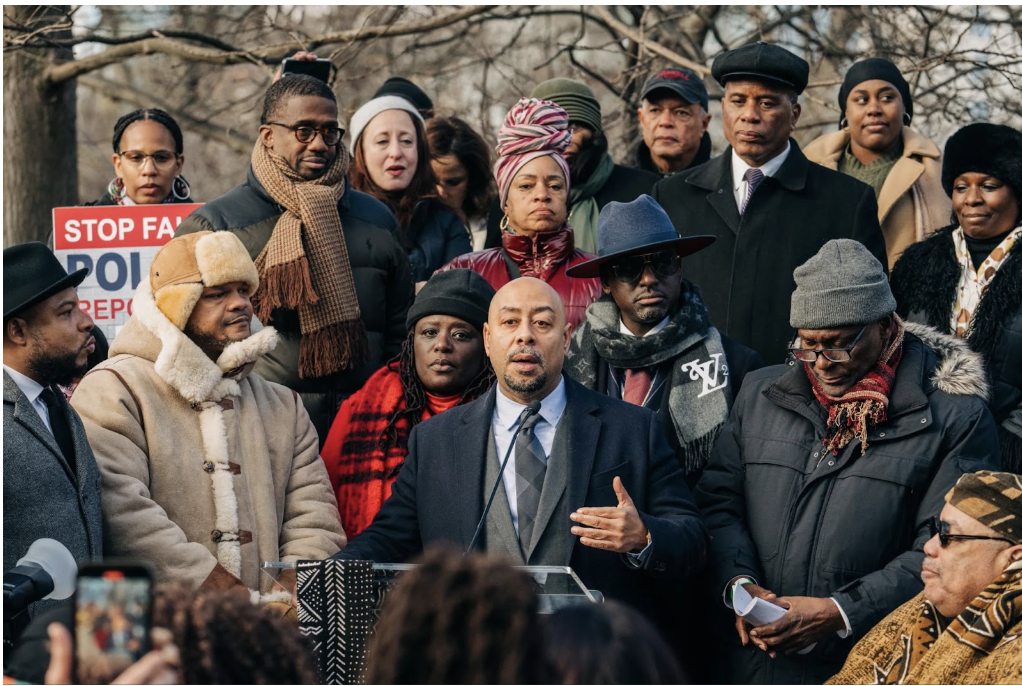
On the 20th anniversary of their exoneration, the Exonerated Five returned to the place where their stories of wrongful conviction began — Central Park. This time, however, they came to see their resilience memorialized in a public space. Dedicated on Dec.19, 2022, the 20th anniversary of the Exonerated Five’s vacated convictions, the Gate of the Exonerated marks the first official addition to Central Park’s named entrances since the 19th century. In partnership with the City of New York, NYC Parks, and Manhattan Community Board 10, the Central Park Conservancy formally designated the entrance at 110th Street between Malcolm X Boulevard and Fifth Avenue to permanently honor the Exonerated Five and all people who have been wrongfully convicted. Created with support from the Harlem community, the gate reflects a shared desire for healing and recognition of the case’s lasting impact on Black and Latine New Yorkers. 

Raymond Santana speaks at the unveiling of the “Gate of the Exonerated” Central Park Entrance on Dec. 19, 2022, the 20th anniversary of their exoneration. (Image: Jeenah Moon/Innocence Project)

Raymond Santana speaks at the unveiling of the “Gate of the Exonerated” Central Park Entrance on Dec. 19, 2022, the 20th anniversary of their exoneration. (Image: Jeenah Moon/Innocence Project)

Egregious Injustice to Statewide Reform 

What began as a flagrant miscarriage of justice evolved into a force for policy change, as the Exonerated Five’s case helped drive reforms of New York’s interrogation laws. At the time of their arrests in 1989, New York police were legally permitted to lie to those who were accused, including minors, a practice that contributed to the false confessions at the heart of the Central Park case. 

Reflecting on the interrogation, Mr. Richardson recalled the moment he and the others realized they had been deceived. “We realized it early on,” he said. “After everything was done, as far as the confession and the false written statements, we realized that we’d been bamboozled or tricked. It was crushing to find out that detectives and police officers can actually lie, and it was legal to do that.” 

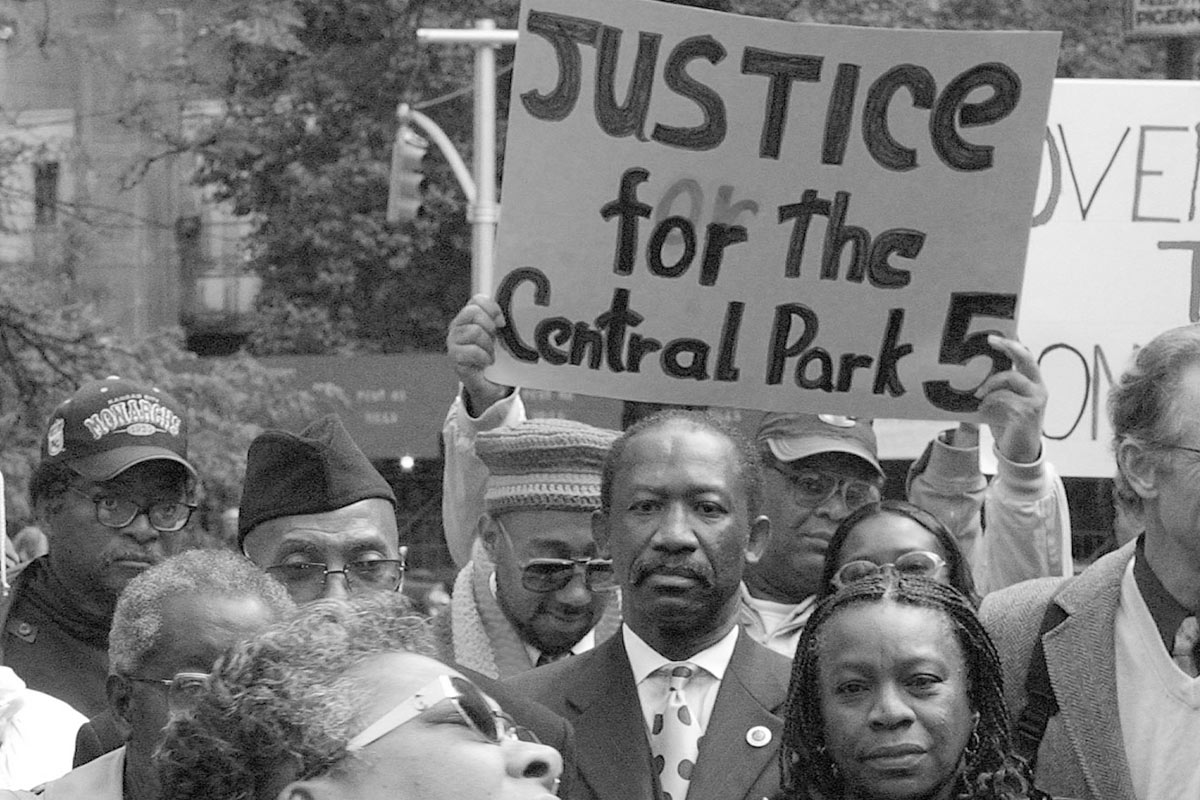
Oct. 21, 2002—Supporters rally in front of Manhattan Supreme Court to demand the 1990 convictions of Yusef Salaam, Korey Wise, Antron McCray, Kevin Richardson, and Raymond Santana be overturned. (AP Photo/Robert Mecea)

Oct. 21, 2002—Supporters rally in front of Manhattan Supreme Court to demand the 1990 convictions of Yusef Salaam, Korey Wise, Antron McCray, Kevin Richardson, and Raymond Santana be overturned. (AP Photo/Robert Mecea)

Their case has helped fuel statewide efforts to reform interrogation practices — processes that, for years, often exploited the trusting nature of youth. In 2018, a New York State law took effect requiring that police interrogations in serious felony cases be videotaped. The measure, aimed at increasing transparency and reducing the risk of coerced confessions, marked a significant step in wrongful conviction prevention. 

Mr. Richardson, Mr. Salaam, and Mr. Santana played instrumental roles in advocating for the change, all appearing in an End Wrongful Convictions public awareness campaign that emphasized the need to end deceptive interrogation tactics. Mr. Salaam also penned an op-ed for the New York Daily News urging lawmakers to adopt the measure. Such policy victories have done more than just change the law; they help equip future generations with protections against the injustices the Exonerated Five experienced in 1989. Today, 30 states and the District of Columbia now require the recording of interrogations. 

Reclaiming Their Story 

Long after the headlines faded, Mr. Salaam, Mr. Santana, Mr. Richardson, Mr. McCray, and Mr. Wise began forging identities beyond the case that had long defined them. They stepped forward, reclaimed their narrative, and started to reshape their communities.

After prison, Mr. Salaam worked in construction, but the company fired him when it found out who he was. Despite being free, the stigma of being formerly incarcerated — even wrongfully so — followed him.

 “If you survive prison, every single door for success will be shut in your face,” he told a New York Times reporter of the dispiriting experience. 

Mr. Salaam forged on, finding work at Weill Cornell Medical and later dedicating himself to motivational speaking, bookwriting, fatherhood, and poetry. For this work — as an advocate raising awareness around police misconduct, forced confessions, and mass incarceration — President Barack Obama issued him a lifetime achievement award in 2016.

Eventually, Mr. Salaam entered politics, announcing his candidacy to New York City Council in February of 2023. 

“As a victim of a broken criminal justice system, I understand the challenges faced by those who are marginalized and neglected by the powers that be,” he wrote on his campaign website.

Throughout his race, Mr. Salaam also spoke often and openly about his wrongful conviction and exoneration. He won the Democratic primary in a landslide victory, and after running unopposed, secured the seat of Central Harlem, the city’s 9th District and his lifelong home. His term began in January of 2024. 

In February of 2025, Mr. Santana endeavoured to do the same. Though he did not win, he says he would “definitely run again,” calling politics a “natural progression” of the advocacy work that he has already been doing. 

In the meantime, Mr. Santana keeps busy with motivational speaking and designing pieces for his clothing brand, Park Madison NYC, named for his childhood home in Harlem, located on 111th Street between Park and Madison Avenues. The brand carries a special design dedicated to the Exonerated Five called the “Brotherhood Hoodie,” a heather grey sweatshirt that lists, in bold black lettering, “Yusef, Kevin, Antron, Korey & Raymond.” 

For Mr. Santana, the fashion brand serves as “another way of me recapturing my youth and reclaiming something that I lost,” he said. “And I just wanna make dope stuff,” he added. He also recently published “Pushing Hope,” a graphic novel about his life. 
Raymond at a book signing for his graphic novel memoir, “Pushing Hope,” published on October 28th, 2025. 
(Photo courtesy of Raymond Santana.)

Raymond at a book signing for his graphic novel memoir, “Pushing Hope,” published on October 28th, 2025. (Photo courtesy of Raymond Santana.)

Mr. Richardson, meanwhile, spends his time working as a criminal justice advocate and motivational speaker. In 2023, he started the Kevin Richardson Foundation to provide mentorship and programming for young people, with the goal of “creating a community for others that look like myself,” he said in a phone interview. Part of his current work involves organizing youth workshops that teach skills in courage, protection, and resilience; Mr. Richardson calls them “CPR” for short. 

“In 1989, me and my brothers — Antron, Korey, Kevin, Yusef — we didn’t get CPR,” he said. 

Mr. Richardson noted that the public often fails to remember just how young they were at the time of their wrongful arrests. 

“I was just scratching the surface of life,” he said. “People forget that we were literally kids.”

Mr. Wise has also supported efforts to end wrongful convictions — as a philanthropist, public speaker, and the namesake of the Korey Wise Innocence Project, housed in University of Colorado’s School of Law. Mr. Wise’s attorneys decided to start a new life in Colorado and sought to open up an Innocence Project under his name. He obliged and provided a major donation to help them get started. 

Despite bringing about profound community impacts, post-incarceration life can still feel hollow. 

“You just feel so empty sometimes,” he said. 

As of four months ago, however, Mr. Wise has found life-affirming meaning in fatherhood, and things are looking especially bright. 

Raising his daughter has been a “beautiful bundle of joy experience,” he said. 

Her name is Miracle.  

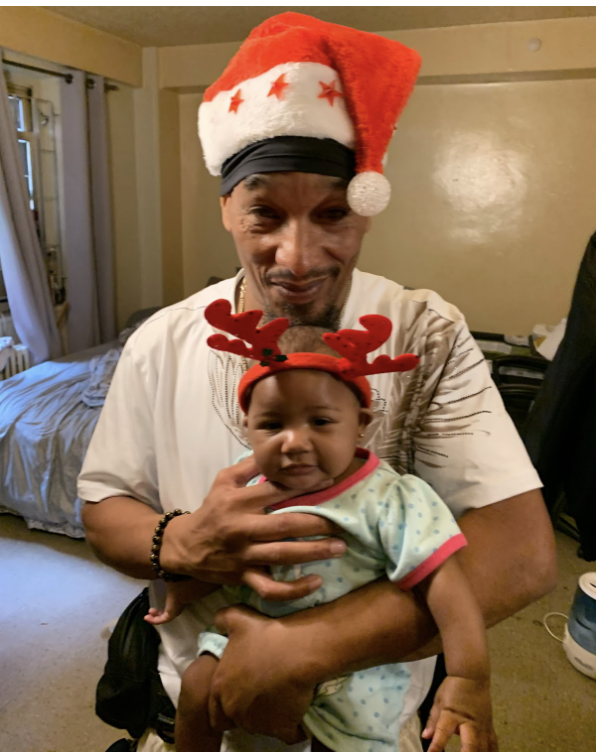
Korey and his daughter Miracle. 
(Photo courtesy of Korey Wise.)

Korey and his daughter Miracle.
(Photo courtesy of Korey Wise.)

Leave a Reply

Thank you for visiting us. You can learn more about how we consider cases here. Please avoid sharing any personal information in the comments below and join us in making this a hate-speech free and safe space for everyone.

This field is required.

We've helped free more than 250 innocent people from prison. Support our work to strengthen and advance the innocence movement.