Eddie James Lowery
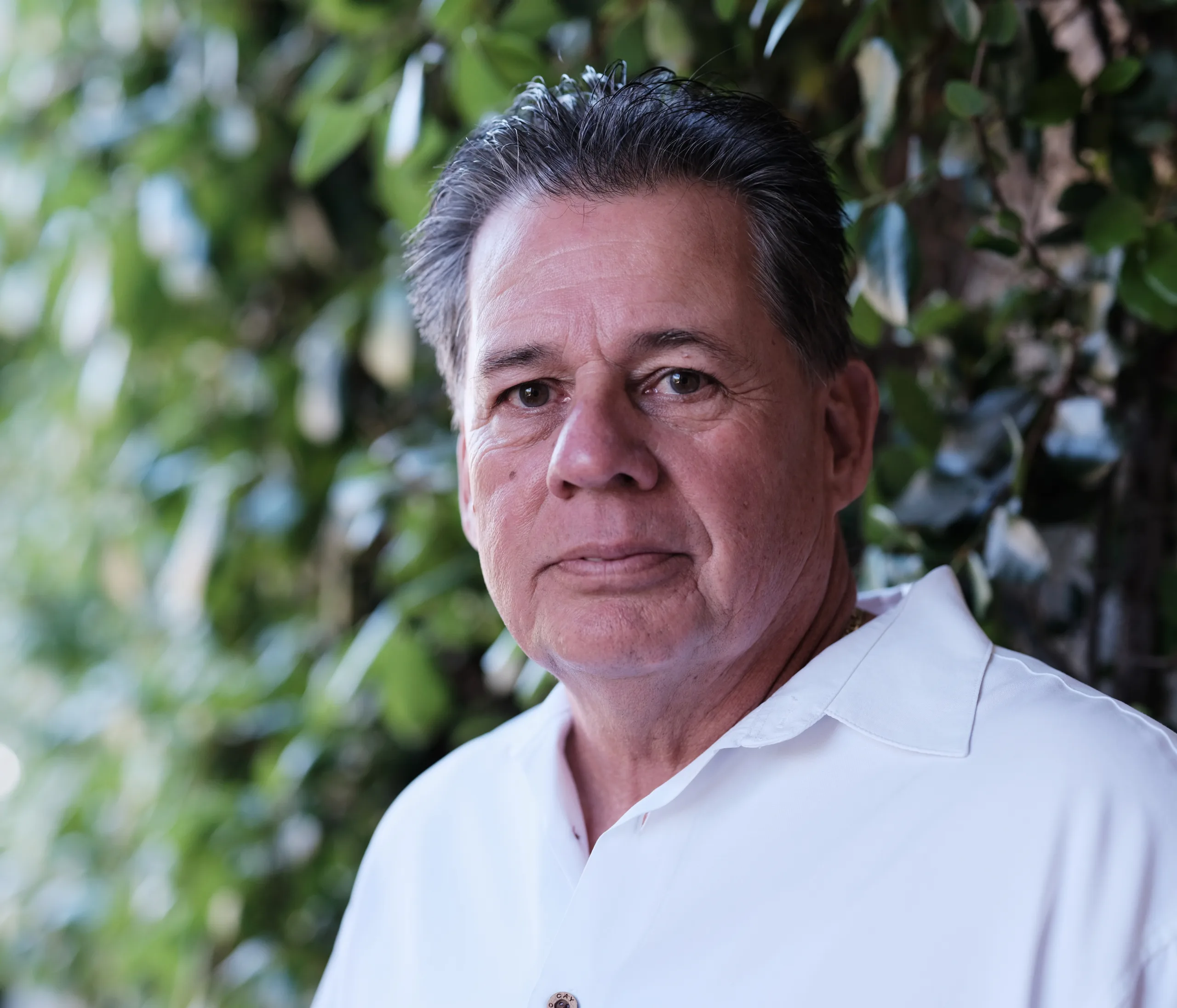
In April 2003, Eddie James Lowery was exonerated of a 1981 rape in Ogden, Kansas. DNA testing excluded him and ultimately identified the actual perpetrator. Mr. Lowery served nine years in prison for a crime he did not commit and was required to register as a sex offender every year.
The Crime
In the early morning hours of July 26, 1981, a 74-year-old woman, identified as A.K., was attacked and raped in her home in Ogden, Kansas. Afterwards, the victim contacted the police and was taken to a hospital, where she was treated for her injuries and a rape kit was collected.
The Investigation
At about the same time as the crime, 22-year-old Eddie James Lowery, a soldier stationed at nearby Fort Riley, was hosting several friends for a late night party. Around 1 or 2 a.m., he stepped out to buy cigarettes at the local Mini Mart a few blocks away. On the drive back, on a dark road without street lights, he accidentally hit the back of a parked car, crashing his chin into the steering wheel in the process. He wiped off some of the blood using his shirt as a bandage.
Charles Adams, who owned the car, called the police around 3:25 or 3:30 a.m. An officer arrived and spoke to Mr. Lowery about the accident, then brought him home. A friend of Mr. Lowery’s helped push the damaged car back to his home.
The following day, Riley County Police Officer Harry Malugani asked Mr. Lowery to come to the police station. Mr. Lowery believed the police wanted to talk to him about the car accident. He had no available vehicle due to the accident, so Officer Malugani and Officer Douglass Johnson picked him at 4 p.m. and brought him to the station. There, they questioned him about the rape, which Mr. Lowery denied committing. He agreed to allow the officers to search his home where he lived with his wife and daughter. A shirt and a pair of pants were collected.
Mr. Lowery agreed to return the following day to take a polygraph examination. Officer Malugani picked him up at 8:30 a.m. Mr. Lowery had barely slept and had not eaten breakfast.
He was taken to an interview room, where, after he signed a waiver of his Miranda rights, he was questioned about the rape. Mr. Lowery asked for a lawyer. Officer Malugani told him he did not need one, and so no lawyer was summoned.
From 9:30 a.m. to about 12:30 p.m., Mr. Lowery underwent a polygraph examination during which he denied involvement in the crime. As the interrogation progressed, Officer Malugani grew increasingly angry, and Mr. Lowery became emotional, confused, and upset. He began crying and responding affirmatively to the questions posed by Officers Malugani and Johnson in the hope that they would put him in jail so he could get a lawyer.
Afterwards, Mr. Lowery was arrested and charged with rape, aggravated battery, and aggravated burglary.
The officers then prepared a report describing the confession, arguing that it was credible because Mr. Lowery had revealed, without prompt or suggestion, facts about the case that only the perpetrator could have known. In addition, the report contained other “admissions” that Mr. Lowery did not make. Mr. Lowery later asserted that he had told the officers that he broke into the house through the front door. However, the perpetrator gained entry through the back door. The officers maintained that Mr. Lowery told them he broke in through the back.
The Trial
Mr. Lowery denied that he had confessed. His attorney filed a motion to suppress the statement, but the trial court denied the motion, ruling that the confession was made voluntarily. The confession was the cornerstone of the prosecution’s case.
In November 1981, Mr. Lowery went to trial in Riley County District Court.
Officers Malugani and Johnson testified about the interrogation. They denied that Mr. Lowery had asked for an attorney and asserted that he had provided all the details of the crime. They denied feeding him information.
Mary Cortese, a serologist at the Kansas Bureau of Investigation, testified that in addition to the rape kit, police had collected bedding and A.K.’s nightgown containing blood and seminal fluid. The blood was determined to be type A, which was A.K.’s blood type. The seminal fluid was determined to be type O, which was consistent with Mr. Lowery’s blood type as well as blood found on his pants.
Ms. Cortese, assuming that Mr. Lowery was a secretor, testified that he was among 38.4% of the population that could have produced the seminal fluid. However, she never performed testing to determine if Mr. Lowery was a non-secretor, meaning his blood type would not show up in serological testing, rendering the statistic inaccurate.
On Nov. 12, 1981, a mistrial was declared when the jury was unable to reach a unanimous verdict.
Mr. Lowery went to trial a second time in January 1982. On Jan. 7, the jury convicted him of rape, aggravated burglary, and aggravated battery. He was sentenced to 11 years to life in prison.
In 1991, Mr. Lowery was released on parole and was required to register annually as a sex offender.
The Exoneration
Through his attorney, Barry Clark, and with the assistance of the Innocence Project, Mr. Lowery requested an evidence search, which turned up biological evidence from the investigation, including swabs from the rape kit, portions of the bedding, and portions of the victim’s nightgown.
In September 2002, DNA testing confirmed Mr. Lowery’s claim of innocence. The semen found on the victim’s bedding originated from the same person as the semen found on the vaginal swabs. Mr. Lowery was excluded as the contributor.
On April 3, 2003, Riley County District Judge Meryl Wilson vacated Mr. Lowery’s convictions and the prosecution dismissed the case.
“Nothing that I say or do today will give back to you the years you spent in prison or the years you spent registering as a sex offender,” Judge Wilson said. “I can today, by signing this order, restore to you your reputation and perhaps your dignity.”
Mr. Lowery subsequently filed a federal civil rights lawsuit against the Riley County Police Department and Officers Malugani and Johnson seeking compensation. He settled the case in 2010 for $7.5 million.
In 2011, the DNA profile from the evidence was linked to Daniel Brewer, who was living in New York. Mr. Brewer pleaded guilty to the rape for which Mr. Lowery was wrongly convicted, as well as another rape committed in March 1981, about four months prior to the attack of A.K. He was sentenced to 12 to 20 years in prison.
Time Served:
9 years
State: Kansas
Charge: Rape, Aggravated Battery, Aggravated Burglary
Conviction: Rape, Aggravated Battery, Aggravated Burglary
Sentence: 11 years to life
Incident Date: 07/26/1981
Conviction Date: 01/07/1982
Exoneration Date: 04/03/2003
Accused Pleaded Guilty: No
Contributing Causes of Conviction: False Confessions or Admissions, Government Misconduct, Unvalidated or Improper Forensic Science
Death Penalty Case: No
Race of Exoneree: Caucasian
Race of Victim: Caucasian
Status: Exonerated by DNA
Alternative Perpetrator Identified: Yes
Type of Crime: Sex Crimes
Forensic Science at Issue: Flawed Serology
Year of Exoneration: 2003