Roy Criner
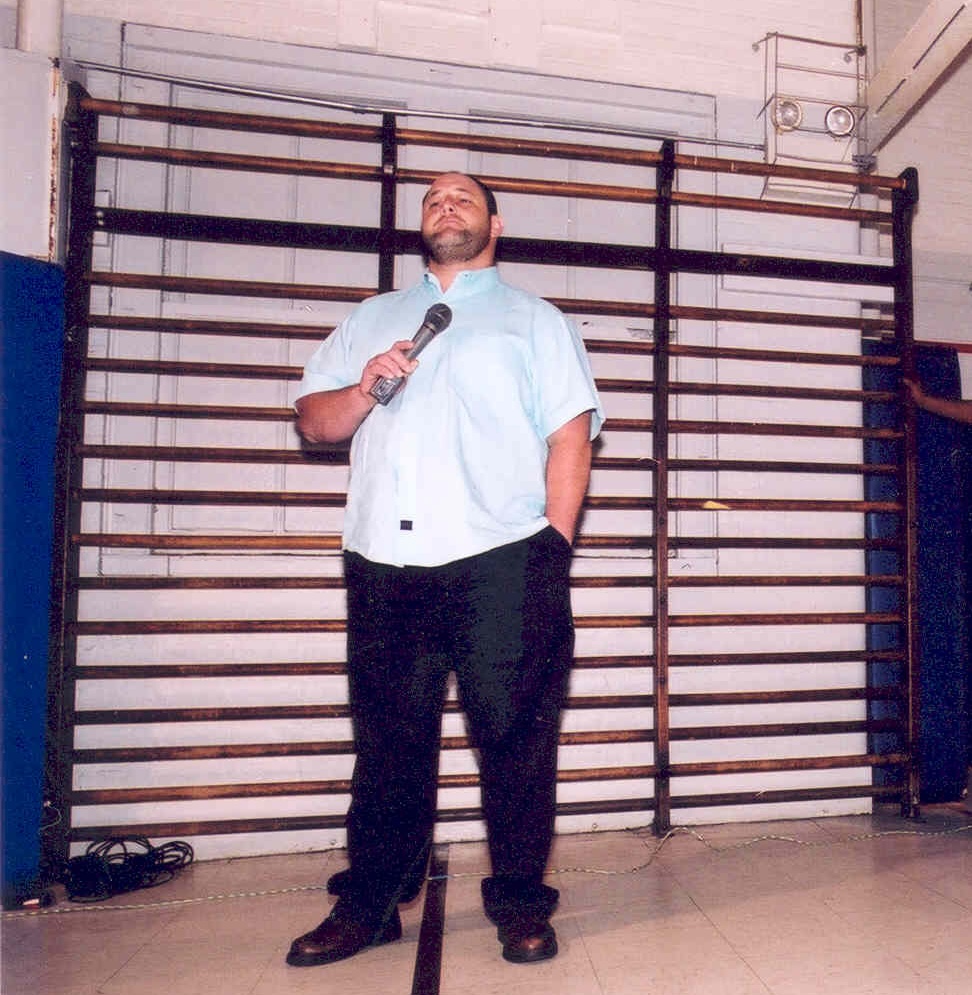
In August 2000, Roy Criner was exonerated of a 1986 aggravated assault in Montgomery County, Texas. DNA testing revealed that Mr. Criner was innocent, leading to his release from prison after serving more than 10 years.
UPDATED June 2026: Nearly four decades after Deanna Ogg’s murder, advances in forensic genetic genealogy technology led to an arrest in the case.
The Crime
On Sept. 27, 1986, 16-year-old Deanna Ogg left her home in Porter, Texas. Three hours later, just after 7 p.m., several teenagers found her body about eight miles from her home, in a secluded wooded area near an old logging road.
Police found a Marlboro cigarette near the teenager’s body, and a large clump of blonde hair clutched in her right hand.
The Investigation
A pathologist concluded the cause of death was blunt trauma to the head and multiple stab wounds to the neck. The victim also had been sexually assaulted.
Twenty-one-year-old Roy Criner, whose lawyer would later describe him as “nearly retarded,” became a suspect after allegedly bragging to friends that he had picked up and had sex with a young woman who he “had to get rough with.”
On Oct. 29, 1986, Mr. Criner was charged with murder, but in September 1987 that charge was replaced with one count of aggravated sexual assault.
The Trial
In April 1990, Mr. Criner went to trial in Harris County Criminal District Court. The Harris County medical examiner testified that Deanna had died from a fractured skull and multiple stab wounds to her neck, possibly made with a screwdriver. Sperm was found on vaginal and rectal smears. There was no evidence of trauma to the vaginal area and the medical examiner could not determine whether the sexual intercourse had been consensual.
Former Montgomery County Sheriff’s Deputy Charles Self testified that on Sept. 30, 1986, he had seized a brown flat-bed truck belonging to Jesse Pitts, who was Mr. Criner’s boss. The deputy testified that he had found a small flathead screwdriver sticking in an air conditioning vent. The screwdriver was never subjected to any analysis.
Maurita Howarth, a forensic serologist with the Texas Department of Public Safety, testified that she had analyzed blood, semen, and hair samples taken from the victim’s body, Mr. Criner, and the truck. None of the hair found on Deanna’s body belonged to Mr. Criner, and none of the hair found in the truck belonged to Deanna.
Ms. Howarth further testified that serology testing on the semen from the vaginal and rectal swabs contained a blood type group that Deanna and Mr. Criner both had. Based on this, the analyst said that the sample could have belonged to Mr. Criner or any of the 40% of men who shared the blood type. This testimony was incorrect, however, because the victim’s blood group markers could have been “masking” the perpetrator’s. In fact, 100% of the male population could have been included.
According to Deanna’s family, on the day she was murdered, the teenager had planned to attend a dance with her grandmother and her uncle, who lived about 30 minutes away. Unable to get a ride, Deanna left her home on foot.
Virginia Mathes, a clerk at a convenience store in Porter, Texas, testified that Deanna had come into the store sometime between 5:30 p.m. and 7:00 p.m. to purchase cigarettes. She had been with some friends and was going to a party in Conroe, Texas.
The remainder of the prosecution’s case relied on the testimony of three men — Michael Ringo, Terry Dale Hooker, and Jeffrey Pitts — who claimed that Mr. Criner had made statements suggesting that he had picked up a hitchhiking woman and had sex with her behind a school. However, all three men were impeached due to the unreliability of their testimony. Each recalled Mr. Criner describing the woman as 20 years old and drunk — details that directly conflicted with the facts of the case, as the victim had been 16 years old and her toxicology report showed no traces of alcohol or drugs. Furthermore, two of the men indicated that Mr. Criner had been referring to an encounter that occurred the night before Deanna’s death.
The defense called Texas Ranger Stan Oldham to testify that he had been informed by the Montgomery County Sheriff’s Department that the screwdriver found in the truck had a Phillips head, not a flathead.
On April 26, 1990, the jury convicted Mr. Criner of aggravated sexual assault. He was sentenced to life in prison. He was allowed to remain free on bond while the case was appealed.
In September 1991, the Ninth Circuit Texas Court of Appeals, in a 2-1 decision, vacated the convictions and ordered the case dismissed for insufficient evidence. The prosecution appealed and in December 1991, the Texas Court of Criminal Appeals reinstated the conviction, ruling that the lower court had misapplied the law. In July 1994, Mr. Criner was arrested and imprisoned.
The Exoneration
In June 1997, the Montgomery County District Attorney’s Office agreed to submit the vaginal and rectal swabs for DNA testing. In August 1997, after the results indicated that the sperm did not come from Mr. Criner, his attorney Mike Charlton filed a state writ of habeas corpus challenging his client’s unlawful imprisonment. Despite independent testing requested by the prosecution that confirmed the exclusion of Mr. Criner as the source of sperm, the prosecution denied the defense’s request.
In January 1998, Montgomery County Judge Michael Mayes recommended that the writ be granted. However, in May 1998, the Texas Court of Criminal Appeals, in an unpublished ruling, denied the writ. The court found the DNA test results insufficient, suggesting that Mr. Criner could have been wearing a condom or failed to ejaculate, though these theories had never been previously presented. Court of Criminal Appeals Judge Sharon Keller contended that the semen could have resulted from consensual sex prior to the killing, again raising a theory that had never been previously presented.
Mr. Criner then sought post-conviction DNA testing on the cigarette found next to Deanna’s body. Testing indicated that the cells on the cigarette filter contained a mixture of DNA from at least three individuals, with at least one being a male and another a female. Mr. Criner was eliminated as a contributor of cellular material on the filter.
Subsequently, Forensic Science Associates, a private DNA laboratory in California, tested both the cigarette filter and the swabs. The male DNA found on the cigarette matched that found on the rectal swab, and Mr. Criner was excluded as the source of DNA on both. Mr. Criner argued that the individual who had shared a cigarette with Deanna before having sex with her was likely the person who had committed the murder.
In July 2000, based on this testing, Judge Mayes concluded that Mr. Criner was innocent and signed a request for a pardon. The recommendation was also signed by Montgomery County District Attorney Mike McDougal.
In August 2000, the Texas Board of Pardons and Paroles voted unanimously to release Mr. Criner. On Aug. 14, Mr. Criner was released after Texas Governor George W. Bush granted a pardon saying “that credible new evidence raises substantial doubt about the guilt of Roy Criner and that he should receive a pardon.”
Mr. Criner subsequently received a lump sum compensation payment of $130,000 from the State of Texas, plus a $2,200 monthly annuity.
In May 2026, Bobby Charles Taylor, Sr. was charged with capital murder in connection with Ms. Ogg’s death based on new DNA testing that allegedly tied him to the crime. Tetsing was conducted by the Texas Department of Public Safety’s Sexual Assault Kit Initiative and authorities described the DNA match probability as “one in octillion.”
For an in-depth look at Mr. Criner’s case, check out The Case for Innocence | FRONTLINE.
Time Served:
10 years
State: Texas
Charge: Aggravated Sexual Assault, Murder
Conviction: Aggravated Sexual Assault, Murder
Sentence: Life in prison
Incident Date: 09/27/1986
Conviction Date: 04/26/1990
Exoneration Date: 08/14/2000
Accused Pleaded Guilty: No
Contributing Causes of Conviction: Government Misconduct, Unvalidated or Improper Forensic Science
Death Penalty Case: No
Race of Exoneree: Caucasian
Race of Victim: Caucasian
Status: Exonerated by DNA
Type of Crime: Homicide-related
Forensic Science at Issue: Flawed Serology
Year of Exoneration: 2000