Gerard Richardson
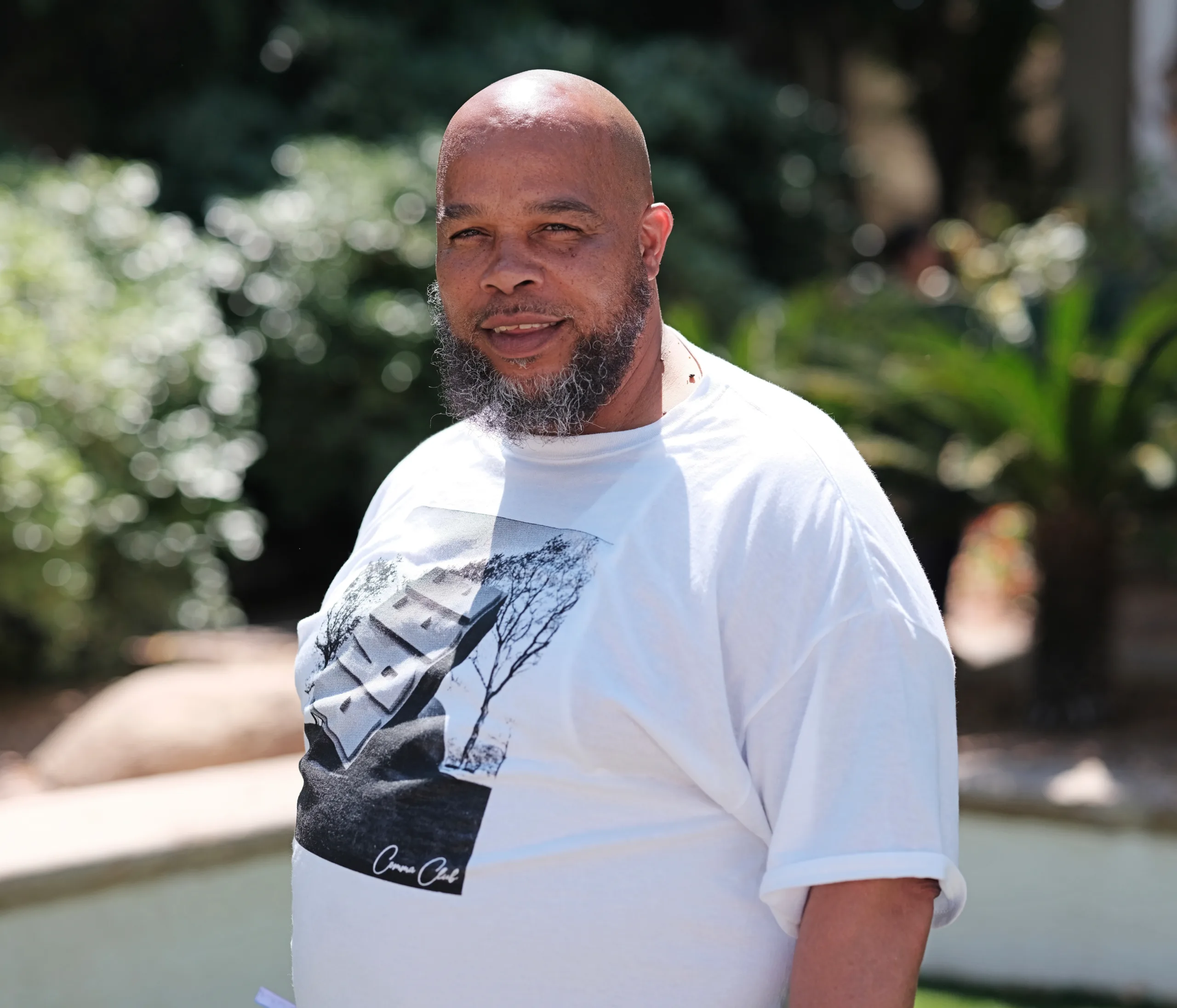
In October 2013, Gerard Richardson was exonerated of a 1994 murder in Elizabeth, New Jersey. He was exonerated by DNA testing obtained by the Innocence Project and released nearly 18 years after he was convicted.
The Crime
On Feb. 20, 1994, 19-year-old Monica Reyes left her apartment in Elizabeth, New Jersey, to collect money from a man. Five days later, her body was found in a ditch about 30 miles away, covered by half an inch of snow. She had been beaten and strangled, and a 100-pound rock was left on her head.
While conducting an autopsy, authorities found a bitemark on the lower left side of her back and swabbed it for saliva.
The Investigation
After Ms. Reyes went missing, her boyfriend, Ely Torres, called police several times. At first, he suggested that she was with a man called “Thomas,” and later that she was with a man named Luis Molina. Mr. Molina had previously accused the couple of stealing $900 from him, as they often preyed upon men by offering Ms. Reyes for sex and, instead, robbing them. Furthermore, Ms. Reyes’ mother overheard Mr. Molina say he had gotten even with one person — Ms. Reyes — and that Mr. Torres was next.
Ms. Reyes’ mother also told police that, a month before her daughter disappeared, a man had come to their apartment to collect $50 that Ms. Reyes owed for drugs, but she wasn’t home. After Ms. Reyes disappeared but before her body was found, another man named “J.J.” came by looking for the $50, Ms. Reyes’ mother said.
Ms. Reyes’ brothers told police that, on the night she disappeared, Ms. Reyes had confided that she was meeting a Cuban man who had money. The brothers claimed that Ms. Reyes sold drugs for a man named Gerard to whom she owed money, which “J.J.” was trying to collect.
Police questioned Mr. Molina, and although he admitted he “may have” threatened to kill Ms. Reyes, he was ruled out as a suspect after he passed a polygraph examination.
On April 18, 1994, Ms. Reyes’ sister, Lucy Rosado, who was in jail, said Ms. Reyes had visited her at the jail just before she disappeared. Ms. Rosado stated that Ms. Reyes told her a man named Gerard had threatened to cut her face because she owed him money. Ms. Rosado, however, was never called as a witness in any proceeding.
A day later, police contacted the parole supervisor of 27-year-old Gerard Richardson. The supervisor then filed a parole violation against Mr. Richardson for allegedly failing a drug test and he was arrested.
In May 1994, a man who lived six miles from where Ms. Reyes’ body was found was accused of beating and biting a woman he hired to perform a strip tease and massage at his home. That man was eliminated as a suspect after he passed a polygraph examination.
On May 17, 1994, police interviewed Mr. Richardson in jail, where he was being held for the parole violation. Mr. Richardson denied involvement in the murder, though he admitted that he had gone to Ms. Reyes’ apartment a year earlier to collect money she owed him. He stated that she had paid him back in December 1993, and he had not seen her since then.
Mr. Richardson offered to take a polygraph. During an interview prior to the examination, he mentioned that on three separate occasions, he had provided Ms. Reyes vials of cocaine to sell. He had initially purchased the vials with an acquaintance, James “J.J.” Newborn.
Mr. Richardson then confessed to seeing Ms. Reyes in February 1994, when he and J.J. had confronted her about her owing between $75 and $150. However, he still denied involvement in the crime, and agreed to give dental impressions for comparison to the bitemark found on Ms. Reyes’ body. Police said Mr. Richardson’s polygraph results showed he was “attempting deception.”
Police then questioned Mr. Newborn and he, too, submitted to a polygraph after denying involvement in Ms. Reyes’ murder. When police told Mr. Newborn the polygraph showed he was “attempting deception,” Mr. Newborn asked for a lawyer and refused to speak to police any further.
On June 4, 1994, forensic dentist Dr. Ira Titunik compared the bitemark to Mr. Richardson’s dental impression and concluded that he had left the bitemark on Ms. Reyes’ body. Five days later, Mr. Richardson was charged with Ms. Reyes’ murder.
The Trial
In November 1995, Mr. Richardson went to trial in Somerset County Superior Court. The prosecution relied on Dr. Titunik’s analysis to connect Mr. Richardson to the murder. Dr. Titunik testified that “this mark was made by Gerard Richardson … there (is) no question in my mind.”
In their testimonies, Ms. Reyes’ brothers confirmed that Mr. Richardson and Mr. Newborn had visited their home seeking to collect money from Ms. Reyes.
Ms. Reyes’ boyfriend, Mr. Torres, also testified and, for the first time, said he heard Mr. Richardson threaten to kill Ms. Reyes. On cross-examination, Mr. Torres admitted that he had not connected Mr. Richardson to Ms. Reyes’ murder until after police told him they matched the man to the bitemark.
There was no other physical evidence linking Mr. Richardson to the crime. The defense called Dr. Norman Sperber, a forensic odontologist, who testified that Mr. Richardson did not make the bitemark. In fact, Dr. Sperber said that Dr. Titunik had reached his conclusion after mistakenly comparing the bitemark upside down, misidentifying the upper tooth marks as being left by the lower teeth and vice versa.
On Nov. 30, 1995, after two days of deliberation, the jury convicted Mr. Richardson of murder. He was sentenced to 30 years in prison without parole. At his sentencing, Mr. Richardson denied killing Ms. Reyes, saying that while he did supply drugs to her for sale, “I didn’t kill Monica Reyes and I am never going to admit to it — to something that I didn’t do.”
The Exoneration
Mr. Richardson sought DNA testing of the swab from the bitemark in 2000, but his petition for testing was dismissed. In 2001, an appeals court ordered that any DNA testing done by the state be turned over and thereafter, the defense could seek further testing. No testing had been done prior to trial, but Mr. Richardson’s lawyer again petitioned for testing, which was granted. Half of the swab from the bitemark was sent for testing in 2002.
The first tests were inconclusive. More tests were performed in 2004. The results turned up only Ms. Reyes’ DNA profile. A motion for a new trial was filed and denied in 2006.
In July 2012, the Innocence Project took on Mr. Richardson’s case and sought a complete DNA re-investigation of the case. In 2013, testing identified a male profile from the remaining swab from the bitemark and excluded Mr. Richardson.
Innocence Project lawyer Vanessa Potkin filed a motion for a new trial and on Oct. 29, 2013, Somerset County Superior Court Judge Julie Marino vacated Mr. Richardson’s conviction and ordered a new trial. Mr. Richardson was released on bond.
On Dec. 17, 2013, the Somerset County District Attorney’s Office dismissed the case. In 2014, Mr. Richardson filed a state court lawsuit seeking compensation. He settled the lawsuit for $369,000.
Time Served:
18 years
State: New Jersey
Charge: Murder
Conviction: Murder
Sentence: 30 years without parole
Incident Date: 02/20/1994
Conviction Date: 11/30/1995
Exoneration Date: 10/29/2013
Accused Pleaded Guilty: No
Contributing Causes of Conviction: Unvalidated or Improper Forensic Science
Death Penalty Case: No
Race of Exoneree: African American
Race of Victim: Latinx
Status: Exonerated by DNA
Alternative Perpetrator Identified: No
Type of Crime: Homicide-related
Forensic Science at Issue: Bite Mark Analysis, Other
Year of Exoneration: 2013