Darryl Howard
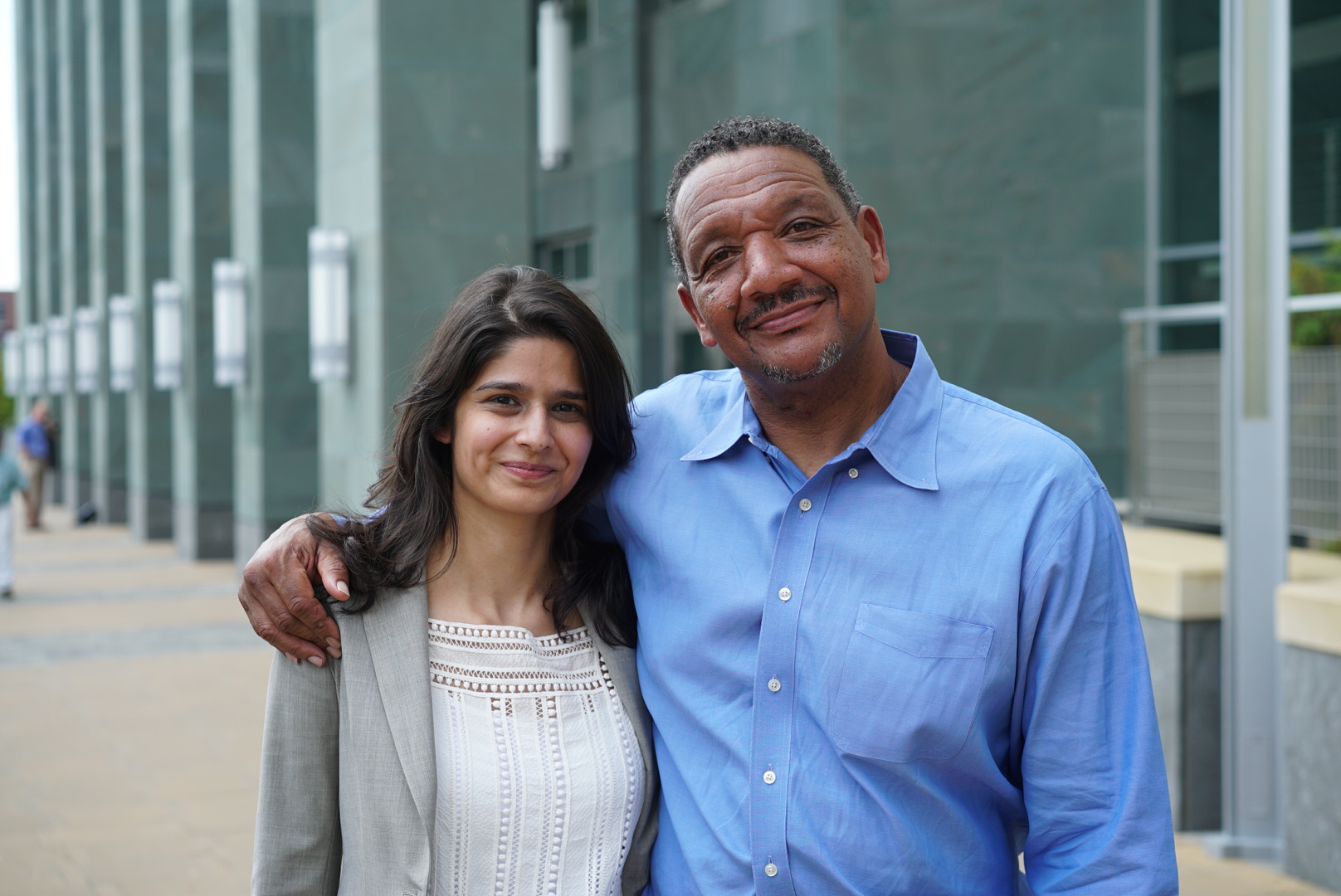
In September 2016, Darryl Howard was exonerated of a 1991 double murder and arson in Durham, North Carolina, after serving more than 21 years in prison for a crime he did not commit. He was exonerated based on DNA evidence pointing to the actual perpetrator.
The Crime
Shortly after midnight on Nov. 27, 1991, firefighters were called to extinguish an apartment blaze at the Few Gardens public housing project in Durham, North Carolina. They discovered the bodies of 29-year-old Doris Washington and her 13-year-old daughter Nishonda.
An autopsy revealed that Nishonda had died of ligature strangulation and Doris, who also had ligature marks on her neck, of blunt force trauma. Both appeared to have been sexually assaulted, and several items had been taken from the apartment.
The Investigation
Shortly after discovering the murders, police received reports that 29-year-old Darryl Howard, a friend of Doris Washington’s, had been seen in the vicinity of her apartment. The two had known each other for more than five years, and he often gave Doris rides, including to search for Nishonda, who frequently ran away from home. It was later discovered that just days before the murders, Nishonda had sought help from social workers, fearing for her life because her mother’s drug deals kept falling through. Her plea was ignored.
In June 1992, police questioned Mr. Howard about a different investigation. At the time, Mr. Howard was a patient at Duke University Hospital, having been shot five times in the back by a member of the New York Boys drug gang. Police suspected the gang member who shot Mr. Howard was responsible for two other murders, but not the murders of Doris and Nishonda.
Mr. Howard told police that he believed the New York Boys killed Doris and Nishonda. The day before the bodies were discovered, Mr. Howard had been at a friend’s apartment at the same housing complex as Doris’ when a New York Boys gang member came by to purchase drugs. The man traded a VCR, a radio, and a jacket, items similar to those police believed to have been taken from Doris’ apartment. However, the detective did not follow up on Mr. Howard’s information.
In October 1992, police arrested Angela Oliver on a charge of prostitution, and she gave a statement that implicated Mr. Howard in the murders. The statement took 46 minutes to record, but the police stopped and started the recorder so often that the actual recording was only about 10 minutes.
In her statement, Ms. Oliver described visiting Doris’ apartment with Mr. Howard the day before the murders, noting that she heard Mr. Howard threaten to kill Doris if she didn’t have his money or drugs. Later that evening, Ms. Oliver accompanied Mr. Howard and his brother, Harvey, to the apartment. She stated that she witnessed Mr. Howard confront Doris at the door with a gun before the two entered, and she then heard Doris screaming inside. Finally, Ms. Oliver stated that once the screams subsided, Mr. Howard called Harvey into the apartment and said he had to “burn them up.”
On Nov. 12, 1992, Mr. Howard was charged with two counts of capital murder and arson. His brother Harvey was also charged with arson.
The Trial
Prior to trial, DNA testing on sperm in Nishonda’s rape kit revealed a DNA profile that did not match Mr. Howard. No sperm was found in Doris’ rape kit collected from Doris, so a DNA test was not performed on that evidence.
In March 1995, Mr. Howard went to trial in Durham County Superior Court. The first-degree murder charges against him had been reduced to second-degree murder.
Mr. Howard’s case was prosecuted by Durham County Assistant District Attorney Michael Nifong, who argued that there was not a sexual assault component to the crime, contrary to the medical examiner’s analysis. Instead, he contended that Nishonda had consensual sex with a boyfriend prior to the murders, despite no evidence to support this theory.
Several prosecution witnesses testified to seeing Mr. Howard near Doris’ apartment in the hours prior to the murders, although their accounts were contradictory and inconsistent.
Roneka Jackson, a friend of Doris’ and a fellow Few Gardens resident, described seeing Mr. Howard arguing with Doris from outside her apartment on the afternoon of the murders, threatening to kill her and her daughter. Ms. Jackson, who was in prison for violating her probation at the time of the trial, later received $10,000 from a state compensation program in exchange for her testimony.
Dwight Moss testified that on the afternoon of the crime, he had been across the street from Doris’ apartment when he heard Mr. Howard tell her, “You messed up the money,” and, “You messed up the drugs,” before yelling, “I’ll kill you,” and walking away. He claimed to see Mr. Howard later carry a television out the backdoor of Doris’ apartment.
Rhonda Davis testified that she was with Doris on Nov. 26, from 10:30 a.m. until 10:30 p.m., less than three hours before Doris and Nishonda were found murdered. Ms. Davis said she did not see Mr. Howard speak to Doris or come by the apartment at all that day.
When Ms. Oliver refused to appear at trial, she was arrested and brought to court. She recanted her statement on the witness stand, saying that lead detective Darrell Dowdy had threatened to charge her as an accessory to murder if she did not testify against Mr. Howard. “You can’t force me to come and tell something I didn’t see,” she said. “So, I am on the stand to make [the detective] feel good, so he ain’t going to charge me with it.”
Ms. Oliver testified that the reason the police kept stopping and starting the recorder during her statement was because she “wasn’t talking right or something.” She asserted that she knew nothing about the murders and that when the fire broke out, she was “probably across town.”
The trial judge declared Ms. Oliver a hostile witness and allowed the prosecution to play the tape recording of her statement for the jury.
Detective Dowdy conceded that he had threatened to charge Ms. Oliver with murder if she did not cooperate. The detective also admitted that while he was questioning Mr. Howard’s girlfriend, Natasha Mayo, he showed her a fake warrant for murder and arson with Ms. Mayo’s name on it in an attempt to persuade her to implicate Mr. Howard. She never did.
The defense contended that Doris and Nishonda were sexually assaulted and that the sexual assaults went “hand in hand” with the murders; therefore, the pre-trial DNA test excluding Mr. Howard proved his innocence. The defense also noted that the prosecution initially believed the sexual assaults were part of the crime, but changed its theory of the crime after the DNA testing excluded Mr. Howard.
Mr. Howard acknowledged that he was near Doris’ apartment on the day of the crimes, but maintained his innocence.
Ms. Mayo testified that she and Mr. Howard were together at a friend’s apartment in the Few Gardens housing complex on the evening of the crimes. She said that around midnight, she and Mr. Howard went out to get drugs for the friend when they saw smoke coming from Doris’s apartment. They then returned to their friend’s apartment.
Detective Dowdy testified that the murders were never investigated as involving sexual assaults. In his closing argument, Mr. Nifong told the jury that the case “was never investigated as a sexual assault and it was never suspected to be a sexual assault.”
On March 31, 1995, the jury convicted Mr. Howard on two counts of second-degree murder and one count of arson. He was sentenced to 80 years in prison. The prosecution then dismissed the arson charge against his brother, Harvey.
The Exoneration
In 2009, Mr. Howard, represented by the Innocence Project and James Cooney III of Charlotte, North Carolina, sought DNA testing on the rape kits. In 2010, after the prosecution consented, a judge ordered the tests. By that time, Mr. Moss had recanted his testimony implicating Mr. Howard, saying that he had been coerced by the lead detective.
The testing of Doris’ rape kit revealed sperm for the first time and produced a male DNA profile that was not Mr. Howard’s. The DNA profile was entered into the FBI’s DNA database, the Combined DNA Index System, and it was matched to Jermeck Jones, a man with more than 35 convictions. DNA testing on Nishonda’s rape kit again excluded Mr. Howard and identified a second male DNA profile that was not Mr. Jones.
Despite the identification of Mr. Jones, then-Durham County District Attorney Tracey Cline declined to conduct any further investigation.
Around the same time, Mr. Howard’s attorneys discovered undisclosed documents in the prosecution files. They revealed that a few days after the murders, Durham police received a tip that the two victims were killed because Doris owed $8,000 to drug dealers from New York or Philadelphia. The informant explained that Doris had accepted $2,000 a week in exchange for allowing drug sales in her home. However, when the perpetrators came for their money, they learned that the drugs were missing and Doris could not repay her debt, so they murdered her. Her daughter was killed because she walked in during the crime. The informant also noted that more than one perpetrator was involved.
In the margin of the memo was a handwritten note by a captain in the Durham Police Department to the lead detective, stating, “There may be something to this. I don’t remember any public info on the rape.”
That tip was not only ignored, but also had been concealed by police and Mr. Nifong for nearly two decades. Mr. Nifong had been disbarred in 2007 for failing to disclose evidence favorable to the defendants in an unrelated wrongful accusation of rape against several members of the Duke University lacrosse team. The tip would have supported the defense theory that the crimes were committed by more than one perpetrator and by members of the New York Boys drug gang.
In May 2014, Durham County Superior Court Judge Orlando Hudson Jr. vacated Mr. Howard’s convictions without a hearing. He ordered a new trial based on the DNA test results, Mr. Nifong’s failure to disclose favorable evidence, and the presentation of false and misleading evidence and arguments at the trial by Mr. Nifong and Mr. Dowdy.
The prosecution appealed and in April 2016, the Court of Appeals of North Carolina set aside the decision and ordered Judge Hudson to conduct a hearing on the motion for a new trial.
On Aug. 31, 2016, after a three-day hearing, Judge Hudson again vacated Mr. Howard’s convictions and ordered a new trial. Mr. Howard was released on bond after more than 23 years in custody.
On Sept. 2, 2016, the prosecution dismissed the murder and arson charges.
Mr. Howard filed a federal civil rights lawsuit seeking damages in May 2017. On Dec. 1, 2021, following a trial, a jury awarded Mr. Howard $6 million based on the misconduct of Detective Dowdy, who had retired by then. After initially balking at covering Mr. Dowdy’s damages, the city reversed course in May 2024, and agreed to pay Mr. Howard $7 million.
On April 30, 2021, Governor. Roy Cooper granted Mr. Howard a pardon of innocence, paving the way for him to receive $750,000 in state compensation.
Time Served:
21.5 years
State: North Carolina
Charge: Capital Murder (2 cts.), Arson
Conviction: Second-degree Murder (2 cts.), Arson
Sentence: 80 years
Incident Date: 11/27/1991
Conviction Date: 03/31/1995
Exoneration Date: 09/02/2016
Accused Pleaded Guilty: No
Contributing Causes of Conviction: Government Misconduct, Informants
Death Penalty Case: No
Race of Exoneree: African American
Race of Victim: African American
Status: Exonerated by DNA
Alternative Perpetrator Identified: Yes
Type of Crime: Homicide-related, Sex Crimes
Year of Exoneration: 2016