Dewey Davis
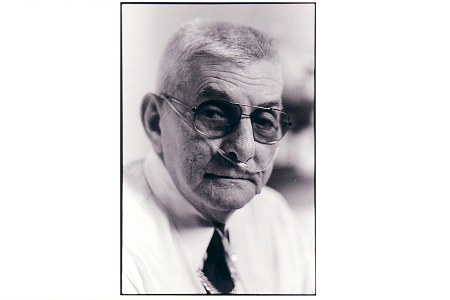
Dewey Davis was wrongly convicted of aiding and abetting a 1986 sexual assault originally believed to have been committed by his son, Gerald Davis, in St. Albans, West Virginia. Dewey was exonerated by DNA testing in 1994 following disclosures that the forensic evidence at his trial was tainted. His son, who was also charged in the case, was acquitted shortly after.
The Crime
On Feb. 18, 1986, a 21-year-old woman went to the trailer home of 53-year-old Dewey Davis and his 26-year-old son, Gerald Davis, in St. Albans, West Virginia, to retrieve her laundry. The woman, identified in court as E.W., was a friend of the family.
She later told police that, upon her arrival, Gerald Davis asked her to come to his bedroom. When she refused, he grabbed her by the shoulder and pulled her toward the bedroom. E.W. said she wrested free and tried to run out the back door, but could not get the door open. She then ran to the living room to ask Dewey Davis for help. When Gerald entered the room, she threw a glass of water at him. Then, she said, Gerald grabbed her by the hair and dragged her into the dining room where he struck her.
Afterwards, E.W. described, Gerald forced her into the bedroom and threw her on the bed. She said that Gerald then raped her while Dewey watched. Afterward, both men left the room and she ran to a neighbor. The neighbor refused to help, so E.W. drove her car, which had a slashed tire, about a quarter of a mile to a friend, who called the police. The friend, Rose Shaffer, noted that E.W. was hysterical, had marks on her neck and throat, and was wearing no jacket and only one shoe.
Kanawha County Sheriff’s deputies took a statement from E.W. and drove her to Charleston Area Medical Center for treatment. E.W. was found to have suffered a cut lip and abrasions to her face and vulva. Her clothes were taken by the police for analysis, and seminal fluid was found on her underwear. A rape kit was taken.
The Investigation
The following day, sheriff’s deputies went to the trailer to execute arrest and search warrants. The police found E.W.’s missing shoe and jacket in her laundry basket on the porch. They also seized sheets and towels found on Gerald Davis’ bed, along with some of his clothing, all of which were subsequently found to contain seminal fluid stains.
Dewey and Gerald Davis were each charged with one count of second-degree sexual assault, abduction, and first-degree sexual abuse.
The Trials
In July 1986, Gerald Davis went to trial in Kanawha County Circuit Court. E.W. recounted the attack in the trailer.
Fred Zain, the chief serologist for the State of West Virginia, testified that he had tested the semen found on several pieces of evidence for an ABO blood type. Although the semen had characteristics of type A blood, Mr. Zain testified that this could have resulted from contamination. He claimed that the contributor was more likely type O — the blood type of E.W. and Gerald Davis — and that only Gerald Davis and 3.5% of the male population could have been the source of the semen. In fact, however, the type O blood could have come from the victim alone, and any male could have deposited the semen.
Gerald Davis testified and denied the attack. He said that E.W. had been in the trailer that evening, but that nothing happened.
On July 23, 1986, a jury convicted Gerald Davis on all charges. He was sentenced to consecutive sentences totaling 14 to 35 years in prison.
Dewey Davis went to trial in Kanawha County Circuit Court in March 1987. The prosecution’s evidence, including the testimony of Mr. Zain, mirrored that of Gerald Davis’ trial. The defense contended that Dewey Davis was intoxicated to the point of being passed out that evening and had no memory of anything.
On March 11, 1987, a jury convicted Dewey Davis on all charges. He was sentenced to 10 to 20 years in prison.
Gerald Davis’ convictions were affirmed in December 1988 by the West Virginia Supreme Court of Appeals. In December 1989, the Supreme Court of Appeals ruled that only his conviction for second-degree sexual abuse should stand, and the other charges were dismissed.
The Exoneration
In 1992, Glen Woodall, who had been wrongfully convicted of two rapes and other crimes in Cabell County, West Virginia — in part based on similarly flawed testimony by Mr. Zain — was exonerated by DNA testing. That testing showed that Mr. Zain had testified falsely about the serology results in his case. Mr. Woodall’s exoneration prompted others convicted on Mr. Zain’s testimony, including Gerald and Dewey Davis, to seek similar DNA testing. The West Virginia Supreme Court ordered a review of all cases handled by Mr. Zain and, in late 1993, found that Mr. Zain had fabricated evidence in more than 100 cases between 1986 and 1989.
Gerald Davis then filed a habeas corpus petition to obtain DNA testing of the evidence in his case. Samples were sent to the Center for Blood Research in Boston, Massachusetts for analysis.
In March 1994, DNA expert Dr. David Bing reported that testing on the rape kit had obtained the DNA profiles of two people. One was identified as E.W., and the other was a male. Both Dewey and Gerald Davis were excluded as the source of the male profile. Further testing of Gerald Davis’ bedsheets and clothing failed to reveal E.W.’s profile.
That same month, the convictions of both men were vacated. Gerald and Dewey Davis were released on bond in March 1994.
Dewey Davis was never retried and his case was dismissed. Gerald Davis went to trial a second time in December 1995. The prosecution contended that he had raped E.W., but did not ejaculate. On Dec. 4, 1995, a jury acquitted him.
Dewey and Gerald Davis filed a federal civil rights lawsuit. The lawsuit was dismissed after they were awarded compensation from the West Virginia Board of Risk and Insurance Management in 1998. Dewey Davis was awarded $750,000 and Gerald Davis was awarded $500,000. Gerald Davis died in 2013.
Time Served:
8 years
State: West Virginia
Charge: Second-degree Sexual Assault, Abduction, First-degree Sexual Abuse
Conviction: Second-degree Sexual Assault, Abduction, First-degree Sexual Abuse
Sentence: 10 to 20 years
Incident Date: 02/18/1986
Conviction Date: 03/11/1987
Exoneration Date: 01/01/1995
Accused Pleaded Guilty: No
Contributing Causes of Conviction: Eyewitness Misidentification, Unvalidated or Improper Forensic Science
Death Penalty Case: No
Race of Exoneree: Caucasian
Race of Victim: Caucasian
Status: Exonerated by DNA
Alternative Perpetrator Identified: No
Type of Crime: Sex Crimes
Forensic Science at Issue: Flawed Serology
Year of Exoneration: 1995